



Groupsets explained: How to choose the right setup in 2026
A top-tier groupset isn’t automatically the right choice for your bike. The better question is which setup suits your riding and works with your frame, brakes and existing components. With groupsets from Shimano, SRAM and Campagnolo, plus mechanical and electronic shifting and different gear layouts, brand names and tier rankings only tell part of the story.
If the options feel difficult to compare, you’re not alone. Choosing between road, gravel and mountain-bike setups means weighing how you ride against the gearing, shifting system and components you need, rather than simply aiming for the highest tier. This guide explains the differences and helps you compare options against your priorities.
We’ll look at the main groupset components, mechanical versus electronic shifting, and 1x versus 2x gearing. You’ll also learn what to check before upgrading, including bottom bracket standards, brake mounts, cable routing and derailleur hangers. Use these checks to narrow down a suitable setup and catch compatibility issues before choosing your next groupset.
Key Takeaways
- Understand how a groupset’s transmission and braking components shape gear choice, stopping and the feel of your ride.
- Compare mechanical or electronic shifting and 1x or 2x gearing by your priorities, rather than assuming one format suits every rider.
- Use your usual terrain and riding style to narrow down the gear range, braking setup and shifting preference that matter most.
- Before choosing, identify your bike’s frame and existing standards, then compare them with the exact groupset specifications.
- Explore road, gravel and mountain-bike examples from Shimano, SRAM and Campagnolo, including Shimano GRX 810 double and SRAM NX Eagle.
What is a groupset, and how does it shape your ride?
A groupset is the coordinated set of transmission and braking components that controls how a bike changes gear and slows down. These parts are designed to work as a system, rather than as unrelated upgrades. For a wider overview of the term and its components, see this guide to the bicycle groupset.
A groupset affects more than shifting. Gear range influences how easily you can find a comfortable cadence on climbs or keep turning the pedals on faster, flatter stretches. Shifting behaviour affects how you move between gears, while the brakes influence the feel and control available when slowing down. Maintenance matters too: the parts work together, so their condition and compatibility affect how the system performs over time.
Groupsets come in different tiers, but the highest tier isn’t automatically the best match. Start with your bike’s design and the riding you do, then consider which features make a practical difference on your usual routes.
Which components are usually part of a groupset?
Common groupset components include shifters, derailleurs, chain, cassette, crankset and brakes. Each has a distinct role:
- Shifters let you select a different gear.
- Derailleurs move the chain between chainrings or cassette sprockets.
- Chain transfers pedalling force through the drivetrain.
- Cassette provides a range of rear sprockets for different gears.
- Crankset connects the pedals to the chainrings.
- Brakes help control and slow the bike.
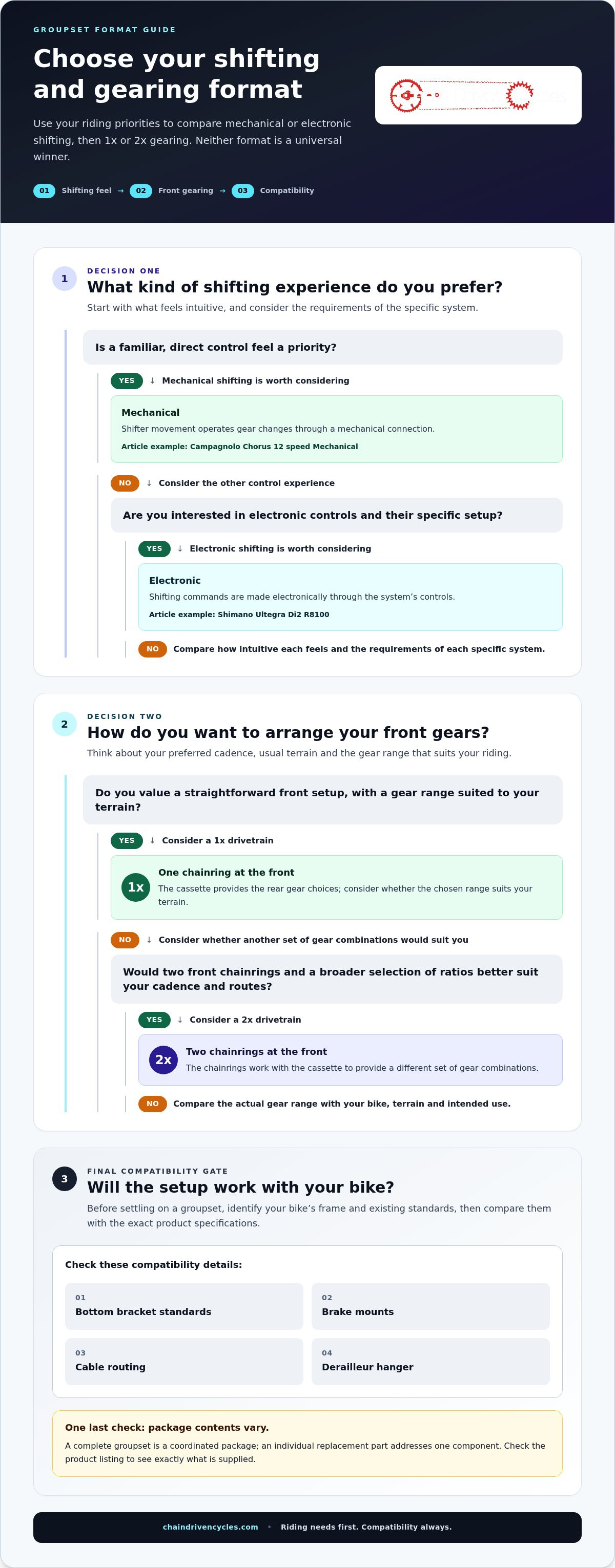
A complete groupset is a coordinated package, while an individual replacement part addresses one component. Don’t assume every product described as a groupset includes the same parts, because package contents vary. Read the product listing to see exactly what’s supplied before comparing options or planning an upgrade.
Why do groupsets change the way a bike rides?
The combination of chainrings and cassette sprockets determines the available gears. A suitable range helps you adapt your effort to the terrain. Easier gears can help on steep climbs, while the gaps between gears affect how finely you can adjust your cadence. The right balance depends on where and how you ride, not simply on the number of components or the groupset’s position in a range.
Shifting feel also shapes the experience. The controls and drivetrain work together to determine how you change gear and how the transition feels. Braking components contribute to control, but their exact specifications and feel depend on the system fitted to the bike. Keep this in mind when comparing groupsets or changing from one braking setup to another.
A groupset coordinates gear selection and braking so you can manage your effort and control your speed across changing riding conditions.
Mechanical or electronic, 1x or 2x: which groupset format fits?
Two choices shape the groupset experience: how you operate the shifters and how many chainrings sit at the front. Neither has a universal winner. Think about the routes you ride, how you like to change gear and the cadence you prefer to maintain. The format can help narrow down your options, but your riding needs should guide the decision.
| Choice | What it means | Consider it if… |
|---|---|---|
| Mechanical shifting | Shifter movement operates the gear-changing mechanism through a mechanical connection. | You prefer a familiar, direct control feel. |
| Electronic shifting | Shifting commands are made electronically through the system’s controls. | You’re interested in an electronic control experience and its specific setup. |
| 1x drivetrain | One chainring sits at the front, with the cassette providing the rear gear choices. | You value a straightforward front setup and your chosen gear range suits your terrain. |
| 2x drivetrain | Two front chainrings work with the cassette to provide a different set of gear combinations. | You want to consider how a broader selection of ratios may suit your cadence and routes. |
How should you compare mechanical and electronic shifting?
Mechanical shifting uses a physical action at the shifter to operate gear changes. Electronic shifting sends a command through an electronic system. Consider which feels intuitive to you and whether you’re comfortable with the requirements of the specific system. Shimano Ultegra Di2 R8100 is an electronic option, while Campagnolo Chorus 12 speed Mechanical is a mechanical example. They illustrate different approaches, not a universal ranking. For more road-focused context, see this Cyclingnews groupset comparison.
Is a 1x or 2x drivetrain better for your riding?
With 1x, a single front chainring keeps gear selection centred on the cassette. With 2x, two chainrings offer another set of combinations. On road rides, think about the cadence you want to hold as the pace or gradient changes. Gravel riders may prioritise a setup that feels manageable across mixed terrain, while mountain-bike riders should consider the climbs and descents they tackle. The right balance depends on the bike, terrain and intended use.
Your gearing priorities can also shape your choice of bike for road riding. To compare formats across disciplines, explore the groupset collection from Chain Driven Cycles for examples from Shimano, SRAM and Campagnolo. Check each product’s details to understand its format and contents before deciding what suits your riding.
Compare groupsets by riding style, not just brand or tier
A groupset that suits a racer’s priorities may be a poor fit for someone riding mixed terrain or heading out for a relaxed weekend spin. Brand and tier can help narrow the options, but start by considering where you ride, how much climbing you tackle and what kind of gear changes feel comfortable. Competitive riders may prioritise fine gear steps and a specific shifting feel. Everyday riders may value a setup that matches varied routes without paying for features they won’t use.
Use this rider-needs matrix as a starting point. It highlights useful questions, rather than offering a universal ranking of brands or systems.
- Road: Consider the gradients on your regular routes, how easily you want to adjust cadence, your preferred shifting method and whether the braking system suits your bike.
- Gravel: Think about how often your rides move between sealed roads and rougher tracks, and whether your priorities are climbing, steady cadence or a straightforward setup.
- Mountain bike: Match the drivetrain and brakes to the type of riding you do, then factor in the bike’s existing components and standards before comparing options.
Let your discipline and terrain guide groupset comparisons, then weigh gear range, braking system and shifting preference against how you actually ride.
What should road and gravel riders prioritise?
For road riding, start with your usual routes. Long or steep climbs can make easier gears an important consideration, while flatter rides may lead you to focus more on the steps between gears and your preferred cadence. If you ride competitively, consistent gear selection may matter more than it does on a casual outing. A higher tier isn’t automatically better for every rider.
Gravel riding brings a different mix of surfaces and gradients. Shimano GRX 810 double is one gravel-specific example in the collection. Check its product listing for exact specifications and contents rather than assuming its gearing or package details. Compare the listed setup with your intended terrain and the way you want to manage effort on changing surfaces.
What matters when choosing an MTB groupset?
Mountain-bike riding can range from regular trail rides to routes with sustained climbs or more technical descents. Consider the terrain you ride, your preferred gear changes and the braking system that works with your bike. The frame and existing drivetrain matter too. A replacement needs to match the bike’s standards, so compare the exact product details with your current setup before choosing.
SRAM NX Eagle Groupset DUB kit 175mm, 1x12, 11-50 is a named mountain-bike example in the range. Treat the product name as a starting point, then review the listing for the details relevant to your bike. If you also use training data to set broader riding goals, the power-meter training guide explores how measurement can inform those priorities.
Check groupset compatibility before you order
A groupset can look suitable on paper and still be incompatible with your bike. Frame interfaces, braking arrangements and drivetrain standards vary between models, so check the exact specifications rather than relying on a brand name or gear count alone. Comparing details before ordering helps you avoid choosing parts that won’t work with your existing setup.
Which bike details should you identify first?
Start by recording your bike’s make, model and year, along with the current groupset if you know it. Then compare what’s on your bike with the product listing using this checklist:
- Frame: Identify the frame model and relevant interfaces. Check the bottom bracket standard, cable routing and derailleur hanger details against the groupset specifications.
- Drivetrain: Note the current number of gears and the components you intend to replace. Check which parts are included in the listed package, as contents can vary between groupsets.
- Braking setup: Identify whether the bike uses disc or rim brakes, then compare the brake type and mounting standard with the product details. Brake mounts and components can differ between systems.
- Crankset and interfaces: Check the crank length shown for the product, along with the bottom bracket and other mounting or connection details. A matching brand does not establish that these interfaces will fit.
- Exact variant: Compare the product’s full name and specifications with your bike, including any options shown in the listing. Don’t assume different versions of a model share identical compatibility.
What compatibility mistakes are easy to avoid?
Counting gears is useful, but it isn’t a complete compatibility check. Two components with the same gear count may use different standards or be designed for different systems. Likewise, parts from the same manufacturer aren’t automatically interchangeable across every model or generation. Check the product’s stated specifications against the bike’s existing drivetrain, brake mounts, bottom bracket and derailleur hanger. If your notes are incomplete, identify the bike’s exact model information before deciding.
Also distinguish a groupset from a related accessory. The RRSkit USB Adapter is a separate accessory described for Shimano 12-speed Di2 charging. It isn’t a groupset and won’t replace drivetrain or braking components.
Check the complete bike-to-product match before ordering, because compatibility can vary between models and components. Use the product listings to review the exact specifications and package details for each setup. You can compare groupsets in the collection as part of that check.
Explore Chain Driven Cycles’ groupsets and choose your next step
Chain Driven Cycles’ groupset collection brings together options from Shimano, SRAM and Campagnolo for road, gravel and mountain-bike riding. The useful comparison isn’t simply which brand or tier sits highest. Consider your kind of riding, whether you prefer mechanical or electronic shifting, how you want your gearing arranged and whether the exact product will work with your bike.
The products below illustrate different riding categories and shifting preferences. Use them as starting points, then read each product listing for its exact specifications and package contents. Names and broad categories can help narrow your search, but they don’t replace checking the details against your bike.
Which collection examples suit different priorities?
- Road and electronic shifting: Shimano Ultegra Di2 R8100 is a road-oriented electronic option. Review its listing for the precise specification and included components.
- Gravel: Shimano GRX 810 double groupset is the collection’s gravel-specific example. Consider whether its listed configuration suits your intended routes and riding style.
- Mechanical shifting: Campagnolo Chorus 12 speed Mechanical is an example for riders comparing a mechanical setup.
- Electronic shifting: SRAM RED ETAP provides another electronic example to compare against your preferences and bike compatibility.
- Mountain biking: SRAM NX Eagle is a mountain-bike option in the collection. Check the exact product details against your bike’s existing setup.
These examples aren’t a universal ranking. A rider focused on road performance may have different priorities from someone mixing gravel tracks with sealed roads or riding mountain-bike trails. Package contents can differ too, so check the individual listing rather than assuming every groupset includes the same components.
The Shimano Di2 charger USB adapter is a related accessory, not a groupset. Keep that distinction clear when comparing drivetrain options and accessories.
How can you move from comparison to a confident choice?
Before deciding, bring your main criteria together: riding discipline, shifting format, gearing preference and compatibility with your bike’s frame, drivetrain and braking setup. Then compare the product specifications and contents with those requirements. If your bike’s exact model or component standards aren’t clear, identify them before ordering.
Chain Driven Cycles also provides professional bicycle repair services to support ongoing bike ownership. Use that service for your bike’s maintenance, and choose a groupset based on your riding plans and the product’s compatibility details.
Ready to compare options? Browse the groupset collection and choose an option that suits your bike and the rides you have planned.
Choose a setup that supports the rides ahead
Your next groupset should make sense for both the bike you ride now and the routes and goals you’re building towards. Picture a typical ride: the climbs, surfaces and pace you enjoy, and the gear changes that feel natural. This gives you a practical reference point when comparing specifications, rather than relying on a tier label alone.
Think of the choice as part of your bike’s longer-term care, too. Chain Driven Cycles provides professional bicycle repair services alongside groupsets from Shimano, SRAM and Campagnolo for road, gravel and mountain-bike use. Compare the available options and use each product’s details to guide your decision.
Browse the groupsets collection and find a setup that fits your bike and the riding you’re looking forward to. A considered choice can help make every ride feel more like your own.
Frequently Asked Questions
Can I mix components from different groupset brands?
Sometimes, but compatibility depends on the precise components and standards, not just the logos. For example, a shifter and derailleur need to work together as a shifting system, while other parts may depend on specific interfaces. Before buying, compare the published specifications for each part with your exact bike. Don’t assume a cross-brand combination will work, or rule it out without checking the details.
How can I tell how many speeds my current groupset has?
Count the sprockets on the rear cassette to identify the number of rear speeds. Don’t count the front chainrings, which are separate and affect the gear combinations. You can also check the bike or component documentation for drivetrain details. Note what you find before comparing replacements, and don’t rely on appearance alone to identify a component’s model or age.
Does a new groupset always include every drivetrain component?
No. “Groupset” can describe packages with different contents, so don’t assume a particular component is included. One listing may cover a different selection of parts from another. Read the individual product description and check its contents before ordering. If you’re replacing only selected components, compare the listed parts with the ones you plan to retain, so you can account for anything not included in the package.
Can I transfer my current crankset to a different groupset?
Possibly, but it depends on the exact crankset, drivetrain and interface specifications. A matching brand or speed count alone doesn’t establish that the crankset will work with the new setup. Compare the published details for both the crankset and proposed groupset, including the relevant connection standards. Don’t assume your existing crankset can be reused without checking these details.
How do I identify the groupset fitted to my bike?
Look for brand names and model markings on the shifters, derailleurs and crankset, then compare them with the bike’s original specification or documentation. Check more than one component: a previous repair or upgrade may mean the bike no longer has its original setup throughout. Recording visible markings and comparing them with the bike’s documents can help you build a more accurate picture of the fitted components.
Is a groupset upgrade worthwhile if my current components still work?
It can be worthwhile if it solves a specific problem or gives you a change you value, such as a different gear layout or shifting experience. If your current setup meets your needs, a newer or higher-tier groupset won’t automatically make the bike faster or better for you. First identify the benefit you want, then weigh it against the product’s contents and compatibility with your bike.