



Carbon vs Alloy Wheels: How Much Faster for Average Riders
Carbon wheels don’t automatically make every ride faster. There’s no single speed gain for everyone asking how much faster carbon wheels are for average riders: the difference depends on the route, pace and wheel design. They can help a bike carry speed on open roads and feel more responsive on climbs, especially when replacing heavier wheels. Tyres, pressure and road surface also affect the result.
A lighter or more aerodynamic wheelset can make a noticeable difference, but in everyday riding the benefit may be subtle. Alloy wheels can still be a sensible choice for your routes and riding style. The right option isn’t simply the lightest or most expensive: it’s the one that matches your priorities.
This comparison looks at how wheel materials affect speed, everyday riding and varied terrain, then sets out a practical way to decide whether an upgrade suits your needs.
Key Takeaways
- Assess wheel weight in the context of your climbs and acceleration, rather than assuming a lighter set will transform every ride.
- Aerodynamic benefits become more relevant as riding speed rises; your usual pace helps determine whether deep rims suit you.
- Match rim depth to your routes: shallower options can feel more manageable in crosswinds, while deeper rims favour speed on open roads.
- Before upgrading, consider whether tyres, pressure or bike fit would address your most immediate riding needs more effectively.
Carbon vs alloy Wheels: which material wins?
Neither material is faster on every route. Weight, rim profile, braking system and hub engagement all affect how a wheelset performs and feels.
Wheel weight and climbing effort
Lower wheel weight can make acceleration feel more immediate, particularly on climbs where the bike repeatedly loses speed. Carbon wheels may improve climbing response if they replace heavier stock wheels, but the complete wheelset matters, not just the rim material. Hub engagement also affects how quickly power is transferred to the wheel on technical climbs. It doesn’t reduce the wheel’s weight or the gradient.
Aerodynamics, climbing and handling
Deeper carbon rims prioritise aerodynamics over low weight and easy handling. Aerodynamic drag is a major resistance factor above approximately 25 km/h, so aero benefits matter more when a rider can sustain that pace. Deep-section wheels can also catch crosswinds, creating sudden steering forces; shallower rims are generally easier to manage in gusts. Rim depth, rider position and wind exposure all shape the trade-off.
Performance on climbs, descents and trails
Lighter wheels can feel livelier during accelerations uphill. On descents, stability and braking performance matter more than weight alone. Carbon and alloy wheels each offer a different balance, and performance depends on the wheel’s design and intended use. On trails, tyre choice and pressure also affect grip and comfort. The wheels must match your bike’s rim-brake or disc-brake system. Carbon-wheel durability depends on construction and impact damage, while inspection and repair costs depend on the damage and components involved.
| Wheel option | Weight and climbing | Aerodynamics and handling |
|---|---|---|
| Carbon | Can feel responsive if lighter than the current set | Deep rims favour speed but can be more affected by crosswinds |
| Alloy | May feel heavier than a lighter carbon set | Often prioritises a practical balance over deep-rim aerodynamics |
Match wheel weight, rim depth, braking system and hub engagement to your routes and handling priorities.
Are Carbon Wheels Good for Everyday Riding?
For casual riders travelling under 30 km/h, gains from expensive wheels can be marginal. Your typical pace and routes help determine whether carbon’s aerodynamic benefits matter.
Aerodynamic gains and riding speed
Aerodynamic wheels reduce drag, so their advantage grows as riding speed rises. Above approximately 25 km/h, aerodynamic drag becomes the biggest resistance factor for cyclists. A good aero wheelset can save 20-40 watts at a race speed of about 40 km/h. That figure describes race-speed conditions, not an expected saving at every rider’s everyday pace. If your routes involve steady, faster riding, aerodynamic gains become more relevant than they are during frequent stops or slower spins.
Carbon wheels for everyday road riding
Carbon wheels can suit regular road riding, particularly when their depth and tyre fit match your routes. A 40mm to 50mm wheelset is presented as a suitable everyday road option, while 50mm is an all-round choice for many road cyclists. Modern road setups commonly use 28mm to 30mm tyres, with some frames allowing 32mm. Tyres, pressure and road surface affect rolling resistance more than the wheels themselves. A tubeless setup can reduce friction and improve comfort, making tyre choice part of the upgrade decision.
Matching wheels to riding goals
Choose for your pace, riding position and routes, not material alone. Rider weight affects the total mass being accelerated, while a more aerodynamic position reduces the area exposed to airflow. Tyre width, pressure and road surface affect rolling resistance and can outweigh the wheel’s contribution. Wind matters too: gusts can disrupt a steady ride and make deep rims harder to handle. Aero wheels are more relevant on open roads at a sustained pace than on slow, stop-start journeys. For mixed everyday routes, prioritise balanced performance and practical handling.
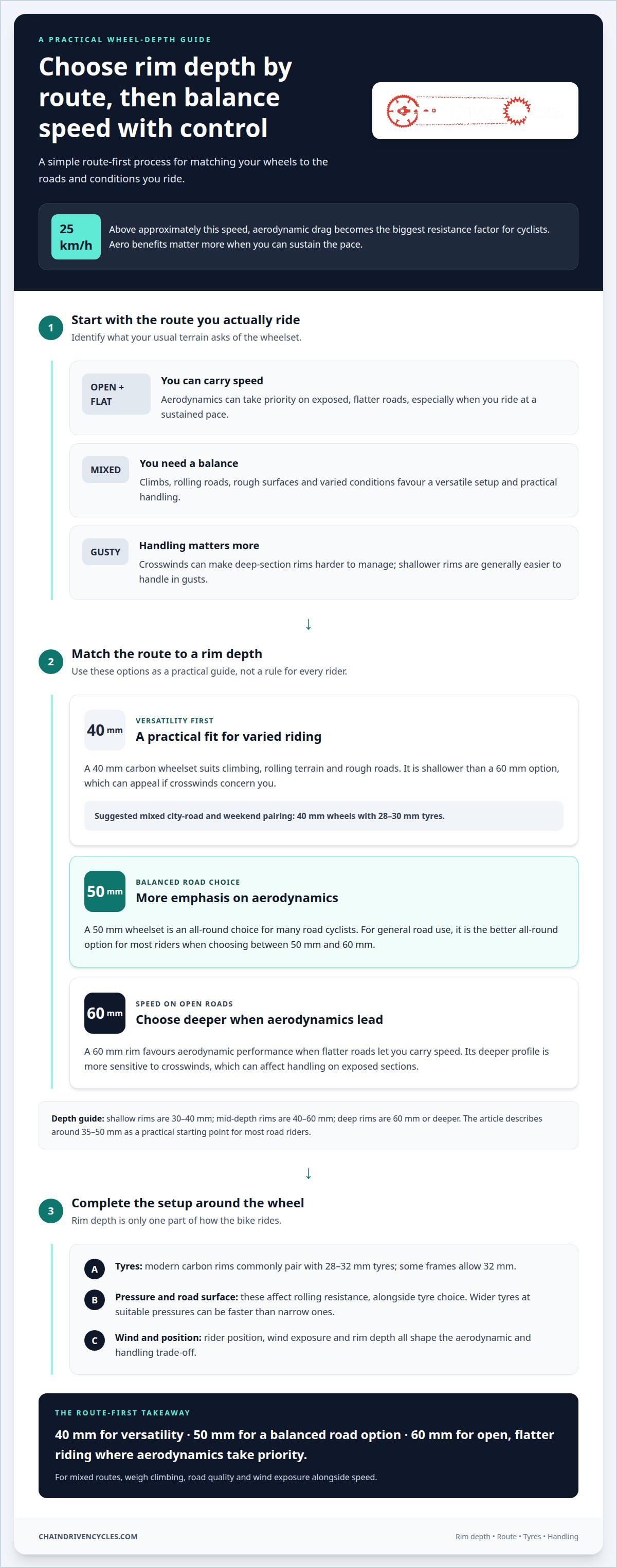
Choosing wheel depth for riding style and terrain
Rim depth changes a wheel’s aerodynamic profile, weight and feel in wind. Shallow rims are described as 30-40 mm deep, mid-depth rims as 40-60 mm, and deep rims as 60 mm or deeper.
Those categories help narrow the choice, but terrain matters too. A route with exposed, flat stretches rewards a different balance from rolling roads, climbs or rough surfaces. For most road riders, a mid-depth option around 35 to 50 mm offers a practical starting point.
A 40 mm carbon wheelset suits varied riding, including climbing, rolling terrain and rough roads. It can also appeal to riders concerned about crosswinds, as it’s shallower than a 60 mm option. For mixed city roads and weekend routes, a 40 mm wheelset with 28 mm to 30 mm tyres is one suggested pairing.
A 50 mm wheelset is an all-round choice for many road cyclists. It gives more emphasis to aerodynamics than a shallower rim, while remaining within the mid-depth category. If you’re deciding between 50 mm and 60 mm for general road use, 50 mm is the better all-round choice for most riders.
Choose 60 mm when speed on open, flatter roads is the priority. The deeper profile favours aerodynamic performance when the route lets you carry speed, but it’s more sensitive to crosswinds. That trade-off can affect handling on exposed sections, so consider how often your rides include open roads and gusty conditions.
Tyres complete the setup. Modern carbon rims commonly pair with 28 mm to 32 mm tyres, while wider tyres at suitable pressures can be faster than narrow ones. Tyres, pressure and road surface influence rolling resistance more than the wheels themselves, and comfort depends on the whole setup.
For mixed Irish routes, weigh climbing, road quality and wind exposure alongside speed. Choose 40 mm for versatility, 50 mm for a balanced road option, or 60 mm for open, flatter riding where aerodynamics take priority.
Who may benefit from a wheel upgrade
A carbon wheel upgrade suits riders whose routes and goals make its advantages useful. Cyclists averaging under 28 km/h may not fully benefit from deep aero wheels. Riders who regularly hold speed on open roads have a clearer reason to consider them. The right choice depends on your current setup, riding position and typical terrain.
Begin with the problem you want to solve. If climbs feel sluggish, lighter wheels may improve the bike’s response, especially when replacing heavier stock wheels. If you want to maintain speed on flatter roads, aerodynamics may matter more. On exposed, gusty routes, manageable handling may be more important than choosing a deep rim.
- Prioritise fit: consider a professional bike fit if your position is the more immediate need.
- Review your tyres: a better tyre setup may provide a more noticeable speed improvement than changing wheels alone.
- Match the terrain: choose a balanced wheelset for mixed routes, rather than focusing only on fast, open roads.
- Assess your pace: deep aero wheels are less likely to suit riding that stays below 28 km/h.
These steps help you tell a useful upgrade from one that won’t address your main limitation. For example, changing wheels won’t fix tyres or riding position that need attention. If your setup already suits you and you ride open roads at a steady pace, lighter or more aerodynamic wheels may better support your aims.
Use your usual routes, pace and handling priorities to guide the decision. Discuss your bicycle repair needs if you’re weighing a wheel upgrade against other practical changes.
Chain Driven Cycles
Chain Driven Cycles can help you weigh a wheel upgrade against your riding needs and wider cycling priorities. If you're still deciding whether a different bike better suits your routes, its range includes performance road bicycles, classic models and electric hybrid bikes. Bike hire can also suit a rider who wants to experience a different type of cycling before making a longer-term choice.
For a wheel decision, start with your usual pace, terrain, handling preferences and current setup. If your bike needs attention beyond the upgrade question, Chain Driven Cycles also provides bicycle repair services. The aim is to choose equipment that supports your riding, rather than treating carbon wheels as an automatic improvement.
For help considering your options, contact Chain Driven Cycles.
Make your next upgrade count
The question of how much faster carbon wheels are for average riders is most useful when it leads to a decision based on your own riding. Before changing equipment, decide what you want to improve: confidence on familiar roads, comfort on longer rides or a setup that better supports your goals. That priority gives an upgrade a clear purpose, rather than making speed the only measure of success.
It also helps to look beyond one component. The right next step may be refining your current bike, choosing equipment better suited to your routes or planning for a different kind of riding. A considered choice is easier to enjoy because it reflects how you actually ride, not an abstract performance claim.
If you’re ready to explore what suits your cycling, talk through your options with Chain Driven Cycles. Keep your goals in view, and make your next ride your guide.
Frequently Asked Questions
What Makes Riders Ask: Are Carbon Wheels Worth It?
Riders ask about carbon wheels because they promise a performance change, but the benefit depends on how you ride. A commuter on short, stop-start trips may value durability and predictable handling more than aerodynamic gains. Someone riding longer, uninterrupted routes may care more about maintaining speed. Identify the change you want to feel before comparing materials, so the decision reflects your actual rides.
Do Bike Wheels Actually Make You Faster?
Wheels can contribute to speed, but they’re only one part of the bike-and-rider system. To judge a change fairly, compare familiar rides with similar tyres, pressure, route and effort. Notice whether you maintain speed more easily instead of relying on one fast section. Changes in wind or traffic can obscure the wheel’s contribution.
Is it worth it?
A carbon wheelset is worth considering if it addresses a clear riding priority and suits your bike. It may be harder to justify if you expect a dramatic improvement without changing anything else. Consider how often you ride, what currently feels limiting and whether the new setup would improve those rides. A focused upgrade is easier to assess than buying for appearance alone.
Quick answer: who should upgrade?
Riders with a specific performance goal may be the strongest candidates: for example, someone who wants a more responsive bike on repeated climbs or rides long, open stretches and wants an aero-focused setup. Those replacing heavy stock wheels may notice a more useful change. If your current setup already suits your routes, switching solely for the material may offer little practical value.
Which Rim Depth Should You Choose?
Base rim depth on the routes you ride most, rather than choosing the deepest profile available. A 40 mm option suits mixed terrain and riders prioritising versatility; 50 mm offers a balanced road choice; 60 mm favours speed on flatter, open roads. Consider how exposed your routes are to gusts, and whether easier handling or aerodynamic performance matters more to you.
Who Should Upgrade Their Wheels?
Consider an upgrade if your current wheels are holding back a defined goal, such as improving climbing response or building a faster road setup. Check that replacements suit your bike’s brake system, tyre clearance, cassette and intended use. If a professional bike fit or a better tyre setup is a more immediate need, address that first: new wheels won’t resolve those issues.