



Hydraulic Bike Brake Bleed: The 2026 Guide to Fluid Maintenance
Choosing the wrong fluid for your hydraulic bike brake bleed isn't just a performance mistake; it's a critical chemical decision that can instantly compromise your bike's entire stopping system. Most riders have felt that unsettling moment when a brake lever pulls too close to the handlebar or feels frustratingly spongy during a long descent. It's a common pain point that often leads to hesitation, especially when you're caught between the conflicting requirements of Mineral Oil and DOT fluid systems. You want your equipment to be as reliable as your passion for the sport, yet the fear of damaging expensive calliper seals through incorrect maintenance is a valid concern for any enthusiast.
This 2026 guide will help you master the technical differences between fluid types to ensure your hydraulic disc brakes remain powerful, predictable, and safe on Irish roads. We understand that precision is the foundation of confidence when you're descending at speed or navigating heavy traffic. We'll provide a clear understanding of fluid compatibility, explain the impact of moisture thresholds on your braking performance, and preview exactly when it's time to seek professional workshop support. By the end, you'll have the knowledge to restore your bike's original stopping power and maintain its long-term reliability.
Key Takeaways
- Understand why hydraulic systems offer superior modulation and stopping power compared to traditional cable brakes for modern road cycling.
- Learn the critical differences between Mineral Oil and DOT systems to avoid irreversible seal damage during a hydraulic bike brake bleed.
- Identify the warning signs of fluid degradation, such as a spongy lever feel or discoloured fluid, before they compromise your safety on the road.
- Discover why electric hybrid bikes require more frequent fluid inspections and maintenance due to the increased thermal demands of their higher mass.
- Recognise when a professional workshop overhaul at Chain Driven Cycles is necessary to maintain the integrity of high-performance components found on premium road bikes.
The Role of Brake Fluid in Hydraulic Cycling Systems
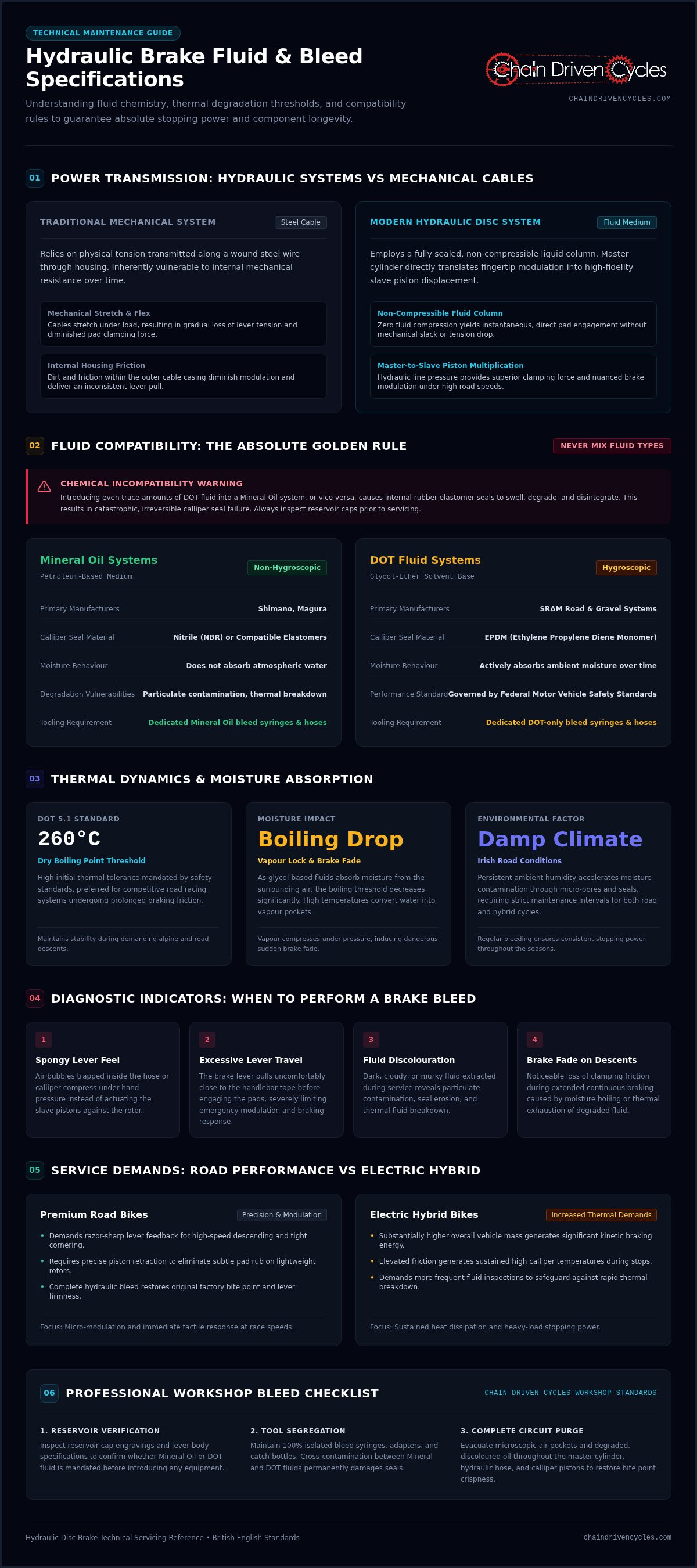
Brake fluid is the lifeblood of modern disc brake safety, acting as the essential link between your fingertips and the road. Unlike traditional cable systems that rely on the physical tension of a steel wire, hydraulic systems use a non-compressible liquid medium to transfer force. This fundamental difference is why hydraulic disc brakes have become the standard for performance road bikes. Cables are prone to stretching and internal friction, whereas fluid provides a direct, high-fidelity connection that translates every millimetre of lever pull into precise clamping force at the wheel. Without fluid integrity, your stopping power becomes a variable rather than a constant, which is a risk no cyclist should take.
How Hydraulic Disc Brakes Function
The system operates through a master-slave relationship. When you squeeze the brake lever, the master cylinder pushes fluid through the hose toward the calliper. This fluid pressure acts on the slave cylinders, or pistons, forcing the brake pads against the rotor. Once you release the lever, internal seal retraction or pad return springs pull the pistons back to their starting positions. Because fluid cannot be compressed, the response is usually instantaneous. However, if air enters the system, the lever feels "spongy" because the air bubbles compress under pressure instead of moving the pistons. This is why a periodic hydraulic bike brake bleed is vital to maintain that crisp, immediate bite point.
Why Fluid Quality Matters for High-Performance Bikes
Maintaining control on steep descents and technical corners requires absolute predictability. In the damp Irish climate, fluid integrity is constantly challenged. Glycol-based DOT fluids are hygroscopic, meaning they absorb moisture from the air over time. This lowers the boiling point of the fluid, which can lead to brake fade during heavy use. Even mineral oil systems can suffer from particulate contamination or thermal degradation. For those riding premium machines, ensuring the brake bleeding process is performed correctly is the only way to guarantee consistency across long rides in varying temperatures.
Consistency is particularly important for riders who demand the most from their equipment. If you notice your brakes behaving inconsistently or the lever travel increasing, it's likely time for professional electric and road bike servicing Ireland to restore that factory-fresh feel. A well-executed hydraulic bike brake bleed ensures your stopping power remains a reliable asset, allowing you to focus entirely on the road ahead whilst trusting your equipment to perform under pressure.
Mineral Oil vs. DOT Fluid: The Golden Rule of Compatibility
The most important rule in bicycle maintenance is simple: never mix Mineral Oil and DOT fluid. These two liquids are chemically incompatible and designed for entirely different internal environments. Introducing even a trace amount of DOT fluid into a Mineral Oil system, or vice versa, will cause the internal rubber seals to swell and eventually disintegrate. This leads to total brake failure. Manufacturers design their systems around specific elastomer compounds. SRAM road systems typically use EPDM seals for DOT fluid, whilst Shimano and Magura use nitrile or similar seals for Mineral Oil. Before you begin a hydraulic bike brake bleed, always check the reservoir cap or lever body. It will clearly state which fluid is required for your specific model.
Chemical composition dictates how these fluids behave. DOT fluid is a glycol-ether based solvent, whereas Mineral Oil is petroleum-based. Because they operate so differently, they require dedicated tools. You should never use the same syringe or hose for both fluids. Even a small amount of cross-contamination can ruin a high-end calliper. If you are unsure which fluid your specific model requires, our team at Chain Driven Cycles can identify the correct specifications for your setup to prevent costly mistakes.
Understanding DOT Fluid Grades (4, 5.1)
Modern high-performance racing systems predominantly use DOT 4 or DOT 5.1. These fluids are governed by the Federal Motor Vehicle Safety Standards for brake fluids, which mandate specific boiling points. DOT 5.1 is the preferred choice for racing because it offers a high dry boiling point of 260°C. Whilst DOT 4 and 5.1 can technically be mixed, you must never use DOT 5. DOT 5 is silicone-based and will not mix with the glycol-ether versions. This leads to immediate performance issues and potential system damage amongst racing components.
The Benefits of Mineral Oil Systems
Mineral oil is a petroleum-based alternative used by brands like Shimano and Campagnolo. One major advantage is its non-corrosive nature. Unlike DOT fluid, which can strip the paint from your Wilier or Bottecchia frame if spilled, Mineral Oil is safe for your bike’s finish. It is also hydrophobic. Instead of absorbing water like DOT fluid, moisture in a Mineral Oil system pools at the lowest point. This prevents the "wet boiling point" drop seen in DOT systems. However, this pooled water can boil at 100°C under heavy load, making a regular hydraulic bike brake bleed essential for managing heat on long descents.
Identifying Brake Fluid Degradation and Performance Issues
Recognising the early warning signs of fluid failure is vital for maintaining the safety of your high-performance machine. The most common symptom is a "spongy" lever feel. When you pull the brake lever, it should meet a firm, distinct "bite point." If the lever travels too far toward the handlebar or feels soft, it usually indicates that air bubbles have entered the system. Because air is compressible whilst hydraulic fluid is not, the force you apply is wasted on squashing gas pockets rather than moving the calliper pistons. This inconsistency makes a hydraulic bike brake bleed an immediate priority to restore predictable control.
Beyond tactile feedback, visual inspection often reveals the state of your fluid. Fresh mineral oil is typically a bright pink or blue, whilst DOT fluid is nearly clear or light straw-coloured. If the fluid in your reservoir looks dark, cloudy, or contains visible particles, it has likely undergone thermal shearing or has been contaminated by internal seal wear. Consulting a guide to bleeding Shimano hydraulic disc brakes can help you understand the specific colour shifts to look for in mineral oil systems. Darker fluid is less effective at managing heat, which directly leads to brake fade during sustained use.
The Science of Boiling Points
Glycol-based DOT fluids are hygroscopic, meaning they naturally absorb moisture from the atmosphere over time. This process is critical because moisture significantly lowers the boiling point of the fluid. The "dry boiling point" refers to fresh fluid, which for DOT 5.1 is 260°C. Once the fluid absorbs just 3.7% water by volume, it reaches its "wet boiling point," which can drop to 180°C. On long descents where heat builds rapidly, this moisture can turn into gas, causing a sudden "vapour lock" where the brakes fail completely. Regular maintenance ensures you stay well above these dangerous thermal thresholds.
External Contamination and Leaks
In Ireland, the environment plays a significant role in brake health. Road salt and grime during the winter months can be abrasive to the delicate seals around the calliper pistons. If you notice a slight weeping of fluid around the calliper or lever body, the system's integrity is compromised. This fluid often finds its way onto the brake pads. Contaminated pads will squeal loudly and lose friction, often mimicking the feel of fluid degradation. If fluid has touched your pads, they must be replaced, as the porous material absorbs the oil instantly. A thorough hydraulic bike brake bleed alongside a calliper clean is the only way to ensure these issues don't recur on your next ride.
Essential Maintenance: When to Bleed Your Brakes
Proactive maintenance is the only way to ensure your braking system remains reliable throughout the cycling season. For the average Irish cyclist, a full hydraulic bike brake bleed should be performed at least once a year. However, this interval depends heavily on your riding environment and bike type. Our damp climate and high coastal humidity accelerate moisture absorption in DOT-fluid systems, often necessitating a flush every six months for high-mileage riders. If you wait until the lever hits the bar, you've already compromised your safety and potentially damaged internal components.
Special considerations apply to electric hybrid bikes Ireland enthusiasts. Because these machines carry significantly higher mass than a standard road bike, they generate much higher temperatures during deceleration. This thermal stress causes fluid to degrade more rapidly. You might also distinguish between a basic lever bleed and a full system flush. A lever bleed is a quick procedure to remove air trapped at the top of the system, whilst a full flush replaces every drop of old, contaminated fluid from the calliper to the reservoir. For total reliability, a full flush is always the superior choice.
A Step-by-Step Overview of the Bleeding Process
Success begins with a clean workspace. You must protect your bike frame, especially on premium carbon models, from corrosive DOT fluid using rags and isopropyl alcohol. A proper bleed kit is essential, consisting of high-quality syringes, airtight hoses, and specific bleed blocks. These blocks are inserted into the calliper in place of the pads to prevent piston over-extension and accidental pad contamination. The goal is a closed-circuit push-pull method that forces air bubbles upward and out of the system, ensuring the line is completely air-free and centrally balanced.
Tools of the Trade
Precision requires the right hardware. Different calliper designs from Shimano, SRAM, or Magura require specific bleed blocks to maintain the correct internal volume during the process. Equally important is the fluid itself. You must always use fresh fluid from a recently opened, sealed container. Once a bottle is opened, it begins absorbing atmospheric moisture, rendering it less effective for future use. Finally, remember that used brake fluid is a hazardous waste. Proper disposal according to Irish environmental regulations is mandatory; never pour old fluid down a domestic drain. If the process feels daunting, you can always trust the experts at Chain Driven Cycles to handle your maintenance with professional precision.
Professional Servicing at Chain Driven Cycles
Whilst many enthusiasts enjoy home maintenance, a professional hydraulic bike brake bleed offers a level of precision that is difficult to replicate in a domestic garage. Modern high-performance Wilier road bikes Ireland riders often feature complex internal cable routing. This design passes hydraulic hoses through headsets and handlebars, creating intricate paths where air bubbles can easily become trapped. A professional technician uses specialised vacuum-bleeding tools and closed-circuit systems to ensure every microscopic pocket of air is purged. This is not just about feel; it is a fundamental safety requirement for machines capable of high speeds on technical Irish descents.
Our workshop provides a comprehensive brake overhaul that goes far beyond a simple fluid swap. We perform a deep clean of the calliper pistons to ensure they retract evenly, preventing the uneven pad wear that often plagues DIY attempts. For owners of premium Bottecchia bicycles, professional servicing is also a vital step in protecting your warranty and resale value. We use only manufacturer-specified fluids and genuine seals to maintain the integrity of your system. To make essential safety maintenance more accessible, we offer a 10-month payment plan for major repairs and full-system overhauls, allowing you to invest in your bike's longevity without immediate financial strain.
Expert Diagnostics and Precision
Precision is the cornerstone of our service. During the bleed process, our mechanics inspect hydraulic hoses and lever assemblies for micro-fractures or signs of fatigue that are often invisible to the untrained eye. We don't just restore pressure; we calibrate the lever reach and bite point to match your specific hand size and riding style. This bespoke approach ensures that your brakes feel intuitive and comfortable, providing maximum control when you need it most. We use professional-grade bleed blocks to ensure the system is filled to the exact volume required by the manufacturer's specifications.
Peace of Mind for Every Rider
Safety is our absolute priority. Every bike that leaves our workshop after a hydraulic bike brake bleed undergoes a rigorous pressure test to confirm the system is airtight and reliable. This professional validation provides peace of mind that a home bleed simply cannot match. We operate a convenient drop-in service with no booking required, making it easy to integrate professional brake care into your regular maintenance schedule. Whether you are preparing for a local sportive or a weekend trek, ensure your machine is ready for the challenge. Visit Chain Driven Cycles today to experience the confidence that comes with expert hydraulic servicing.
Maintain Peak Performance on Every Irish Descent
Understanding the chemical nuances of your braking system is the first step toward long-term cycling safety. Whether you're managing the hydrophobic properties of Mineral Oil or the high-temperature demands of DOT 5.1, consistent maintenance ensures your lever feel remains crisp and your stopping power predictable. For riders of high-performance machines, a regular hydraulic bike brake bleed isn't just a workshop task; it's a vital commitment to equipment integrity and personal safety on the road.
As an authorised Wilier and Bottecchia service centre, we provide expert diagnostics and national Irish coverage to keep your bike in showroom condition. Our mechanics understand the unique pressures of the local climate and the specific needs of electric hybrid systems. If your brakes feel spongy or it's simply been over a year since your last flush, we're here to help. You can even manage the cost of major maintenance through our flexible 10-month payment plan. Book a professional brake service at Chain Driven Cycles today to ensure your next ride is as safe as it is enjoyable. Trust your machine to those who value precision as much as you do.
Frequently Asked Questions
Can I use automotive DOT 4 brake fluid in my bicycle?
You can use automotive DOT 4 fluid if your system explicitly requires it, as the chemical standards are identical to cycling-specific versions. It's vital that the fluid is sourced from a new, sealed bottle. Because bicycle reservoirs hold very small volumes, even tiny amounts of moisture in an old bottle can significantly lower the boiling point. Always verify your manufacturer's specifications before proceeding with a hydraulic bike brake bleed.
How often should I change the brake fluid in my electric hybrid bike?
You should inspect the fluid in your electric hybrid bike every six months and perform a full change at least annually. These bikes are significantly heavier than standard road machines, which creates higher thermal loads during braking. This heat accelerates the degradation of the hydraulic medium. Given the high humidity in Ireland, moisture can penetrate the system more quickly, making regular professional checks a key safety requirement for heavier bikes.
What happens if I accidentally mix Mineral Oil and DOT fluid?
Mixing these fluids causes catastrophic failure of the internal rubber seals. Mineral oil and DOT fluids use different elastomer compounds; the wrong fluid causes these seals to swell, soften, and eventually disintegrate. If cross-contamination occurs, flushing the system is rarely enough to fix the damage. You'll usually need to replace the entire calliper and lever assembly to ensure the bike remains safe for road use and retains its structural integrity.
Why do my brakes feel spongy even after I topped up the fluid?
Topping up the reservoir only adds volume; it doesn't remove the air bubbles trapped inside the hoses or calliper. Sponginess is caused by air compressing under pressure, which prevents the force from reaching the pistons. To fix this, you must perform a complete hydraulic bike brake bleed. This process uses syringes to push fresh fluid through the entire circuit, forcing all trapped air out of the system for a firm lever feel.
Is DOT 5.1 better than DOT 4 for performance road cycling?
DOT 5.1 is superior for performance road cycling because it has a higher dry boiling point of 260°C compared to DOT 4. This extra thermal headroom is essential for maintaining control during long, high-speed descents where heat buildup can cause brake fade. Whilst both are glycol-based and compatible, the improved viscosity and heat resistance of 5.1 make it the standard choice for modern racing systems and premium hydraulic setups found on high-end road bikes.
Can I change my bike brake fluid myself without a specialised bleed kit?
It is not recommended to change your fluid without a dedicated bleed kit. These kits include airtight syringes, specific hoses, and bleed blocks that are essential for a successful service. Without them, you risk introducing more air into the lines or contaminating your brake pads with fluid. Professional tools ensure a closed-circuit flush, which is the only way to guarantee that your braking system is 100% air-free and reliable for technical riding.
Does brake fluid expire if the bottle has been opened for several months?
Yes, brake fluid definitely expires once the seal is broken. Glycol-based DOT fluids are hygroscopic, meaning they actively absorb moisture from the atmosphere. Even if the cap is on tight, humidity can enter the bottle over several months. Using "wet" fluid significantly lowers the boiling point of your brakes, increasing the risk of vapour lock. For the best performance, always use fluid from a freshly opened container for your annual maintenance.
Why does my brake fluid turn black or cloudy over time?
Discolouration is usually caused by a combination of thermal shearing and internal contamination. As the fluid is subjected to extreme heat during braking, its chemical structure begins to break down. Additionally, microscopic particles from the internal rubber seals and metal components wear off over time, turning the fluid dark or cloudy. This change in colour is a clear indicator that the fluid's protective properties have diminished and a full system flush is required.