



Best Handlebar Tape & Grips: 2026 Guide for Comfort
Why would you spend thousands on a precision-engineered carbon frame only to let a three-millimetre strip of foam dictate your entire riding experience? It's a common oversight, yet your choice of handlebar tape and grips represents one of the most critical contact points between you and the road. If you've ever dealt with the frustrating tingle of finger numbness during a long Sunday spin or felt your hands sliding during a sudden Irish downpour, you know that the wrong setup does more than just look untidy; it actively undermines your confidence and endurance.
We understand that a truly great ride depends on those fine technical details that often go overlooked. In this 2026 guide, you'll discover how to choose the perfect handlebar tape and grips to effectively dampen road vibration, eliminate hand fatigue, and ensure a secure grip regardless of the weather. We will walk you through the latest material advancements, from tacky high-performance polymers to classic cushioned cork. You'll also learn how to achieve a professional-grade installation that transforms your bike's handling and aesthetic, allowing you to focus entirely on the road ahead.
Key Takeaways
- Understand how selecting the correct handlebar tape and grips can significantly reduce road buzz and protect against long-term nerve discomfort.
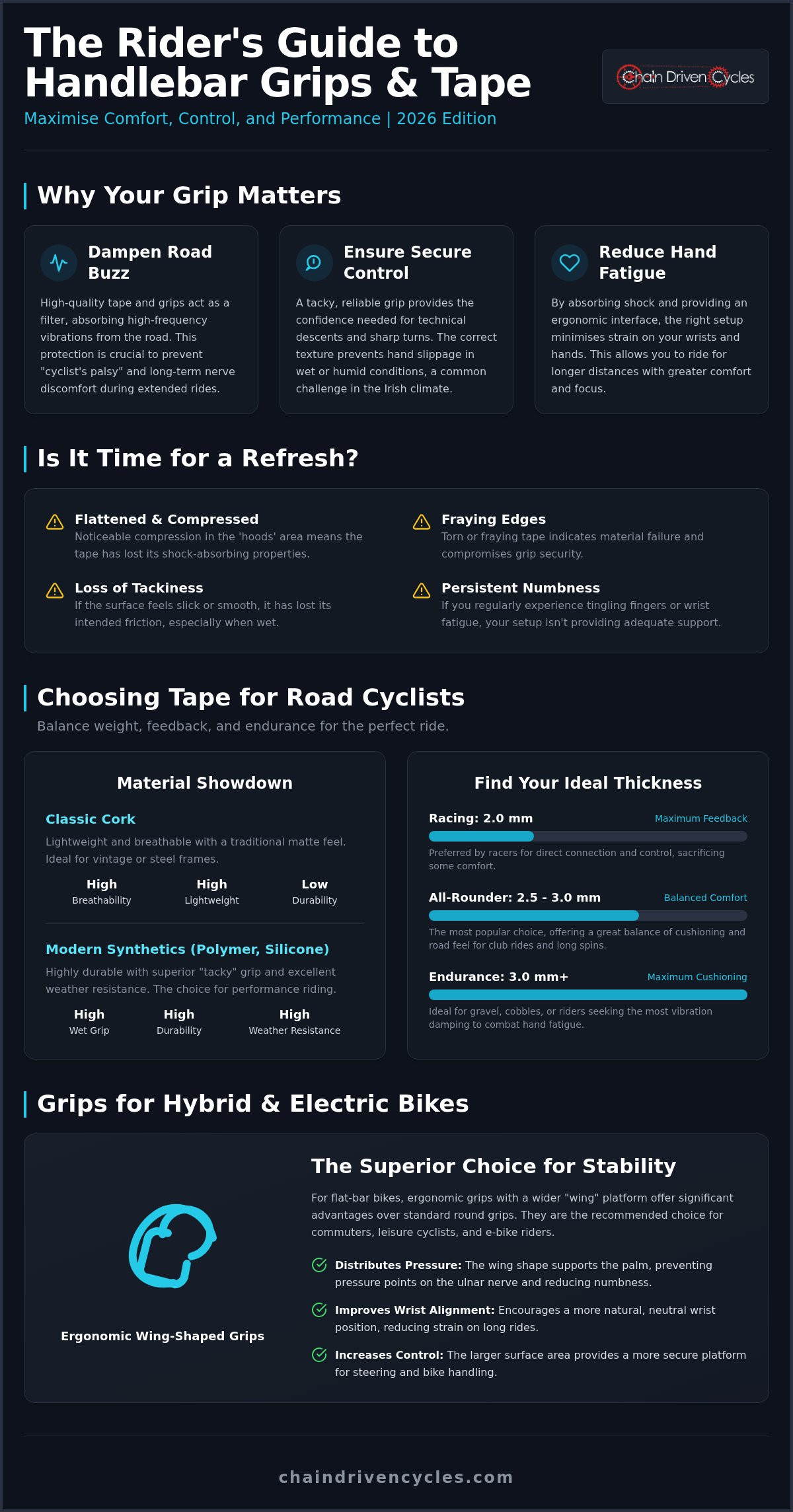
- Learn to distinguish between 2mm racing tapes and 3mm plus endurance options to match your specific riding style and distance requirements.
- Explore why ergonomic wing-shaped grips are the superior choice for stability and comfort on electric hybrid bikes.
- Evaluate which materials and textures, from tacky polymers to classic cork, offer the best security in damp or humid conditions.
- Gain the confidence to perform professional-grade installations using proven wrapping methods for a sleek and lasting finish.
The Importance of Grip: Comfort, Control, and Performance
Your hands are two of just three primary contact points on a bicycle. Whilst we often obsess over frame geometry or gear ratios, the interface between your palms and the bars dictates your actual riding experience. Selecting the right handlebar tape and grips is a fundamental exercise in cycling ergonomics. It isn't merely about aesthetics; it's about managing the biomechanical stresses of the sport. A fresh wrap of high-end tape is the ideal companion for premium road bikes like a Wilier Triestina or Bottecchia, ensuring the touchpoints match the technical quality of the frame.
High-frequency vibrations from the road, commonly known as "road buzz", travel directly through the fork and stem into your wrists. Without effective damping, this constant oscillation can lead to Ulnar neuropathy, often called cyclist's palsy. The right material acts as a high-performance filter, absorbing these shocks before they reach your nerves. Beyond comfort, a secure grip provides the friction necessary for confidence during technical descents. When you're hitting 50 kilometres per hour on a winding road, you need to know your hands won't slip if you hit a sudden bump or encounter a wet patch. It's often the most affordable way to breathe new life into a bike that has seen better days, providing a professional, refreshed look that mirrors a showroom finish.
Anatomy of a Contact Point
A quality grip or tape is more than just a strip of foam. It typically consists of three layers: a core material for vibration damping, an adhesive or backing for stability, and an outer texture for weather-resistant friction. Modern handlebar tape and grips are engineered to work in tandem with various Bicycle handlebar components. For instance, an aerodynamic flat-top bar requires a thinner, more flexible tape to maintain its profile, whilst a traditional round bar might benefit from a thicker 3.5mm gel-backed wrap. The core material, often a high-density EVA foam or a silicone gel, provides the structural foundation. This is followed by a thin adhesive strip that prevents the wrap from migrating under heavy torque. Finally, the outer surface provides the tactile finish, whether that is a classic microfibre, a tacky polymer, or a natural cork blend.
Signs You Need an Upgrade
You should inspect your cockpit regularly for signs of degradation. Look for compression in the "hoods" area where you spend most of your time, as flattened tape loses its ability to absorb shock. Fraying edges or a loss of tackiness are clear indicators that the material's structural integrity has failed. In some cases, old tape can become a hygiene issue, as sweat and road grime saturate the fibres over time. If you find yourself experiencing persistent hand numbness or wrist fatigue, it's a sign your current setup isn't providing the support you need. Refreshing your cockpit is a cost-effective way to make a seasoned bike feel brand new again. For those looking to overhaul their entire setup, our 10-month payment plan can help manage the cost of a full professional refresh including installation through our bicycle repair services.
Choosing the Right Handlebar Tape for Road Cyclists
Selecting the right interface for your drops is a decision that balances weight, tactile feedback, and endurance. For owners of Wilier road bikes, the tape needs to match the frame's racing pedigree whilst offering enough compliance for long days in the saddle. The market for handlebar tape and grips has evolved significantly, moving beyond simple foam to multi-layered technical fabrics designed for specific riding conditions.
Classic Cork vs. Modern Synthetics
Traditional cork remains a favourite for many purists due to its natural, matte feel and excellent breathability. It's incredibly lightweight and provides a classic aesthetic that suits vintage or steel frames. However, cork can become brittle over time and lacks the "tacky" finish that modern riders often demand. High-performance road bikes now frequently utilise polyurethane or microfibre synthetics. These materials are far more durable and offer superior weather resistance, which is vital for surviving a typical Irish winter. When browsing top-rated handlebar tape, you'll notice that silicone-based options are also highly regarded for their ability to maintain grip even when completely saturated by rain or sweat.
Finding Your Ideal Thickness
The thickness of your tape, usually measured in millimetres, dictates the level of "road feel" you experience. Most manufacturers offer options ranging from 2mm to 4mm. A 2mm tape is the standard for racing; it provides a slim profile and direct feedback from the front wheel, allowing for precise handling. In contrast, endurance riders often prefer 3mm or thicker options to provide a more substantial cushion against fatigue. Whilst double-wrapping bars was once a common sight in the pro peloton for rough cobbles, modern gel-backed tapes have largely made this practice obsolete. These advanced tapes provide the shock absorption of two layers without the unnecessary bulk or weight. If you're unsure which thickness suits your riding style, you can browse our full range of handlebar tape and grips to compare the latest technical specifications.
Tackiness is another crucial factor, especially for cyclists who prefer not to wear gloves. A high-traction surface ensures your hands stay planted during high-torque climbs or sudden sprints. Many modern polyurethane tapes feature a laser-etched pattern that increases friction without feeling sticky to the touch. This balance of comfort and security is what separates professional-grade equipment from budget alternatives. Whether you're refreshing a dedicated racing machine or a winter trainer, choosing a material that aligns with your typical mileage will transform your connection to the bike.
Selecting Ergonomic Grips for Hybrid and Electric Bikes
Whilst road cyclists benefit from multiple hand positions on drop bars, those riding flat-bar bikes often remain in a fixed position for the duration of their journey. This static posture places consistent pressure on specific areas of the palm, making the selection of handlebar tape and grips a vital consideration for daily commuters and leisure riders alike. The evolution of grip technology has moved towards task-specific designs that cater to the unique weight distribution of modern frames, including the advanced electric mountain and gravel bikes designed by Velduro.
Material choice is your first line of defence against hand fatigue. Dual-density rubber is the industry standard, featuring a hard internal sleeve for structural integrity and a softer, textured outer layer for comfort. Silicone grips have gained popularity for their exceptional vibration damping and lightweight profile, though they require a clean surface for a secure fit. For riders with larger hands, choosing a grip with a wider diameter prevents the "clawing" sensation that leads to forearm pump, whilst those with smaller hands should opt for a slimmer profile to ensure full control over brake levers and shifters.
For the modern commuter, security is paramount. Lock-on grips utilise one or two aluminium collars that bolt directly onto the bar, ensuring the grip cannot rotate even in torrential rain. This eliminates the dangerous "throttle grip" effect where the material slips under torque. In contrast, slip-on foam or silicone grips offer a lighter weight and a more uniform cushion but can be difficult to install without compressed air or hairspray. If you find your current setup shifting during rides, a professional upgrade through our bicycle repair services can ensure a permanent, secure fit.
Ergonomic Support for Long Rides
The rise of electric hybrid bikes has accelerated the demand for "winged" or flared grips. These designs feature a widened platform that supports the heel of the hand, effectively redistributing pressure away from the ulnar nerve. This prevents the tingling and numbness often associated with long-distance trekking. Modern ergonomic grips are also designed to integrate seamlessly with e-bike controllers and trigger shifters, ensuring that your thumb has easy access to power modes without compromising your hold. Whilst traditional bar ends have become less common, integrated versions still offer a secondary hand position for climbing, providing a welcome change in posture during extended tours. For those interested in seeing how these components fit on the latest models, you can visit Go Cyclone to explore a wide selection of e-bikes and accessories.
Choosing the right handlebar tape and grips involves more than picking a colour that matches your frame. You must weigh tactile feel against the practicalities of your local environment. Texture is key. For those riding in variable climates, the surface finish dictates how much control you retain when the weather turns. Suede-effect tapes offer a luxurious, soft feel in the dry; however, they can become heavy and waterlogged during a downpour. Knurled or diamond-pattern textures provide mechanical grip by creating channels for water to escape, ensuring your hands don't slide during heavy braking.
Texture and All-Weather Control
The "tackiness" of a material is its most vital safety feature. High-performance polymers often feature a sticky outer layer that works in tandem with cycling gloves to provide a locked-in sensation. This is particularly important for technical descents where sweat or rain can compromise your hold. Whilst smooth finishes are easier to wipe clean, they often require a tighter hand squeeze to maintain position, which leads to premature fatigue. In the height of summer, breathable microfibre options help wick moisture away from the palms, keeping your hands cool and preventing the "slimy" feel that affects cheaper rubber compounds.
Durability and Maintenance
Durability often comes with a slight weight penalty, but for most riders, the trade-off is worthwhile. Lightweight foam tapes are excellent for hill-climb specialists, yet they lack the resilience needed for daily use. Longevity is what separates professional-grade equipment from entry-level alternatives. UV resistance is essential; cheaper plastics often become brittle and crack after prolonged exposure to sunlight. You should also consider how easy it is to maintain your cockpit. Synthetic materials are generally the best choice for those who ride year-round, as they can be scrubbed clean after a muddy winter spin without losing their structural integrity. It's also wise to periodically peel back a section of tape to inspect for salt corrosion from sweat, which can oxidise aluminium bars if left unchecked.
Investing in premium contact points is a logical step for any serious cyclist. Whilst high-end components carry a higher initial cost, their durability and superior performance often provide better value over thousands of kilometres. If you're looking to refresh your entire cockpit with professional-grade gear, you can browse our curated collection of premium handlebar tape and grips. Our 10-month payment plan makes it easier to manage the cost of high-performance upgrades, ensuring your bike remains in peak condition regardless of the season.
Maintaining Your Cockpit: Installation and Care
A professional finish on your handlebar tape and grips is the hallmark of a well-maintained machine. Whilst it's tempting to rush the process, a poorly executed wrap leads to gaps, bunching, and premature wear. Achieving that "pro-mechanic" look requires patience and a methodical approach to tension and direction. Even the highest quality materials will fail to perform if they aren't secured correctly to the bars.
The Art of the Perfect Wrap
Start at the bar end and always wrap from the bottom up. You should move from the outside of the bar towards the stem. This ensures the overlapping edges face down, which prevents your hands from "rolling" the tape back and causing it to uncurl during use. Maintain consistent tension throughout the process. If you pull too lightly, the tape will migrate under pressure; pull too hard, and you risk snapping the delicate foam or polymer core. Aim for a consistent 25 percent overlap to ensure uniform cushioning across the entire bar.
Handling the area around the levers is often the most challenging part of the job. Most modern kits include "cheater strips" to cover the lever clamps, but the "figure of eight" method provides a much cleaner profile without unnecessary bulk. This technique involves looping the tape around the lever body in a specific pattern to ensure no metal or carbon remains exposed. Once you reach the top of the bars, cut the tape at a sharp angle so the final wrap is perpendicular to the stem. Secure it with high-quality finishing tape for a sleek, flush result that won't peel in the heat.
Grip and Tape Longevity
Regular maintenance significantly extends the life of your contact points. For synthetic handlebar tape and grips, a simple solution of warm water and mild dish soap is usually sufficient to remove sweat and road grime. You should avoid harsh degreasers, as these can strip the "tacky" coating from high-performance polymers, leaving them slippery. Periodically check your bar-end plugs to ensure they are tight. A loose or missing plug is a significant safety hazard that can cause serious injury during a crash; it should never be ignored.
If your bike features fully integrated internal cable routing or electronic shifting, a cockpit refresh can be surprisingly complex. In these instances, booking a professional bike repair ensures your tape is installed without interfering with hydraulic lines or internal wiring. Whether you're preparing for a summer of sportives or winter commuting, the right setup makes all the difference. Explore our full range of handlebar tape and grips to find your perfect match and give your bike the professional finish it deserves.
Transform Your Connection to the Road
Selecting the ideal interface for your bike is one of the most effective ways to improve both comfort and control. It's a fundamental contact point. You've seen how the right thickness and material can eliminate road buzz, whilst ergonomic designs protect your hands during long-distance efforts. Upgrading your cockpit setup is more than a cosmetic refresh; it's a commitment to your long-term endurance and safety. Every millimetre counts. Every ridge of texture plays a role in how you handle technical corners and steep gradients.
We offer over 33 high-performance options in stock to ensure you find the perfect match for your riding style. If you're refreshing your entire cockpit, our 10-month payment plan makes it easier to manage costs. Our expert technicians are also available for professional installation at our service centres. Browse our full collection of premium handlebar tape and grips today to find your ideal setup. Your hands will thank you on the next long climb, and your bike will look as sharp as it feels.
Frequently Asked Questions
How often should I replace my handlebar tape or grips?
You should replace your handlebar tape or grips every six to twelve months, or sooner if you notice visible wear, compression, or a loss of tackiness. Regular riders might find that sweat and road grime degrade the material faster than expected. If the padding feels flat or you experience increased vibration, it's time for an upgrade. Keeping these contact points fresh ensures optimal comfort and control during every ride.
Can I use road bike handlebar tape on a hybrid bike?
Yes, you can use road bike tape on a hybrid bike, though it's typically used to wrap bar ends rather than the entire flat bar. Most hybrid riders prefer dedicated ergonomic grips for the primary hand position. However, if you have a custom setup or use bar extensions, high-quality tape provides excellent vibration damping and a customisable diameter that some cyclists find more comfortable than traditional rubber or foam grips.
What is the best material for preventing hand numbness whilst cycling?
Silicone and gel-backed polyurethane are the most effective materials for preventing hand numbness. These compounds offer superior shock absorption by filtering out high-frequency road buzz before it reaches your nerves. For flat-bar riders, ergonomic winged grips are the best choice as they redistribute pressure away from the ulnar nerve. Combining the right handlebar tape and grips with a proper bike fit is the most reliable way to eliminate persistent tingling.
Is lock-on grip better than slip-on for an electric bike?
Lock-on grips are generally better for electric hybrid bikes because they provide a mechanical connection that prevents slipping. Given the higher speeds and torque associated with e-bikes, a secure interface is essential for safety. Slip-on grips can rotate over time, especially in wet weather, which can be dangerous. Lock-on designs use aluminium collars to bolt the grip firmly in place, ensuring total reliability regardless of the terrain, weather conditions, or riding style.
Do I need special tools to install new handlebar grips?
Most modern lock-on grips only require a standard 2.5mm or 3mm Allen key for installation. This makes them much easier to fit or replace than traditional slip-on versions. If you are installing slip-on grips, you might need compressed air or a lubricant like hairspray to slide them onto the bar. For a guaranteed professional finish, our bicycle repair services can handle the installation for you at any of our national service centres.
How do I choose between 2mm and 3mm handlebar tape?
Choose 2mm tape if you prefer a direct, racing feel with maximum feedback from the road. This thinner profile is favoured by competitive cyclists who want a slim grip for precise handling. If you prioritise comfort for long-distance endurance rides, 3mm or thicker tape is the better option. The extra millimetre provides significantly more cushioning, which helps to reduce hand fatigue and manage vibrations over rougher surfaces or unpaved rural paths.
Can I wash my handlebar tape if it gets dirty or greasy?
You can wash most synthetic handlebar tape and grips using a soft cloth and a mild solution of dish soap and warm water. This removes sweat salts and road grime that can make the surface slippery. Avoid using harsh chemical degreasers or pressure washers, as these can damage the adhesive backing or strip away the tacky outer coating. Regular cleaning maintains the material's friction and keeps your cockpit looking professional and refreshed.
Are bar-end plugs necessary or just for decoration?
Bar-end plugs are a critical safety component, not just a decorative finish. They seal the ends of the hollow handlebar, preventing the metal or carbon tube from acting like a punch in the event of a crash. Most cycling events and clubs won't allow you to participate if your plugs are missing. Always ensure they are securely fitted to protect yourself from serious injury during an accidental impact or a sudden fall.