



Using a Road Bike for a Charity Cycle: Gear and Training Tips
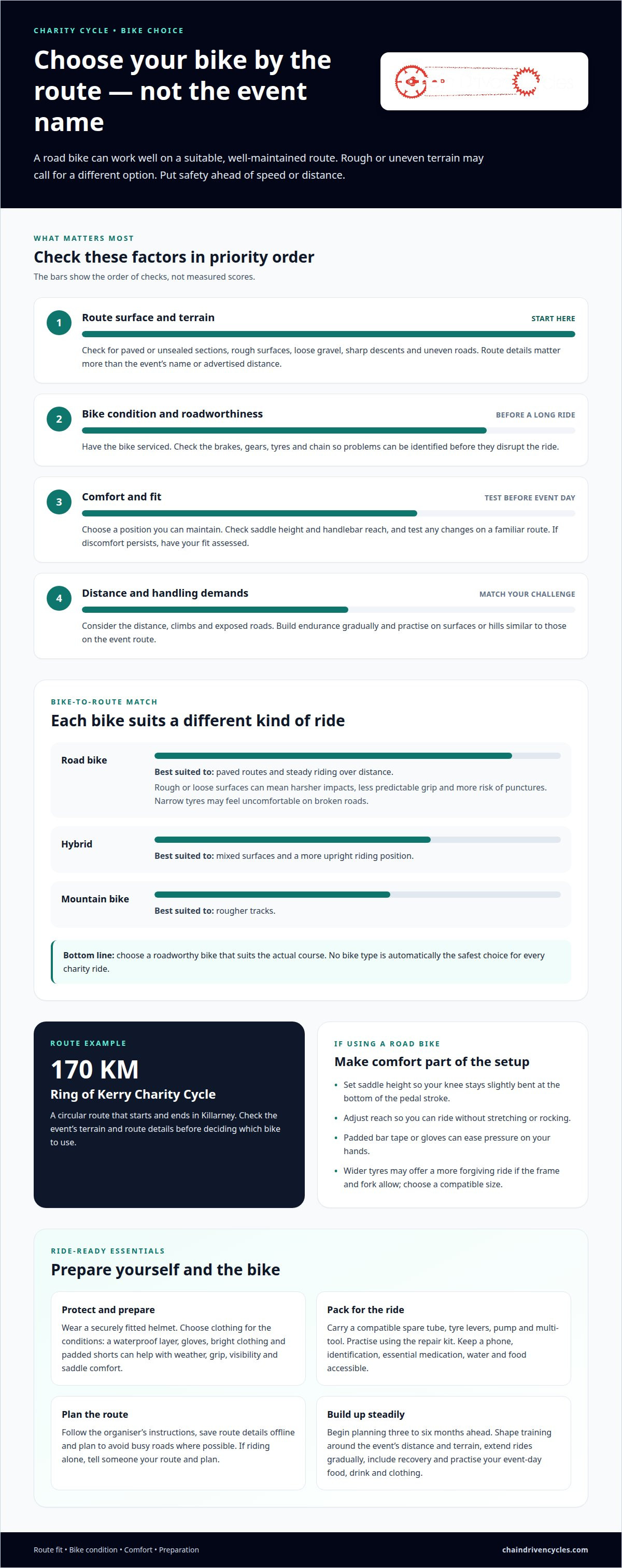
A road bike isn’t automatically the safest choice for a charity cycle. Using a road bike for a charity cycle event can work well when the route suits the bike and it’s in good condition; rough or uneven terrain may call for a different option. Before a long ride, arrange a bike service, wear a helmet and plan a route that avoids busy roads where possible.
Put safety ahead of speed or distance. The right preparation depends on the route, your bike’s condition and how gradually you build up your riding.
This guide explains how to assess whether a road, hybrid or mountain bike suits your challenge, what equipment to prepare and how to structure your training. It also covers practical ways to make the ride more manageable, from route planning to checks before the event.
Key Takeaways
- Match your bike to the route and terrain; a road bike is not automatically the safest option for every charity challenge.
- Have your bike serviced before a long ride, wear a helmet and prepare clothing and essentials for the conditions.
- Start planning your training three to six months ahead, building distance steadily around your current fitness and the event route.
- Use a comfortable riding position you can maintain, and address fit issues before they become a problem on a long day in the saddle.
Essential bike gear and clothing
Start with the essentials that protect you and prepare your bike for the route. Macmillan advises wearing a helmet and having your bike serviced before a long ride. Check that the helmet sits securely without shifting when you move your head. A pre-event service can identify problems with the brakes, gears, tyres or chain before they disrupt your ride.
Choose clothing for the conditions and the time you’ll spend riding. A cycling jersey with pockets keeps small items close, while padded shorts can reduce saddle discomfort. Bring a waterproof layer for changeable Irish weather and wear gloves for grip and comfort. Bright clothing helps you stand out on the road, particularly when cloud or rain reduces visibility.
Pack a compact repair kit that suits your bike: a compatible spare tube, tyre levers, a pump and a multi-tool. Practise using them before event day so a puncture doesn’t catch you unprepared. Carry a phone, identification and essential medication in a secure pocket or saddle bag. Keep water accessible, and plan regular opportunities to eat and drink on longer routes.
Read the event organiser’s instructions before packing. They may explain what participants should carry, where support is available and how the route is marked. Save route details offline, and tell someone your plan if you’re riding alone. Macmillan advises planning routes carefully and considering alternatives to busy roads. For a solo challenge, arrange for friends or family to meet you along the route, or make sure someone knows your route and is waiting at the finish.
- Before setting off: check the brakes, tyres, chain and lights.
- Pack: a repair kit, water, food, phone and weather-appropriate clothing.
- On the day: follow event instructions and adjust layers as conditions change.
Planning training
Begin planning three to six months in advance, then shape your rides around the event’s distance and terrain. Find out whether the route includes long climbs, exposed roads or rough surfaces. These details affect how much time you spend building endurance, practising hill efforts and getting comfortable on your bike. If the route information changes, adjust your training rather than trying to make every ride harder.
Build a regular routine around your current riding and weekly commitments. Begin with manageable rides, then gradually extend one ride to improve endurance. Keep other outings comfortable enough to practise steady pacing and relaxed handling. Rest days matter too, giving your body time to recover. If you miss a session, continue with your plan instead of cramming extra distance into the next ride.
A simple target can make training easier to organise. One charity-cycle supporter set a goal of riding 100 miles in one month, divided into 25 miles each week. That example shows how a larger aim can become a series of achievable weekly rides. Your own distances should reflect your starting point and event demands. Record each ride’s distance and how it felt, so you can spot when effort or recovery needs adjusting.
Practise your event-day routine before the challenge. Use a training ride to test your clothing, food and drink, and notice how your body responds to a longer outing. Include climbs or road surfaces similar to the event terrain. If you’re riding with friends, practise together and agree on a conversational pace. You’ll learn how the group handles junctions, hills and changes in speed.
As the event approaches, prioritise consistency over a last-minute increase in distance. Keep familiar rides in your schedule and allow time to recover before the start. A gradual plan gives you room to build confidence, assess your progress and arrive prepared.
Road, hybrid and mountain bike suitability
Choose your bike by matching its strengths to the route surface, distance and handling demands. In Ireland, charity rides can include different road conditions, so assess the course before deciding.
Comparing bike suitability
A road bike suits paved routes and steady riding over distance. A hybrid offers a more upright position and can handle mixed surfaces, while a mountain bike is suited to rougher tracks. The Ring of Kerry Charity Cycle follows a 170 KM circular route that starts and ends in Killarney. Check the event’s terrain and route details, rather than choosing by the event’s iconic status alone. The right bike is roadworthy and suitable for the actual course.
Road bike route risks
Using a road bike on rough or loose surfaces can mean harsher impacts, less predictable grip and more risk of punctures. Narrow tyres may feel uncomfortable on broken roads, while loose gravel can affect cornering. A road bike can still suit a paved event, but check the route for unsealed sections, sharp descents and uneven surfaces. These details matter more than the event’s name or advertised distance.
Adapting a road bike for comfort
For rough roads or longer distances, start with the bike’s contact points: saddle, handlebars and pedals. Check saddle height and handlebar reach so you can pedal without rocking or stretching. Padded bar tape or gloves can ease pressure on your hands. If the frame and fork allow, wider tyres may provide a more forgiving ride; choose a size compatible with the bike. Make changes gradually and test them on a familiar route before event day. If discomfort persists, have your fit assessed rather than pushing through it.
What bike fit and riding position are best for a long charity cycle?
A good fit lets you pedal smoothly without reaching, rocking or tensing up. Start with the saddle: at the bottom of each pedal stroke, your knee should remain slightly bent. If your hips rock from side to side, the saddle may be too high. If your knees feel cramped, it may be too low. Make small adjustments, then assess how your legs and hips feel on a familiar ride.
Next, check your reach to the handlebars. Your elbows should be relaxed, not locked, and your shoulders shouldn’t feel pulled forwards. If you have to stretch to reach the brake levers, the handlebar position may need adjusting. If your back or neck becomes uncomfortable, note when it starts and whether changing hand position helps. Drop handlebars offer several hand positions, but each should feel controlled and comfortable.
Set up the controls so you can brake and change gear without straining your hands. Test the levers from the position you expect to use most on the route. Keep your wrists relaxed and avoid gripping the bars tightly. Padded gloves and bar tape can ease pressure, while a saddle that suits your anatomy can support comfort over longer distances. No single saddle shape suits every rider.
Test adjustments on progressively longer rides before the charity cycle. Change one thing at a time, such as saddle height or handlebar reach, so you can identify what improves comfort. Persistent numbness, rubbing, knee discomfort or hand pressure are reasons to reassess the setup rather than push through. A professional bike fit can assess your position, contact points and movement together to help identify adjustments that suit your body and riding style.
Before event day, repeat a familiar ride in your planned clothing and equipment. Check that you can reach the brakes, shift gears and maintain a relaxed position throughout. If discomfort returns, arrange a bike-fit assessment before committing to the full route.
Chain Driven Cycles: Wilier Road Bikes
Chain Driven Cycles offers premium road bikes for riders considering using a road bike for a charity cycle event. If your current bicycle needs attention before the big day, expert bicycle repair services can help address any mechanical issues. For a ride where you would rather not use your own machine, cycle hire is another practical option. The right choice depends on the route, your riding position and how the bicycle feels over longer distances. A traditional road bike may suit a paved course, while mixed or rough surfaces can call for a different setup. Consider these factors alongside your training and comfort needs before deciding. Contact Chain Driven Cycles to discuss available models, cycle hire or bicycle repairs for your charity cycle.
Make your next ride count
Choose your next step based on the ride you want to complete, not an idealised setup. A charity challenge gives your training a clear purpose, while regular practice helps you learn what feels sustainable over distance. If you’re still deciding whether using a road bike for a charity cycle event suits you, focus on the route and your comfort, not speed alone.
Chain Driven Cycles sells Wilier Road Bikes and Bottecchia bicycles for riders choosing a bike for their challenge, as well as Assioma Power Meter Pedals. The right option depends on your riding and goals, so take time to discuss what you need before deciding.
Contact Chain Driven Cycles to talk through your charity-cycle plans and available cycling options. Take the next step at your pace, then enjoy building towards a ride that matters to you.
Frequently Asked Questions
What can I do to make sure my cycle is safe?
Reduce avoidable risks by checking your controls and understanding the event arrangements before setting off. Test both brakes, confirm the gears shift cleanly and make sure the wheels are secure. At junctions, signal clearly and ride predictably rather than following another cyclist without checking. Read the organiser’s instructions for route markings and support points, and carry a charged phone in case plans change.
What cycling gear do I need to take?
Take equipment that supports visibility, communication and minor repairs. Front and rear lights can help you be seen in poor light, while a charged phone lets you access event details or call for help. Add identification, a small first-aid dressing and any personal medication you need. Keep essentials in a secure pocket or bag, and ensure nothing can move into the wheels while riding.
Is a road bike suitable for a charity cycle event?
Using a road bike for a charity cycle event can work well when the route is mainly paved and the bike feels comfortable over the planned distance. Smooth tarmac, for example, suits a road bike better than a route with extended loose gravel. Check the organiser’s route description for changes in surface and descents. If rough sections dominate, consider whether a bike designed for varied terrain would offer better control.
What type of bike is best for a charity cycle in Ireland?
The right choice depends on the event route, not simply where it takes place. A road bike suits paved routes; a hybrid can handle mixed surfaces, while a mountain bike is better suited to rougher tracks. For a course combining quiet roads and gravel lanes, prioritise stable handling and a comfortable position. Choose a bike you can control confidently on the surfaces the event actually uses.
How do I prepare a road bike for a charity cycling event?
Before using a road bike for a charity cycle event, check it in a consistent order. Inspect the frame and wheels for visible damage, then test the brakes, gear changes and steering. Confirm the tyres are properly seated and free of obvious cuts. Take a short test ride, listening for unusual noises and checking the handling. Resolve any mechanical issues before relying on the bike for the event.
What tyres, gearing and equipment are recommended for an Irish charity cycle?
Choose tyres that fit your frame and suit the route; rougher roads may call for a more forgiving tyre than smooth tarmac. Select gearing that lets you pedal comfortably on the event’s climbs rather than forcing a gear that feels too hard. Carry a compatible spare tube, tyre levers and a pump. Check that each item fits your bike before the ride, especially the spare tube and repair tools.