



Turbo Trainer vs Exercise Bike: Compare Cost and Space
An exercise bike may seem like the simpler option, but it isn’t automatically the better fit. In the turbo trainer vs exercise bike comparison, the key difference is that a turbo trainer attaches to your own bicycle, while an exercise bike is a standalone machine. Choose a trainer to ride your familiar bike indoors; choose an exercise bike if you want a dedicated setup that doesn’t use a separate bicycle.
Both support indoor training, but they differ in how they fit your bike, your home and your routine. Overall cost depends partly on what you already own and whether you want interactive training features. This guide compares compatibility, setup, space and convenience, then outlines the cost factors to consider in Ireland. Use the decision guide to match your available room, training goals and preferred riding experience.
Key Takeaways
- A turbo trainer lets you ride your own bicycle indoors, while an exercise bike is a standalone option that doesn’t need a separate bike.
- Smart trainers can connect with indoor training software to adjust resistance, bringing structured sessions and changing effort levels into your home.
- Compare the full setup, not just the equipment: your existing bike, available floor space and how often you’ll ride all affect which option makes sense.
- Consider how much convenience matters day to day: a trainer needs setting up with your bike, while an exercise bike stays ready in its dedicated spot.
What Is a Turbo Trainer?
A turbo trainer holds your own bicycle in place so you can ride indoors. Smart models connect to training software, which can change resistance during a session. Some can simulate gradients of over 20%, making a virtual climb feel harder as the route rises. This creates changing effort, though it doesn’t reproduce every sensation of outdoor road surfaces.
For interactive indoor cycling, smart trainers commonly use ANT+ and Bluetooth, with Wi-Fi increasingly common. Compatible platforms can guide structured workouts; ERG mode adjusts resistance to help you hold a target effort. App-based workouts may be available with compatible smart trainers, depending on the trainer and software. A standard trainer instead uses manual resistance.
The equipment also affects ride feel. A direct-drive trainer replaces the rear wheel and avoids tyre-to-roller contact, so it tends to be quieter than a wheel-on model. Wheel-on trainers press the rear tyre against a roller; manufacturers generally recommend a special hard-compound tyre to reduce wear and heat build-up. Prolonged use can wear the bicycle’s drivetrain, and wheel-on use can wear its tyres.
| Option | Resistance and realism | Best suited to |
|---|---|---|
| Standard turbo trainer | Manual resistance | Simple indoor riding |
| Smart trainer | App-controlled resistance and simulated gradients | Structured, interactive workouts |
| Exercise bike | Standalone indoor cycling | Riding without a separate bicycle |
Choose a smart trainer for app-led sessions and changing resistance; choose a standard trainer for straightforward indoor pedalling.
For a safer setup, secure the bicycle before riding and keep the trainer stable on the floor. Check the drivetrain and, with a wheel-on model, the tyre for wear, as prolonged sessions can increase both. Exercise bikes don’t use your bicycle’s tyres or drivetrain, but still need a stable position and routine equipment checks.
Compatibility with different bikes and cassettes
A turbo trainer uses your bicycle, so compatibility depends on its frame, rear wheel and drivetrain. A wheel-on model holds the rear tyre against a roller; a direct-drive model attaches after you remove the rear wheel. In either case, the trainer must secure the bike correctly and connect suitably with its gears.
For direct-drive indoor training, the cassette is central to compatibility. It needs to work with the bicycle’s drivetrain so the chain shifts across the sprockets. If you have more than one bike, compare their drivetrain setups before assuming they can use the same trainer. Road bikes and electric hybrid bikes can differ in fit and components, so the bike type alone doesn’t determine compatibility.
An indoor exercise bike is a standalone machine, so you don’t need a separate bicycle or a compatible cassette. Its resistance system is built in. A smart bike may offer connected workouts, while a basic indoor bike keeps the setup focused on pedalling. Rollers also use your own bicycle, but you balance on the moving drums rather than fixing the bike in place.
Are turbo trainers noisier than exercise bikes? Noise depends on the trainer design and the source of the sound: wheel-on models add tyre-to-roller contact, while direct-drive trainers avoid it. An exercise bike has no bicycle tyre on a roller, but its noise depends on its own resistance mechanism.
For a practical comparison, list the bikes you plan to ride, identify their drivetrain and cassette, then match those details to the trainer’s fitting requirements. If you’d rather ride without adapting your own bicycle, explore exercise bike options as a separate indoor setup.
Space, cost and convenience considerations
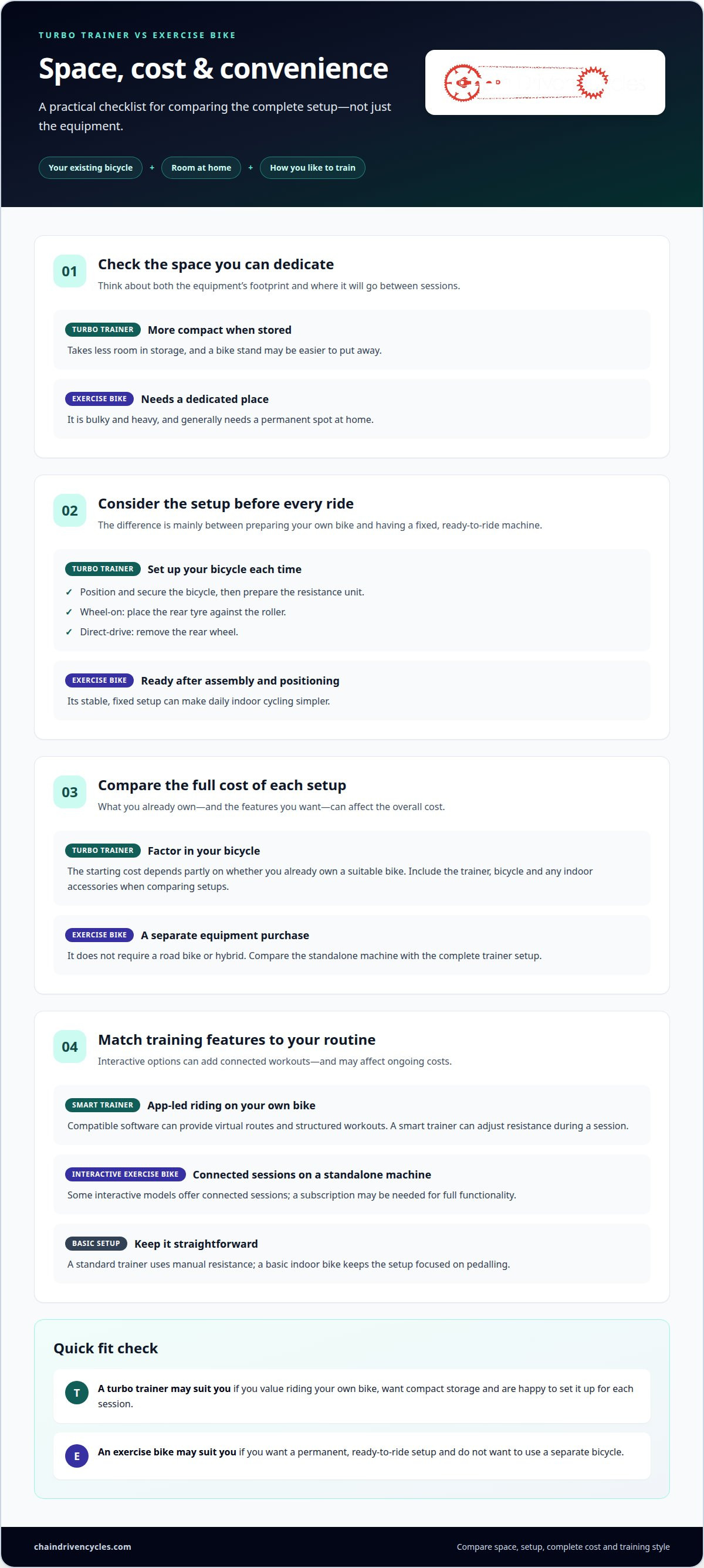
A turbo trainer uses your existing bicycle, so the starting cost depends partly on whether you already own a suitable bike. An exercise bike is a separate purchase, but doesn’t require a road bike or hybrid. Compare the complete setups: trainer, bicycle and any indoor accessories on one side; a standalone machine on the other. Interactive exercise bikes may also require an ongoing subscription for full functionality.
Space can decide the matter. An indoor bike is bulky and heavy, and generally needs a dedicated place at home. It stays ready after initial setup, which suits riders planning frequent sessions. A turbo trainer takes less room when stored, and a bike stand may be easier to put away. However, you’ll need to set up your bicycle each time you ride.
Setup affects convenience as well as floor space. With a turbo trainer, position the bicycle, secure it and prepare the resistance unit before pedalling. A wheel-on model needs the rear tyre against its roller; direct-drive requires removing the rear wheel. By contrast, an exercise bike is ready to ride once assembled and positioned. Its stable, fixed setup can make daily indoor cycling simpler.
Training style also shapes value. A smart turbo trainer connects to compatible software for virtual routes and structured workouts, while a basic trainer uses manual resistance. Some interactive exercise bikes also offer connected sessions, with subscriptions affecting ongoing costs. If improving fitness means following app-led intervals, compare the features and recurring charges with how often you’ll use them.
Use this decision process: measure the floor area you can dedicate, then consider whether the equipment must be stored after each session. Next, factor in the bicycle you already own and the interactive features you want. A smart turbo trainer can make sense when you value riding your own bike and compact storage; choose an exercise bike when a permanent, ready-to-ride setup matters more.
What a turbo trainer is and how it works
A turbo trainer turns your bicycle into a stationary indoor setup by applying resistance to its rear wheel or drivetrain. The trainer stays in place while you pedal, letting you train at home in winter or on wet days. Resistance may be adjusted manually on a standard model, or electronically on a smart trainer connected to compatible software.
There are two common ways to secure the bicycle. A wheel-on model holds the rear wheel and presses its tyre against a drum. A direct-drive model attaches to the bike after you remove the rear wheel. With either type, check that the bicycle is firmly secured before riding. A front wheel block is normally recommended to raise the front wheel to its usual height.
For a wheel-on setup, follow these steps:
- Place the trainer on a stable surface and position the rear wheel at its resistance unit.
- Secure the bicycle, then adjust the unit until it contacts the tyre.
- Check the front wheel position and your bike’s stability before pedalling.
This setup helps keep your riding position familiar because you use your own saddle, handlebars and pedals. Comfort still depends on bike fit and session length. Prolonged indoor use can wear the drivetrain; wheel-on models can also wear the tyre. For wheel-on riding, a special hard-compound tyre is generally recommended to reduce wear and heat build-up.
A smart trainer adds a connected device to the setup. Compatible indoor software can control resistance, changing the effort as a virtual route rises or falls. This ability supports structured sessions without manually adjusting resistance mid-workout. A standard trainer keeps the mechanism simpler, with the rider controlling resistance directly. Both allow indoor riding whatever the weather. If you prefer a standalone setup without attaching your bicycle, explore exercise bike options.
Chain Driven Cycles: Bottecchia bicycles
Chain Driven Cycles can help if choosing an indoor setup has highlighted a gap in your cycling equipment. If you want to ride your own bike on a turbo trainer, explore Bottecchia bicycles to elevate your ride. Assioma power meter pedals may also suit riders focused on measuring their effort during training.
If you're looking for a bike for commuting or everyday rides instead, Electric Hybrid Bikes offer a different direction. Bike Hire is another option for getting out on a bicycle without making a purchase. The right choice depends on how you plan to ride indoors and outdoors, and what equipment you already have.
Contact Chain Driven Cycles to discuss which option fits your cycling plans.
Choose a setup that supports your next ride
The right indoor setup is the one that fits how you want to train. Before deciding, picture a normal week: where you’ll ride, how much time you can give each session, and whether you want your indoor routine to connect with your outdoor cycling. This practical test can make the turbo trainer vs exercise bike choice clearer than focusing on equipment features alone.
Give yourself a clear next step. If a standalone machine suits your home and routine, explore the available exercise bike options. If you’re still weighing up the wider setup, contact Chain Driven Cycles to discuss your cycling plans and the equipment that may suit them.
Choose the option that makes it easier to ride consistently, then build your indoor training around the goals that matter to you.
Frequently Asked Questions
Smart or non-smart?
Choose a smart trainer if you want your training device to communicate with an app; choose a non-smart model for simpler resistance control. For example, a rider following planned intervals may benefit from app-controlled changes, while someone riding at a steady effort may prefer manual adjustment. Consider whether you’ll use connected workouts regularly, since extra interaction adds little value if you ride without training software.
What Is an Exercise Bike?
An exercise bike is a standalone stationary bicycle designed for indoor riding. It has its own frame, saddle, handlebars and resistance system, so you don’t need to attach your road bike. For example, it can suit a household where different people want to exercise without changing the fit or setup of a shared outdoor bicycle. Models vary in their controls and connected training features.
What are the alternatives?
Bike rollers and spin bikes are alternatives to a turbo trainer or standard exercise bike. Rollers support the bicycle on rotating drums, so you balance while pedalling; they can suit cyclists practising smooth cadence. Spin bikes provide a dedicated indoor ride, often with manually adjusted resistance. For power-focused workouts, rollers’ typically fixed resistance may be less suitable than a smart trainer.
What is the difference between a turbo trainer and an exercise bike?
A turbo trainer uses your bicycle, whereas an exercise bike is a complete stationary machine. That difference affects more than storage: a trainer preserves the riding position and controls of your own bike, while an exercise bike provides a separate setup for indoor exercise. Consider whether a familiar bike feel matters or whether you’d rather keep outdoor and indoor equipment independent.
Turbo trainer vs exercise bike: which is better for home cycling workouts?
Neither option is automatically better for every home workout. A turbo trainer suits cyclists who want to train on their own bike and use compatible software for structured sessions. An exercise bike works well when you want a separate machine that stays ready for use. In a shared home, consider who will ride, whether bike fit matters and how much space can stay dedicated.
What equipment do I need to use a turbo trainer with my bike?
You need a compatible bicycle and turbo trainer, with the bike secured according to the trainer’s design. A wheel-on model uses the rear tyre against its resistance roller; a direct-drive unit attaches after the rear wheel is removed and needs a compatible cassette. A front wheel block is normally recommended to raise the front wheel. Check fit and drivetrain compatibility before setup.