



Signs Your Entry-Level Road Bike No Longer Fits Your Riding
Buying a bigger bike isn’t always the right upgrade. The clearest signs you’ve outgrown your entry-level road bike are persistent discomfort despite fit adjustments, less confidence on the roads you ride, components that struggle to keep up, or goals and performance needs that have changed. If the bike still suits your position and riding, targeted adjustments or repairs may be all you need.
It makes sense to wonder whether a new bike will solve the problem, especially when longer rides or tougher routes expose the limits of your current setup. The key is to separate issues a service or adjustment can address from limitations caused by the bike’s fit, design or equipment.
This guide explains what to look for in comfort, control, components, performance and racing goals. You’ll also learn why a different type of road bike may suit you better than simply choosing a larger frame, and how to recognise when your riding has outgrown your first racing bike.
Key Takeaways
- Persistent discomfort or reduced confidence can point to a fit or bike-design issue; identify which before deciding whether to size up or change bike type.
- Repeated drivetrain, brake or wheel problems may be a sign to weigh ongoing repairs against replacing the bike.
- If keeping pace on group rides or tackling climbs takes more effort than your progress warrants, your bike’s weight or setup may be holding you back.
- As your riding shifts towards racing or another discipline, look for a bike that suits those goals rather than assuming a bigger frame is the answer.
1. Tyre clearance, comfort and control
A narrow tyre can feel harsh on broken tarmac, while a wider tyre may add comfort, grip and control on varied Irish roads. Modern road frames can accommodate tyres wider than 32 mm, but the frame and fork set the available clearance. Wheel and tyre width should suit both the bike’s space and the surfaces you ride; a tyre that rubs the frame isn’t a workable upgrade.
Frame material alone doesn’t determine whether a bike suits your riding. Consider its position, tyre clearance and intended purpose together. If you want a more relaxed position and the option to ride fine gravel, an all-road bike may suit you better than a pure road bike. Riders who mainly cover smooth tarmac may prefer a different setup.
Persistent discomfort after adjustments, or a cramped or stretched position, can be among the signs you've outgrown your entry-level road bike. Back pain, numb hands or saddle soreness may point to a fit problem. A poor fit can contribute to fatigue and injury, so recurring pain doesn’t automatically mean you need a larger frame.
To distinguish a fit issue from a bike limitation, check whether adjustments improve your position and comfort. If discomfort persists, or the frame cannot accommodate the tyre width and riding position you need, the bike itself may be holding you back. Padded cycling shorts can improve saddle comfort, reduce chafing and wick away sweat, but they won’t correct a poor fit.
Before replacing or upgrading your bike, review your position, frame clearance and the roads you want to ride. If its design no longer suits those surfaces, that may be another sign you've outgrown your entry-level road bike. Consider whether you can handle a puncture on a ride: carrying a mini-pump and spare inner tube, then changing a flat tyre yourself, shows growing mechanical independence. These practical needs can help you decide whether adjustments or a different bike would serve you better.
2. Drivetrain, brakes and wheelsets
A beginner road bike can become frustrating as your riding changes. An inefficient drivetrain may make it harder to maintain a smooth cadence on climbs or longer rides. If gears skip, shifting becomes inconsistent or repairs keep recurring, have the cause assessed before assuming a new bike is the only solution. Worn components may be replaceable, but repeated replacements can make a complete upgrade worth considering.
Braking matters for control, particularly on hilly routes or wet roads. Stages Cycling says disc brakes provide more powerful, consistent braking than rim brakes in those conditions. That doesn’t mean every rider needs a different brake system. Consider whether your current brakes respond predictably and suit your routes. The RSA advises cyclists to keep their bicycles in perfect working order as a safety measure.
Wheel problems can also signal that a bike is struggling to meet your needs. Persistent issues, such as wheels that repeatedly need attention, deserve assessment alongside the drivetrain and frame. One repair doesn’t automatically mean the bike has reached the end of its life. Look at whether problems recur and whether several components need replacing.
Can worn or inadequate entry-level bike components create safety risks? Yes. Poorly functioning brakes or recurring mechanical problems can affect control, so address them before continuing to ride as usual. A helmet is important protective equipment, but it doesn’t replace a properly maintained bike.
For a clearer decision, note what needs repair, how often the same fault returns and whether the bike still handles your usual routes safely. A service can distinguish a worn part from a wider pattern of component problems. If your bike needs several replacements and still feels limiting, compare the cost and benefits of repairs with an upgrade. The right choice depends on the condition of the wheels, braking system and drivetrain, as well as the distances and terrain you now ride. Riding should feel controlled, not like a constant battle with your bike.
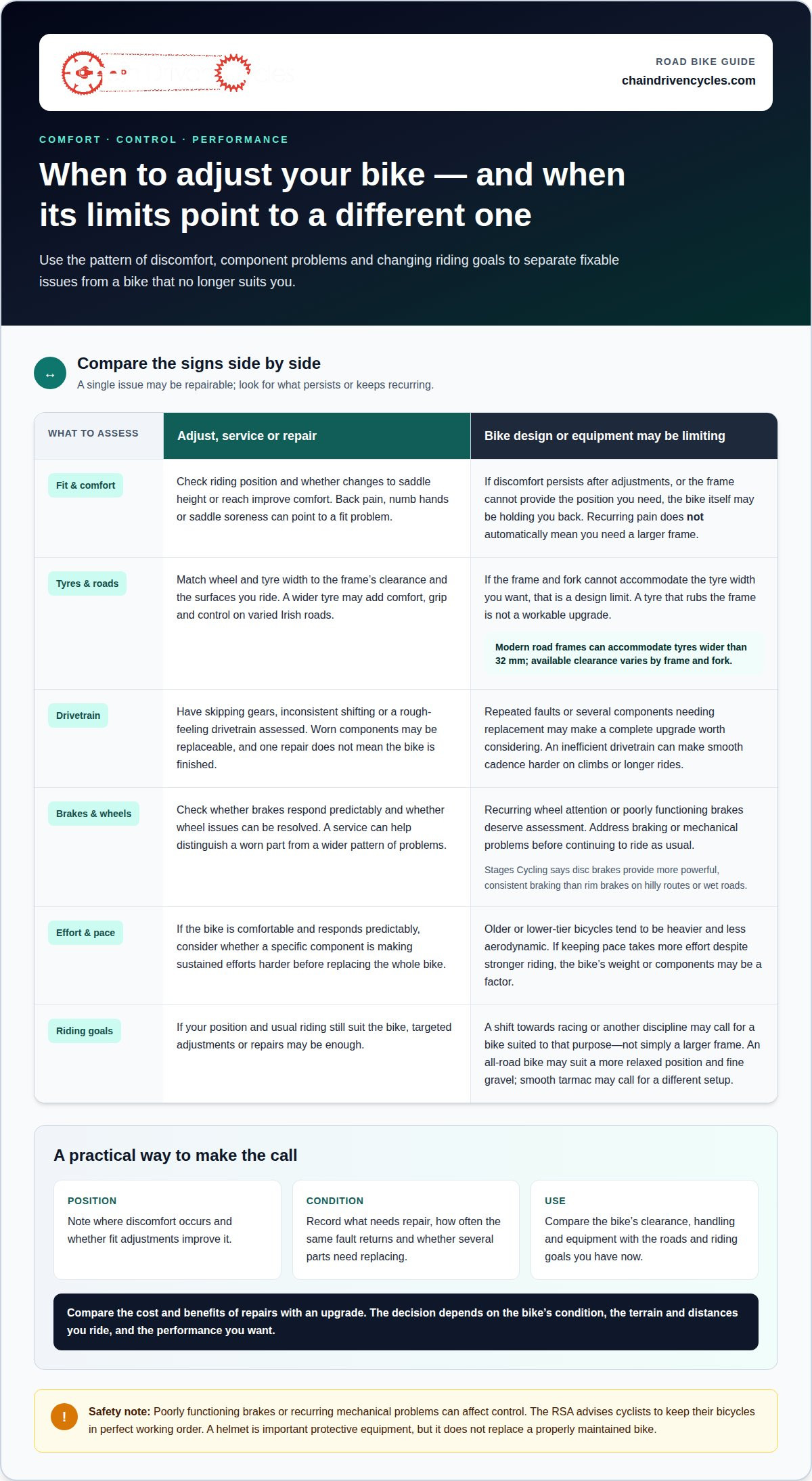
3. Outgrowing an entry-level bike’s performance
As your fitness improves, the same climb or group ride can reveal limits that weren’t obvious when you were a beginner. Older or lower-tier bicycles tend to be heavier and less aerodynamic, so keeping pace with other riders may take more effort. Finding a climb easier is a sign of progress; struggling to keep up despite stronger riding may point to the bike’s weight or components.
Before choosing an upgrade, check whether the limitation is performance or fit. If your saddle position is comfortable and the bike responds predictably, but its components make sustained efforts feel harder, the equipment may no longer match your riding. If discomfort changes with saddle height or reach, revisit the fit first. A bike suited to racing may not be right for relaxed cycling or a move towards mountain biking.
Is it cheaper to upgrade an entry-level road bike or buy a new one? Replacing one worn or limiting component can cost less than replacing the whole bike, while several needed changes can make a new bike more practical. Compare the parts that need replacing with the performance benefit each change would bring.
How much does a suitable next-step road bike cost in Ireland? The price depends on the frame, components and intended use, so there isn’t one figure that suits every rider. A bike for regular group racing may prioritise different features from one chosen for general road cycling. Decide what matters most, such as climbing, keeping pace or a more comfortable position, before setting a budget.
Use a simple assessment: identify where the bike holds you back, then separate fit issues from equipment limits. If the drivetrain, wheels or other components need attention, a repair assessment can help you decide whether targeted work makes sense. If your goals have shifted towards racing or mountain biking, consider whether a road bike remains the right purpose-built choice. Your height informs frame fit, but it doesn’t determine the performance you need.
4. Progressing after a first racing bike
Your first racing bike may have helped you build confidence, but your goals can change as your skills develop. Notice how you handle group rides: can you hold a steady line, respond to changes in pace and settle into an unfamiliar group? If those tasks now feel instinctive, you may be ready for rides that demand more from both you and your bike.
Race ambitions can change what matters in a bike. A rider focused on faster road racing may want a setup designed for that purpose, while someone drawn to fine gravel may prefer an all-road option. If downhill or mountain biking has caught your interest, a road bike probably isn’t the right tool for that discipline. Match your next bike to the riding you actually plan to do.
Before choosing, write down what your current bike handles well and where it feels mismatched. For example, note whether you want to race on paved roads, join longer group rides or explore different surfaces. Consider its handling and riding position, and how it responds when the pace changes. A lighter bike may appeal for racing, but weight alone won’t determine whether it suits your skills or goals.
Progress shows in the details off the bike, too. If you can plan clothing for changing weather, pack jersey pockets for a longer ride and manage food and equipment without disrupting your group, your riding routine has matured. Cycling shorts can help with saddle comfort, but new shorts won’t make a bike suitable for a different discipline. Use these examples to distinguish clothing or equipment upgrades from the decision to change bikes.
If your goals have shifted from casual road rides to racing, gravel or downhill, a bike designed for that discipline may be a more considered choice than simply replacing your first racing bike with a similar model. Start with the type of riding you want to do, then assess how its demands match your handling skills and current setup.
Chain Driven Cycles: Wilier Road Bikes
Chain Driven Cycles offers high-performance options for riders whose goals call for a more advanced road bike. If your riding has shifted towards regular group rides or racing, consider whether a new machine better suits your intended use, position and preferred roads. A bike change isn’t the only option: if a worn component is the main limitation, bicycle repairs may address it without replacing the whole bicycle.
Use your current bike’s comfort, handling and recurring maintenance needs to guide your decision. If you’re ready to explore a road-bike upgrade, contact Chain Driven Cycles to discuss your riding needs and find the ideal performance bicycle.
Choose your next step with confidence
Choose your next bike for the riding you want to do, not just the equipment you’ve been using. Recognising the signs you’ve outgrown your entry-level road bike can start a more deliberate decision: what rides do you want to look forward to, and what would make them more enjoyable?
You may need a different road bike, or a focused change to your current setup. Chain Driven Cycles sells Wilier Road Bikes and Bottecchia bicycles, as well as Assioma Power Meter Pedals for riders exploring power-based training. The right choice depends on what you want from cycling, not on upgrading for its own sake.
Talk through your riding goals and options with Chain Driven Cycles. A considered next step can help you spend more time enjoying the roads ahead.
Frequently Asked Questions
What are signs an entry-level road bike no longer fits your riding needs?
A bike may no longer suit you if the rides you want to do have changed, even if it still works well. For example, a bicycle used mainly for short spins may not be right for regular long-distance touring. Define your main use first, then assess whether the bike’s design supports it. A change in riding purpose can matter more than simply wanting newer equipment.
What are the common component limitations of entry-level road bikes?
Entry-level models can have heavier frames, less efficient drivetrains and less responsive brakes than bikes designed for more demanding riding. These differences may become more noticeable on challenging routes or when you’re trying to maintain a steady effort. Before replacing parts, have their condition and compatibility assessed together. This can help distinguish ordinary wear from a setup that limits the bike’s overall performance.
What improvements can a mid-range road bike offer over an entry-level model?
A mid-range bike may offer lighter components, a more efficient drivetrain and more responsive braking. Some newer designs also provide greater adjustability and ergonomic features that can help refine your riding position. The useful improvements depend on your priorities: a rider who trains regularly may value a different setup from someone seeking a more comfortable position for longer days in the saddle.