



Energy Gels for Cycling: How to Choose the Right Fuel in 2026
The most powerful energy gel isn’t necessarily the right one for your ride. A thick, concentrated pouch may suit one cyclist, while another prefers a more drink-like texture or a chewable option that feels easier to manage on the move. If bike hire is part of your plans, choose fuel with the ride and what you’re comfortable carrying in mind.
Labels such as isotonic, caffeine and electrolytes describe different features, so they don’t all answer the same fuelling question. This guide explains how to compare formats, ingredients and practical details, helping you choose options that suit your ride, taste preferences and personal tolerance.
We’ll look at how traditional and drink-like gels differ, what caffeine and sodium can tell you, and why texture and packaging matter on the bike. The options discussed include drink-like gels, caffeine and electrolyte products, gummies and jellies. Ride length and intensity can help guide your choice, but comfort matters too. Trying an unfamiliar option during training can help you learn what works for you before relying on it for a demanding ride.
Key Takeaways
- Compare gels by texture and format to find an option that’s practical to carry and use on your ride.
- Look beyond broad labels. Product descriptions can help you distinguish features such as caffeine or electrolytes.
- Use your ride and personal preferences to narrow the options, then consider how each product is presented and packaged.
- The collection includes 14 products, with examples ranging from drink-like gels to gummies and jellies.
- Once you know which features matter most, compare the available options and read the product details for the specific variant.
How to choose cycling energy gels that suit your ride
Energy gels are portable, carbohydrate-based sports fuel designed to be carried and taken during exercise. For cyclists, the option with the most features isn’t automatically the best fit. Start with the ride you’re planning, then consider format, ingredients and what feels comfortable to eat while moving. If you’re arranging bike hire Sligo, think about the practical demands of the ride when deciding what fuel to bring.
Ride length, intensity and conditions can all influence what feels appropriate, as can individual tolerance. There’s no single product or fuelling schedule that suits everyone. For a broader overview of how food, fluid and timing fit together, see Sports nutrition principles. Check the product description for specific features, and try an unfamiliar format during training rather than relying on it for the first time on a demanding ride.
What should you consider before choosing an energy gel?
Begin with the ride and how you’d prefer to fuel it. A cyclist who wants a quick, single-serve option may choose differently from someone who prefers to nibble gradually. Consider how easy a product will be to carry and open, and whether water will be available. If texture is a deciding factor, a drink-like format may appeal more than a thick gel.
Taste matters too. If you’re unsure whether gels suit you, consider flavour and consistency before settling on a style. The range discussed here includes drink-like High5 Aqua gels, as well as gummies and jellies, so there are alternatives to a conventional gel pouch. For a ride involving bike hire Sligo, choose a format you’d find straightforward to carry and use along the way.
Which gel features can make a difference on the bike?
Some products include caffeine, while others include electrolytes. These are features to compare, not automatic requirements for every cyclist. Your preferences, ride conditions and wider nutrition plan all matter. Read the current description for the exact product and variant, since details can differ. Don’t assume every flavour or format from the same brand has identical ingredients.
Single-serve gels provide an individual portion, while gummies and jellies offer a chewable format. Chewables may suit someone who’d rather chew than swallow a gel, though the practical choice depends on the rider and situation. Consider whether you’d be comfortable chewing while cycling, and read the product directions. Personal dietary or medical questions are separate from general product selection.
An isotonic gel is a more liquid, drink-like gel formulated to be taken without additional water. That description identifies its stated format, but it doesn’t tell you everything about flavour, texture or ingredients. Compare product details and consider what you’ll find easiest to use on the bike. Once you’ve identified your preferred format and features, you can narrow the options without relying on confusing jargon.
Energy gel formats explained: isotonic, drink-like and chewable options
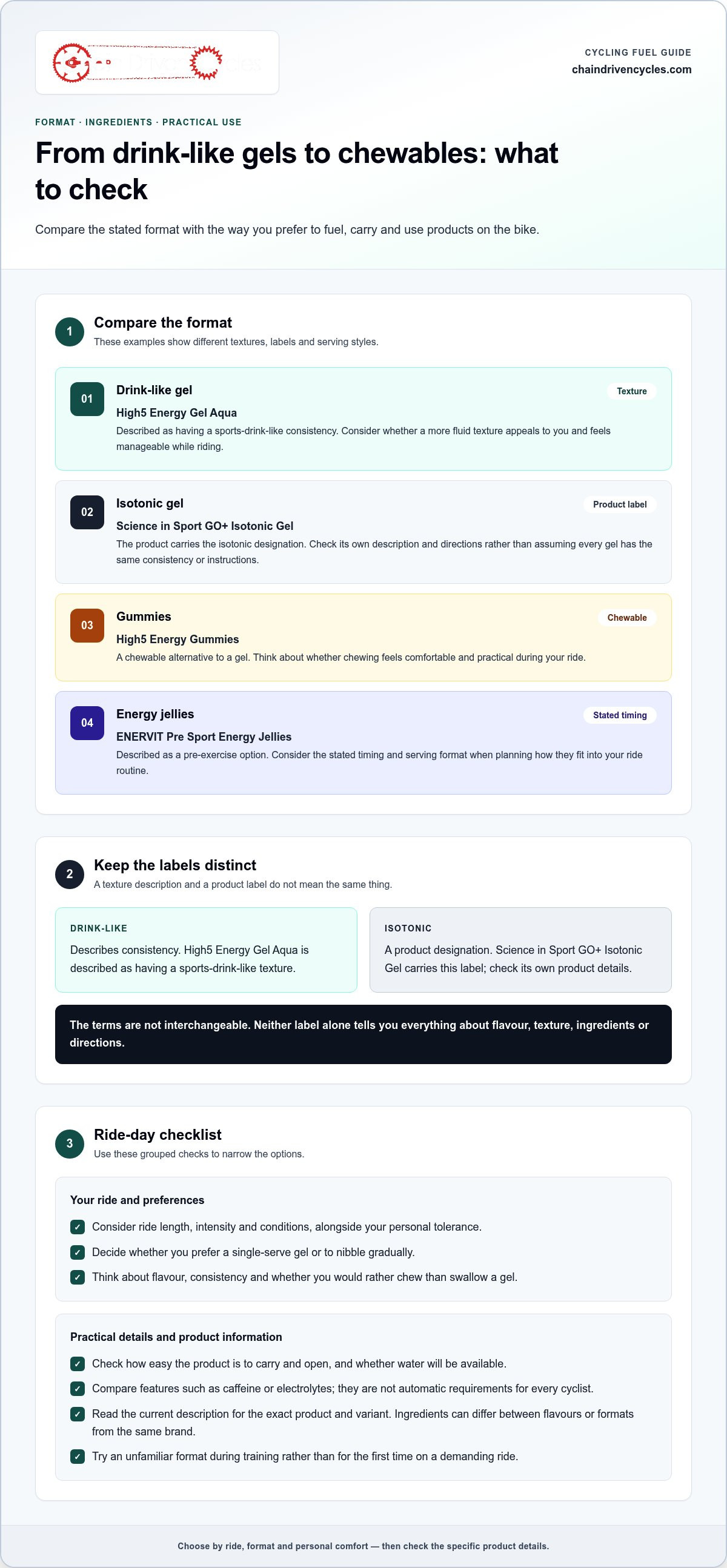
Energy products differ in more than their labels. Texture and serving format affect how they feel to carry and consume, so compare the product description with what you’d find practical on your ride. The examples below illustrate distinctions between formats, without suggesting that one suits everyone.
| Format | Distinguishing feature | Practical consideration |
|---|---|---|
| Drink-like gel | High5 Energy Gel Aqua is described as having a sports-drink-like consistency. | Consider whether a more fluid texture appeals to you and feels manageable while riding. |
| Isotonic gel | Science in Sport GO+ Isotonic Gel is labelled isotonic. | Use the product description to understand its stated features. Don’t assume all gels have the same consistency or directions. |
| Gummies | High5 Energy Gummies provide a chewable alternative to a gel. | Think about whether chewing is comfortable and practical during your ride. |
| Energy jellies | ENERVIT Pre Sport Energy Jellies are described as a pre-exercise option. | Consider their stated timing and serving format when planning how they fit into your ride routine. |
How do isotonic and drink-like gels differ?
“Drink-like” describes a consistency, while “isotonic” is a product label. High5 Energy Gel Aqua is described as having a sports-drink-like texture, while Science in Sport GO+ Isotonic Gel carries the isotonic designation. The terms aren’t interchangeable: one describes the stated consistency, while the other repeats the product’s label. Check the current details for each option rather than assuming either term promises a particular taste, absorption or effect.
This distinction can help you narrow your preference. If you generally favour a thinner texture, the Aqua description gives you a concrete point of comparison. If you’re considering the GO+ option, assess it using its own product information rather than inferring features from the word “isotonic”. The name alone isn’t a substitute for checking the full description and directions.
When might gummies or energy jellies appeal?
Chewable products offer a different experience from squeezing out a gel. High5 Energy Gummies are one example; ENERVIT Pre Sport Energy Jellies are described for use before exercise. Their formats and stated purposes differ, so read the descriptions carefully. Neither format is automatically better. The important question is whether chewing suits your preferences and the ride you’ve planned.
On a steady ride, you may find it easy to pause briefly and chew. During a demanding stretch or on uneven ground, handling food can require more attention, so consider when and where you’d be comfortable eating it. If you’re building a broader fuelling approach, the USADA nutrition guidelines for athletes offer general information on sports nutrition. Product-specific directions should still guide use.
Use these distinctions to shortlist a format, then compare individual descriptions and variants. To explore the available options, browse the energy gels collection and focus on the texture and serving style that best fit your preferences.
Compare energy gels by caffeine, electrolytes and ingredients
Product names can signal a feature, but they don’t provide the whole comparison. Check the current description and ingredient information for the specific variant, then consider how its stated features fit your preferences. The table summarises what can be identified from the product details without assuming that every variant has the same ingredients or texture.
| Option | Caffeine | Electrolytes or carbohydrate feature | Consistency and serving format |
|---|---|---|---|
| HIGH5 Energy Gel Aqua Caffeine | Caffeine is identified in the product name. | No electrolyte feature is specified here. | Gel; check the current description for variant details. |
| Science in Sport GO+ Caffeine Gel | Caffeine is identified in the product name. | No electrolyte feature is specified here. | Gel; check the current description for variant details. |
| ENERVIT Sport Gel with Caffeine | Caffeine is identified in the product name. | No electrolyte feature is specified here. | Gel; check the current description for variant details. |
| High 5 Energy Gel Electrolyte | No caffeine feature is specified here. | Electrolytes are identified in the product name. | Gel; check the current description for variant details. |
| SiS GO Electrolyte Energy Gel Salted Caramel | No caffeine feature is specified here. | Electrolytes are identified in the product name. | Gel; flavour is stated in the name. |
| High 5 Energy Gel with Slow Release Carbs | No caffeine feature is specified here. | The name identifies a slow-release carbohydrate feature. | Gel; check the current description for variant details. |
Should you choose a caffeinated energy gel?
The options discussed include caffeine-labelled products from HIGH5, Science in Sport and ENERVIT. Their names are a useful starting point, but don’t assume they share the same caffeine content, ingredients or consistency. Caffeine preference and tolerance differ between individuals, so consider your own response and read the instructions for the exact product and variant. If you prefer to avoid caffeine, check the full ingredient information rather than relying only on a product name.
A caffeine gel is identified by caffeine in its product description. Compare products by checking their ingredient details, rather than assuming every unlabelled gel is caffeine-free.
What do electrolyte and slow-release options offer?
High 5 Energy Gel Electrolyte and SiS GO Electrolyte Energy Gel Salted Caramel are identified as electrolyte options. High 5 Energy Gel with Slow Release Carbs highlights a carbohydrate feature instead. These descriptions help distinguish what each product states, but they don’t establish that one is right for every ride. Compare the ingredients and directions, and take account of your preferences and overall fuelling plan.
Use the table to shortlist the features that matter to you, then compare current descriptions for the relevant variants. Product names are a helpful guide, not a substitute for checking the details on the pack or product page. If you want to research a broader variety of formulations, endurance sports retailers like fastgear.com.au provide useful specifications on high-performance nutrition designed for demanding events.
Match an energy gel to your ride and fuelling preferences
Use the ride as your starting point, not the most prominent claim on a packet. A short, easy spin may call for a different approach from a longer or more demanding session, and your preferred taste and texture matter too. If bike hire Sligo is part of your plans, factor in the ride’s likely demands and what you can comfortably carry. The steps below are practical selection prompts, not personalised nutrition or medical advice.
How can you narrow down the options?
- Consider the ride. Think about its expected length, intensity and conditions, along with when it’ll be practical to eat or drink. For an indoor cycling session, set out your chosen fuel and fluids before you start so they’re within reach.
- Decide which ingredient features matter. Consider whether you want a caffeine option, an electrolyte feature or neither. If you’re unsure about caffeine or have a health-related question, personal guidance from a qualified health professional is more appropriate than a general buying guide.
- Choose a serving format. Compare a conventional gel with a drink-like option, gummies or jellies. Picture when you’d use it: would you rather swallow a gel, take a more fluid format or chew? Convenience depends on the rider and situation.
- Compare the specific descriptions. Look at flavour variants, ingredient information and product directions. Names can point to a feature, but the description for the exact product is a better guide to what it contains and how it’s intended to be used.
Try an unfamiliar product in a suitable training context, following its instructions, rather than introducing it for the first time on a particularly demanding ride. Notice whether its flavour and texture suit you, and how comfortable you feel using it. Individual tolerance varies, so one cyclist’s favourite isn’t automatically right for another. If bike hire Sligo is part of your plans, testing your preferred format beforehand can help you prepare fuel you’re comfortable using.
What common energy gel buying mistakes should you avoid?
Choosing solely by flavour can leave you with a product format you don’t enjoy using. The reverse can happen too: a headline feature may look useful, but the texture or taste may not suit your preferences. Compare the whole product, including its serving format and ingredient details, before deciding.
- Don’t assume all gels have identical directions about accompanying fluids or timing. Read the instructions for the product you select.
- Don’t infer ingredients from a familiar brand or product family. Check the specific variant, especially if caffeine or another ingredient matters to you.
- Don’t ignore your own tolerance. If a product doesn’t feel suitable during training, reconsider the format or flavour instead of relying on it for a key session.
Keep nutrition decisions separate from general product selection: individual fuelling needs and health considerations can call for tailored professional advice. Once you’ve identified your preferred format and features, browse the energy gel options and compare the product descriptions to find a practical match.
Standout energy gels from the collection and what sets them apart
There isn’t one gel that suits every cyclist. A useful shortlist starts with the experience you prefer: a smooth, light texture, a more drink-like consistency, or a product labelled isotonic. The options discussed include products from High5, Science in Sport and ENERVIT, with differences in format and stated features to help you compare. Treat the descriptions as a guide to each product, not as a ranking.
Which collection options suit different preferences?
High5 Energy Gel is described as having a smooth, light consistency, with flavour variants to consider. If texture is a priority, compare those descriptions with your own preferences rather than choosing on flavour alone.
High5 Energy Gel Aqua is the drink-like option in this comparison. Its sports-drink-like consistency gives you a clear point of difference from a conventional gel. It may be worth considering if a more fluid texture sounds preferable, though personal taste will still guide your choice.
Science in Sport GO+ Isotonic Gel is labelled isotonic, while ENERVIT Sport Isotonic Gel also identifies itself as isotonic in its name. The shared label makes them easy to shortlist, but it doesn’t establish that their ingredients, flavour, directions or other characteristics are identical. Compare each product’s current description and instructions before deciding. Don’t infer details from the label alone.
A practical way to weigh these options is to decide what you want to compare first: texture, flavour or the product’s stated format. If you already know that thick gels aren’t your preference, the drink-like description may help narrow the field. If you’re comparing isotonic-labelled products, look at the individual details rather than assuming the shared term makes them interchangeable. No option needs to be the universal favourite.
Where can you browse the energy gel range?
The collection has 14 products, spanning gel formats and features such as caffeine or electrolytes, alongside chewable gummies and jellies. This gives you more than one way to approach a comparison. Start with the format you’re most comfortable carrying and using, then review the ingredient information and stated features for individual options. If a particular ingredient or instruction matters to you, read the current product description carefully before choosing.
Product details and variants can change, so use the information shown for the specific option you’re considering. Check its ingredients and directions, and think about whether its texture and serving format fit your preferences. This is a more reliable way to build a shortlist than relying on a product name or a single headline feature.
Once you know which formats and features you want to compare, browse the energy gels collection at your own pace. The range makes it straightforward to explore different options without treating any one gel as the right choice for everyone.
Make your next ride a chance to refine your fuelling
Your preferred fuel can become clearer through experience. On a suitable training ride, notice which formats are easy to carry and use, and which flavours you’d choose again. Follow the product instructions, and change one preference at a time so it’s easier to judge what feels comfortable. For personalised nutrition or health questions, seek advice from a qualified professional.
If you’re planning a ride involving bike hire Sligo, give yourself time to prepare rather than making a last-minute choice. A considered approach lets you focus on the ride and build confidence in the options you’ve tested. The aim isn’t to find a universally perfect gel, but to make an informed choice that suits your preferences.
Ready to plan your next ride? Explore bike hire and cycling services from Chain Driven Cycles, and enjoy the ride.
Frequently Asked Questions
How do I choose an energy gel for cycling?
Choose a gel by matching its stated features and format to your ride and preferences. If you dislike thick textures, compare drink-like options; if you prefer to chew, look at gummies or jellies. Read the ingredient list and directions for the specific variant, especially if caffeine matters to you. Try unfamiliar options during a suitable training ride so you can assess taste and comfort before relying on them for a key session.
What is the difference between isotonic and regular energy gels?
An isotonic gel is labelled as isotonic, while “regular” usually refers to a conventional gel format rather than a specific formulation. Some isotonic options have a more fluid consistency, but don’t assume every product with that label tastes or feels the same. Compare the individual descriptions and directions. Labels can help narrow your choices, but they aren’t a substitute for checking the product’s stated ingredients and guidance.
Do you need to drink water with an energy gel?
It depends on the product, so follow its instructions rather than applying one rule to every gel. Some thicker gels are intended to be taken with water, while an isotonic option may be labelled for use without extra water. That doesn’t replace drinking according to your needs during a ride. If you’re carrying limited fluid, check the directions before setting off and plan your hydration separately from your choice of fuel.
Can you use a caffeinated energy gel on every ride?
You don’t need to choose a caffeinated gel for every ride. Whether you want caffeine depends on your preference, tolerance and overall caffeine intake, including from other sources. Check the exact product’s ingredient information and instructions, as variants can differ. If you’re sensitive to caffeine, don’t assume that a familiar brand’s products all contain the same amount. For health-related concerns, seek advice from a qualified health professional.
What is the difference between an energy gel and energy gummies?
An energy gel is usually supplied as a soft or liquid-like portion, while gummies are chewable pieces. The key practical difference is how you prefer to eat them and what feels manageable while riding. Someone who dislikes swallowing gels may prefer a chewable format, while another cyclist may find chewing awkward during a technical section. Consider handling and comfort as well as the product’s stated ingredients and directions.
Are electrolyte energy gels different from caffeinated gels?
Yes. These terms describe different stated features: an electrolyte gel identifies electrolytes, while a caffeinated gel identifies caffeine. They aren’t interchangeable labels, and one feature doesn’t tell you whether the other is present. Read the full description and ingredients for the specific variant, particularly if you want to avoid or include either. Product naming can help you shortlist options, but the detailed information is a better guide.
When should you take an energy gel during a cycle?
There isn’t one timing rule that applies to every cyclist or product. Follow the gel’s directions and consider your planned ride, your usual eating routine and how your stomach responds during exercise. If you’re trying a new option, use a training ride to learn how it fits your routine rather than experimenting during an event. Personalised fuelling needs, including health considerations, are best discussed with a qualified professional.