



Energy Gels for Cycling: How to Choose the Right Fuel in 2026
Planning a cycling trip and wondering what fuel to take? The most useful energy gel isn’t necessarily the one with the most features. A drink-like texture, caffeine or added electrolytes can each suit a different ride, and the right choice depends on what feels practical for you.
If you’ve found the options confusing, you’re not alone. Differences in texture, ingredients and how a gel fits into your fuelling plan can make it hard to know where to start. This guide compares gel formats and product features, so you can narrow down what may suit your ride and preferences.
The 14 products in our Energy Gels collection include drink-like gels, caffeine and electrolyte options, gummies and jellies. We’ll look at how ride duration, on-bike handling, taste and stomach tolerance can inform your choice, without assuming one format works for everyone. Try unfamiliar fuel during training before relying on it for an important ride.
Key Takeaways
- Choose fuel by how you prefer to take it on the bike, whether that’s a drink-like gel or something chewable.
- Compare caffeine and electrolyte features with your ride plans, rather than assuming every gel serves the same purpose.
- Read product descriptions closely. Labels alone may not tell you enough about texture, ingredients or serving format.
- Use ride duration and your preferences to narrow the options, and introduce unfamiliar fuel during training.
- Explore the Energy Gels collection to compare options from High5, Science in Sport and ENERVIT.
How to choose cycling energy gels that suit your ride
Energy gels are portable, carbohydrate-based sports fuel designed to be carried and consumed during exercise. Choosing one isn’t just about its ingredients: texture, format and personal preference all affect how practical it feels on the bike. A gel that suits one rider may not suit another.
Start with the ride you have planned. Its length and intensity, the conditions and your individual tolerance can all influence what feels appropriate. There’s no universal fuelling schedule here. Compare product information and try unfamiliar formats during training rather than for the first time on an important event. For a general overview of energy gel composition and types, see Energy Gels Explained. If you’re hiring a bike, include fuel and other ride essentials in your preparation, and choose a format that’s easy for you to carry and handle.
What should you consider before choosing an energy gel?
Think about how you prefer to take fuel while moving. Some cyclists favour a conventional single-serve gel, whilst others may find a thinner, drink-like texture easier to consume. The collection includes drink-like High5 Aqua gels, alongside gummies and jellies, so format is worth considering from the outset.
Taste matters too. If you don’t enjoy the flavour or texture of gels, a chewable option may feel more appealing. Think about what you can manage conveniently on your usual rides, then compare product descriptions for details on consistency and serving format. The same practical approach helps when preparing for a ride on a hired bike: choose fuel that feels manageable for the route and conditions you have planned.
Which gel features can make a difference on the bike?
Caffeine and electrolytes are features to compare, not automatic requirements. A caffeine option may suit a rider who wants that ingredient in their fuel, whilst an electrolyte gel may appeal to someone considering electrolyte content as part of their ride plan. Preferences, conditions and personal tolerance differ, so neither feature is right for everyone.
Single-serve gels differ from gummies and energy jellies, which are chewable alternatives. Check each product description for its stated features rather than assuming similar-looking options have the same ingredients.
An isotonic gel has a concentration similar to that of body fluids. The term describes a characteristic of the gel; it doesn’t tell you everything about its taste, texture or other ingredients. Compare those details separately. The Energy Gels collection includes 14 products with different formats and stated features. Reading the descriptions closely can help you shortlist fuel that suits your preferences and the practical demands of your ride.
Energy gel formats explained: isotonic, drink-like and chewable options
Energy gels and chewable sports fuel can have a similar purpose but feel quite different to use. Texture, packaging and whether you need to chew all affect how practical a format is while riding. Compare the product description, not just a broad label, to understand the particular option you’re considering.
| Format | Distinguishing feature | Practical consideration |
|---|---|---|
| Drink-like gel | High5 Energy Gel Aqua has a sports-drink-like consistency. | Consider whether a thinner texture appeals to you whilst riding. |
| Isotonic gel | Science in Sport GO+ Isotonic Gel is labelled isotonic. | Check the product description for its stated characteristics and instructions. |
| Gummies | High5 Energy Gummies offer a chewable alternative. | Think about whether chewing feels manageable during your ride. |
| Energy jellies | ENERVIT Pre Sport Energy Jellies are described as a pre-exercise option. | Consider whether you want a format intended for before exercise. |
How do isotonic and drink-like gels differ?
“Drink-like” describes texture, while “isotonic” is a label used for a product type. They aren’t interchangeable terms. High5 Energy Gel Aqua is described as having a sports-drink-like consistency; Science in Sport GO+ Isotonic Gel is labelled isotonic. These descriptions distinguish the options, but don’t assume they share the same ingredients or other characteristics. Check each product’s details before deciding.
When might gummies or energy jellies appeal?
Gummies and jellies offer a chewable alternative to a single-serve gel. High5 Energy Gummies may suit someone who prefers chewing to a gel texture, while ENERVIT Pre Sport Energy Jellies are described as a pre-exercise option. Neither format is automatically better. Consider the timing and demands of your ride, and whether you can comfortably chew whilst cycling. If handling fuel on the move is a concern, try your preferred format in a familiar training setting.
Use these distinctions to build a shortlist, then read the descriptions for product-specific details. The collection includes gels as well as gummies and jellies, making it easier to compare formats in one place. Browse energy gels and chewable options to see which descriptions best match your preferences.
Compare energy gels by caffeine, electrolytes and ingredients
Product labels can help you narrow your options, but compare the features that matter to your ride rather than assuming gels with similar names are interchangeable. Caffeine, electrolytes, consistency and serving format are separate considerations. Check each product description for its stated ingredients and directions.
| Option | Caffeine | Electrolytes or carbohydrate feature | Consistency and format |
|---|---|---|---|
| HIGH5 Energy Gel Aqua Caffeine | Caffeine option | Check product description | High5 Aqua gels have a drink-like consistency; supplied as a gel |
| Science in Sport GO+ Caffeine Gel | Caffeine option | Check product description | Gel; check product description for consistency |
| ENERVIT Sport Gel with Caffeine | Caffeine option | Check product description | Gel; check product description for consistency |
| High 5 Energy Gel Electrolyte | Check product description | Electrolyte feature | Gel |
| SiS GO Electrolyte Energy Gel Salted Caramel | Check product description | Electrolyte option | Gel; Salted Caramel variant |
| High 5 Energy Gel with Slow Release Carbs | Check product description | Slow-release carbohydrate feature | Gel |
Should you choose a caffeinated energy gel?
The collection includes caffeine options in different gel formats. HIGH5 Energy Gel Aqua Caffeine is a drink-like option, while Science in Sport GO+ Caffeine Gel and ENERVIT Sport Gel with Caffeine are also listed as caffeine gels. Caffeine preference and tolerance vary, so consider whether you want it in your ride fuel. Read the product instructions and account for other sources of caffeine in your routine.
A caffeine gel has caffeine as a stated feature; a non-caffeinated option lets you choose fuel without that ingredient. Check the current ingredient information rather than relying on flavour or format to indicate whether caffeine is present.
What do electrolyte and slow-release options offer?
High 5 Energy Gel Electrolyte and SiS GO Electrolyte Energy Gel Salted Caramel are options with an electrolyte feature. High 5 Energy Gel with Slow Release Carbs is identified by its stated carbohydrate feature. These labels describe different product characteristics, not guaranteed outcomes. Compare the ingredients and serving details with your preferences, and follow the directions provided for each product.
Use the table as a starting point, then review the descriptions for details such as consistency and serving format. This makes it easier to compare products without treating one feature as a universal requirement.
Match an energy gel to your ride and fuelling preferences
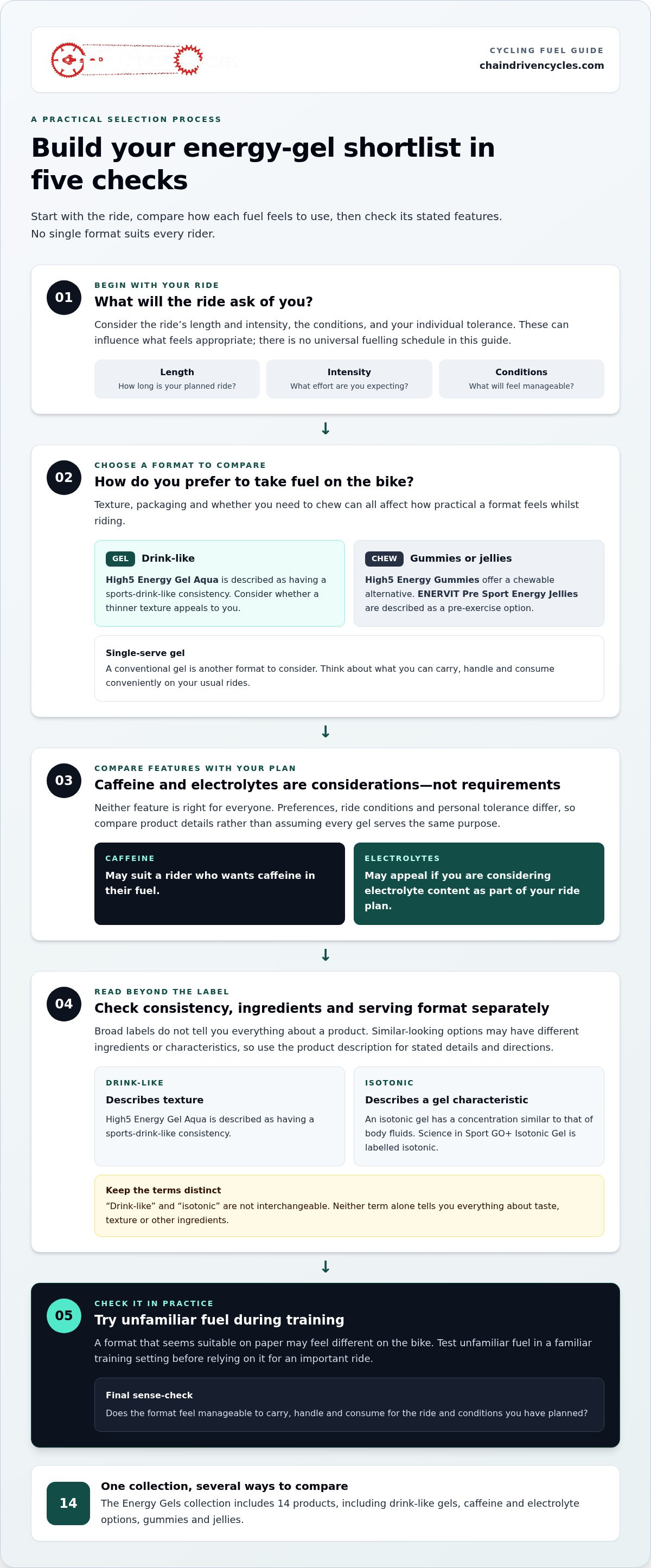
A practical way to choose is to narrow the options in stages. Start with the demands of your ride, then compare features and formats that fit your preferences. This is product-selection guidance, not a personalised nutrition plan or medical advice. If you have specific health or dietary concerns, seek guidance from a qualified professional.
How can you narrow down the options?
- Consider the ride. Think about its length, intensity and conditions, as well as how comfortable you are handling fuel while cycling. If you’re hiring a bike, consider the ride you have planned and what you can conveniently carry.
- Decide which features matter. Work out whether you want caffeine, an electrolyte feature or neither. If you’re unsure about caffeine, consider your usual intake and personal tolerance, and read the product information.
- Choose a format. Compare a conventional gel with a drink-like gel, gummies or jellies. Consider whether you can open and consume it comfortably on your bike, and whether chewing suits the ride.
- Check the details. Compare flavour variants, ingredients, consistency and serving information with your preferences. Follow the directions on the product rather than relying on assumptions about similar formats.
Preparing for an indoor session? The same checks can help you organise your fuel before training and consider which format feels manageable in that setting. Refer to the indoor cycling training guide for session preparation, and use the product’s own instructions for its specific details. These checks are useful whether you’re training at home or riding a hired bike away from your usual routine.
What common energy gel buying mistakes should you avoid?
- Choosing by flavour alone. A flavour that sounds appealing doesn’t tell you whether a gel contains caffeine or electrolytes, or whether its texture suits you.
- Focusing on one headline feature. A label such as “caffeine” or “electrolyte” describes one aspect, not the whole product. Check the ingredient information and format.
- Assuming every gel is used the same way. Don’t presume all products have identical directions, fluid guidance or timing. Read the label for the option you’ve chosen.
- Ignoring personal tolerance. Taste, texture and ingredients can all affect whether a product feels suitable. Try an unfamiliar option during an appropriate training session, rather than making its first outing an important ride.
Once you’ve identified the features and format you prefer, browse the energy gels collection to compare product descriptions and make a more informed shortlist.
Standout energy gels from the collection and what sets them apart
There’s no single gel format that suits every cyclist. A useful comparison starts with features you can assess directly, such as consistency, flavour options and how the product is described. These examples offer different starting points, rather than a ranking of which gel is best.
Which collection options suit different preferences?
- High5 Energy Gel: Described as having a smooth, light consistency and available in different flavour variants. Compare it if texture and flavour choice are high on your list.
- High5 Energy Gel Aqua: This option has a drink-like consistency, offering a different texture from a conventional gel. Consider whether that style sounds comfortable to take during your ride.
- Science in Sport GO+ Isotonic Gel: Its product description identifies it as isotonic. Use that label as one point of comparison alongside the ingredient information and instructions.
- ENERVIT Sport Isotonic Gel: Also described as isotonic. The shared label gives you a basis for comparing the products, but doesn’t mean their descriptions or ingredients are identical.
Product details can change, so read the current descriptions before choosing. Compare the stated consistency and flavour variants, and don’t infer ingredients or usage directions from a product name alone. If you’re deciding between two options, focus on the differences that matter to you rather than expecting a label to explain every practical detail.
Where can you browse the energy gel range?
The collection brings together conventional gels, drink-like options and products described with features such as caffeine or electrolytes. It also includes chewable formats, including gummies and jellies. This makes it possible to compare different types of fuel, especially if you’re still working out which texture or serving format you prefer.
Before selecting a product, check its ingredient information and instructions. Note the stated features, flavour and format, then consider how each option fits your preferences and the practical demands of your ride. The collection includes 14 products, giving you a range of descriptions to compare without settling on one format straight away.
Ready to review the options? Browse the energy gels collection and compare the current product descriptions at your own pace.
Choose fuel that fits your next ride
The right energy gel is a practical choice, not a universal formula. Consider your ride, preferred texture and personal tolerance, then compare stated ingredients and product instructions. Trying an unfamiliar option during training can help you decide whether it suits you before relying on it for a key ride.
The collection brings together gel, isotonic, caffeinated, electrolyte and chewable formats, with options from High5, Science in Sport and ENERVIT. Read the descriptions carefully: flavour, consistency and listed features can help you narrow the choice without relying on a single headline label. Choosing fuel you’re comfortable carrying and taking is a useful part of ride preparation.
Browse the energy gels collection to compare the options and find a format that matches your preferences. If you’re planning a ride on a hired bike, Chain Driven Cycles also provides bike hire and professional bicycle repair services. Get ready for your next ride with Chain Driven Cycles, and choose fuel that feels practical for you.
Frequently Asked Questions
How do I choose an energy gel for cycling?
Consider your ride, preferred texture and the product’s stated ingredients. Think about whether you want a conventional or drink-like gel, a chewable option, or a product with caffeine or electrolytes. Then compare flavour, serving format and instructions. Personal tolerance matters too, so try unfamiliar products during a suitable training ride rather than relying on them for the first time during an important event.
What is the difference between isotonic and regular energy gels?
An isotonic gel is described as having a concentration similar to that of body fluids, whereas most energy gels are hypertonic, meaning they have a higher concentration. The label alone won’t tell you every detail about a product’s ingredients, texture or directions. Compare the current product description and follow its instructions. The collection includes products labelled isotonic from Science in Sport and ENERVIT.
Do you need to drink water with an energy gel?
It depends on the product, so read its instructions rather than assuming every gel is used in the same way. Hypertonic gels are generally taken with water, whilst isotonic products may be designed to be consumed without additional water. This doesn’t replace your wider hydration needs during a ride. Carry fluids appropriate to your ride and follow the directions on the product you choose.
Can you use a caffeinated energy gel on every ride?
Whether to use a caffeinated gel depends on your preferences and how you tolerate caffeine. Consider your overall caffeine intake from other sources as well, and read the product’s ingredient information and instructions. The collection includes caffeine options from High5, Science in Sport and ENERVIT. If you’re sensitive to caffeine or have health concerns, seek advice from a qualified health professional before using caffeinated sports products.
What is the difference between an energy gel and energy gummies?
An energy gel is a soft, often squeezable serving, whilst gummies are a chewable format. The main practical difference is texture and how you prefer to consume fuel while riding. The collection includes drink-like gels as well as High5 Energy Gummies, so you can compare options. Consider whether chewing is comfortable and practical during your ride, and check each product’s serving information and instructions.
Are electrolyte energy gels different from caffeinated gels?
Yes. “Electrolyte” describes a product feature relating to its stated electrolyte content, whilst “caffeinated” means caffeine is listed as an ingredient. These are different characteristics, and a product description should identify which apply. Don’t assume an electrolyte gel contains caffeine, or that a caffeine gel provides electrolytes. Check the ingredient details and product instructions to compare options accurately.
When should you take an energy gel during a cycle?
There isn’t one timing recommendation that suits every cyclist or product. Your ride, personal fuelling plan and the gel’s instructions all matter. Check the label for directions, and practise using an unfamiliar product during training so you can assess its taste and format in a familiar setting. For personalised guidance on fuelling or health needs, consult a qualified sports dietitian or health professional.