



Saddles & Seatposts: 2026 Performance & Comfort Guide
What if the primary obstacle between you and a personal best isn't your aerobic capacity, but the two components connecting you to the road? Many riders accept saddle numbness and harsh road vibrations as an inevitable part of the sport, yet these issues often stem from a poorly matched setup. Finding the right synergy between saddles and seatposts is the most effective way to optimise a mid-range road or electric hybrid bike without the expense of replacing the entire frameset.
We know it's frustrating to feel limited by physical discomfort when your legs are ready for more. You deserve a setup that provides a stable platform for long-distance endurance while maintaining a sleek, professional aesthetic. This guide will show you how to choose a combination that eliminates pressure points and dampens vibration effectively. We'll look at the latest 2026 innovations, from the ergonomic research of Selle Italia to the compliance of modern carbon seatposts, giving you the expertise to build a lighter, more comfortable ride that performs as well as it looks.
Key Takeaways
- Understand why sit bone width and saddle geometry are far more critical for long-distance comfort than simply choosing the softest padding available.
- Learn how to pair specific saddles and seatposts to create a cohesive mechanical system that dampens road buzz and protects your health.
- Discover the impact of seatpost diameter and material on ride quality, particularly how carbon components can transform the feel of a stiff racing frame.
- Identify the gold-standard ergonomic designs from Selle Italia that best suit your unique riding style, whether you are on a road bike or an electric hybrid.
- Master the professional techniques for installing and fine-tuning your setup to ensure a silent, creak-free ride and optimal performance.
Understanding the Anatomy of Saddle Comfort and Performance
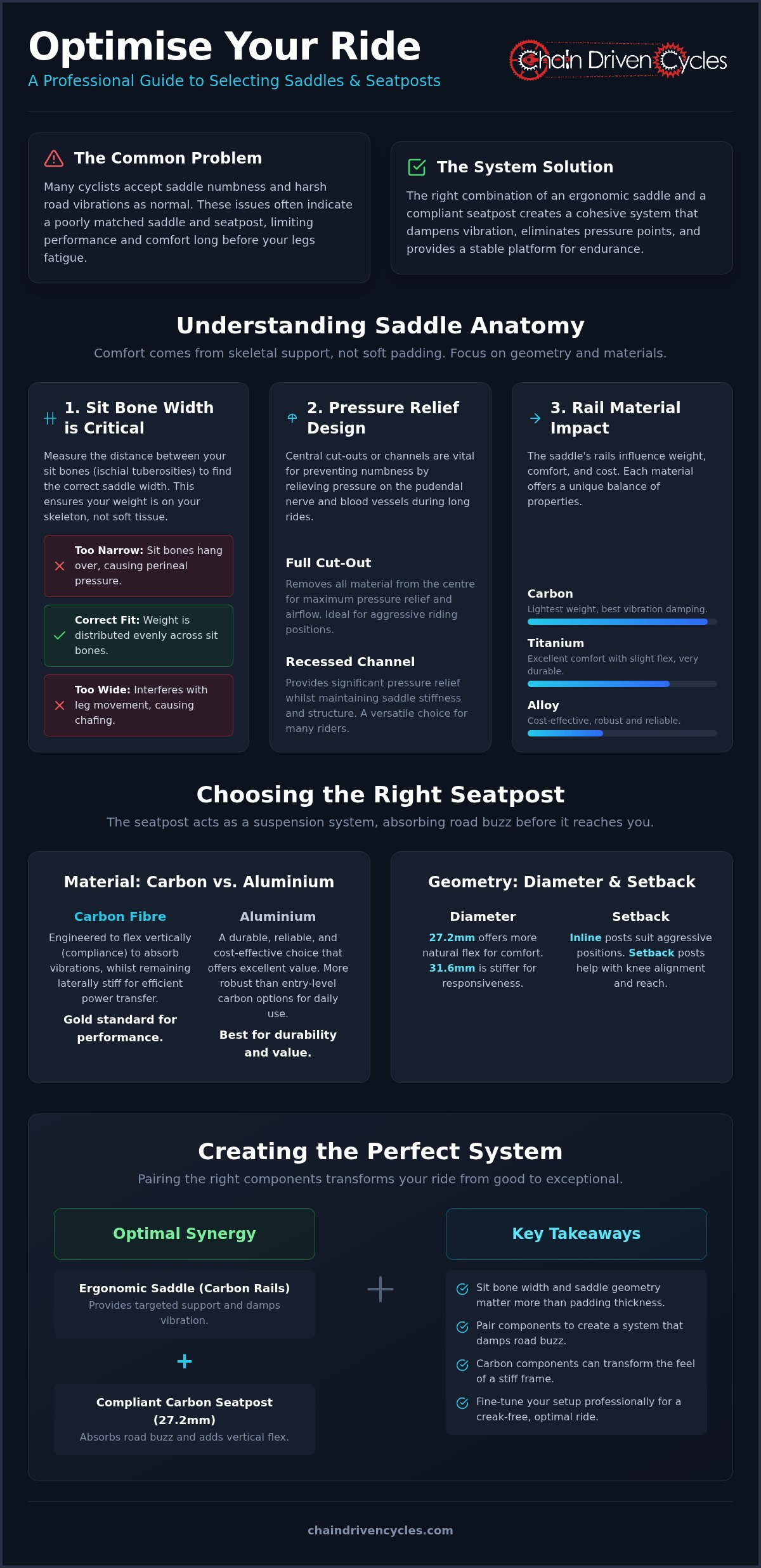
Your saddle is arguably the most critical contact point for your long-term health as a cyclist. Whilst pedals and handlebars are important, the saddle supports the majority of your body weight and dictates the alignment of your hips and spine. Many riders mistakenly believe that a thick, soft saddle equals comfort. In reality, excessive padding often leads to sinking, which puts pressure on sensitive soft tissue rather than supporting your skeletal structure. Modern saddles and seatposts work together to balance this support with vibration damping. Your choice should also reflect your pelvic flexibility; riders who rotate their pelvis forward need a different shape than those who sit more upright.
Saddle Width and Sit Bone Measurement
To find your ideal fit, you must measure the distance between your ischial tuberosities, or sit bones. You can do this at home by sitting on a piece of corrugated cardboard or a gel pad to leave an impression, then measuring the distance between the centres of the indentations. If a saddle is too narrow, your sit bones will hang over the edges, forcing your weight onto the perineum. Conversely, a saddle that is too wide will interfere with your leg movement, causing painful chafing whilst pedalling. A properly sized saddle ensures your weight is distributed across your bones, not your nerves.
Pressure Relief: Cut-outs vs. Channels
Pressure relief is a key feature of modern Bicycle saddle components. Central cut-outs are designed to remove material where it would otherwise compress the pudendal nerve and blood vessels. This is vital for preventing numbness on long rides. Some riders prefer a full cut-out for maximum airflow and relief, whilst others find a recessed channel provides enough comfort without sacrificing structural stiffness. Selle Italia has pioneered ergonomic research in this area, offering various designs that cater to different anatomical requirements and riding positions.
Rail Materials: Carbon, Titanium, and Alloy
The rails are the skeleton of the saddle and significantly impact both weight and ride quality. Carbon rails are the premium choice for high-performance road bikes. They are incredibly light and possess natural vibration-damping properties that help quieten road buzz before it reaches the rider. Titanium rails are a firm favourite amongst endurance cyclists. They offer a slight degree of flex that enhances comfort over hundreds of kilometres whilst being virtually immune to corrosion. For commuters or those using electric hybrid bikes, alloy rails provide a robust and cost-effective solution. While heavier, they are exceptionally durable and compatible with almost all seatpost clamps.
Choosing the Right Seatpost for Your Riding Style
Whilst the saddle handles the immediate interface with your body, the seatpost acts as the primary vertical spring between the frame and your sit bones. Selecting the right combination of saddles and seatposts can significantly reduce road buzz, which is the high-frequency vibration that causes muscle fatigue over time. The diameter of the post plays a major role in this system. A 27.2mm post generally offers more natural flex than a chunkier 31.6mm version, making it a popular choice for endurance road bikes where comfort is paramount. Upgrading to a high-quality post is also one of the simplest ways to shed weight from a performance bike, improving both acceleration and climbing efficiency.
Carbon vs. Aluminium: Weight and Compliance
Carbon fibre is the gold standard for performance because it can be engineered with specific layup patterns to flex vertically whilst remaining laterally stiff. In the context of seatpost engineering, "compliance" refers to this ability of the material to yield elastically under load, absorbing impacts before they reach the rider. High-grade aluminium posts remain a durable and cost-effective alternative. They offer excellent value for commuters and are often more robust than entry-level carbon options, making them a reliable choice for daily use.
Setback vs. Inline Posts: Dialling in Your Reach
Setback refers to the distance the saddle clamp sits behind the centre of the post. This measurement is vital for dialling in your centre of gravity and overall reach to the handlebars. An inline post, where the clamp is centred directly over the tube, is often preferred by riders seeking a more aggressive, forward-leaning position. Correct setback ensures proper knee alignment over the pedal spindle, which is critical for preventing long-term joint strain. Understanding these nuances of ergonomics and health is essential for anyone spending more than an hour in the saddle at a time.
Dropper Posts and Suspension Options
For those riding electric hybrid bikes on varied terrain, dropper posts allow you to lower your centre of gravity instantly, providing better stability on steep descents or when stopping at traffic lights. If you frequently traverse rougher national roads, a suspension seatpost can provide a mechanical cushion that a standard rigid post cannot match. These features do add mechanical weight and complexity. Performance-focused road enthusiasts usually stick to minimalist carbon designs to keep the bike as light as possible. If you are looking to refine your ride quality, you can browse our curated collection of high-performance components to find the right fit for your frame.
The Interaction Between Saddle Shape and Seatpost Material
Many riders view their seating setup as two distinct purchases, but treating saddles and seatposts as a unified mechanical system is the key to unlocking true endurance. A common mistake is mounting a stiff, minimalist racing saddle onto a rigid, oversized aluminium seatpost. This combination creates a harsh ride where every road imperfection is transmitted directly to your spine, leading to premature fatigue and lower back pain. To achieve the best performance, you must balance the stiffness of the saddle shell with the compliance of the post material.
A high-quality carbon seatpost can effectively save a lightweight racing saddle. Whilst the saddle provides the necessary support and shape for efficient pedalling, the carbon post acts as a buffer, absorbing high-frequency vibrations before they reach the saddle rails. This synergy allows you to enjoy the weight benefits of a professional-grade setup without the punishing ride quality typically associated with elite equipment. The clamp interface is also a vital consideration; a well-designed clamp distributes pressure evenly across the rails, which is essential for protecting delicate carbon or titanium components from stress fractures.
Road Racing vs. Endurance Setups
If you are riding high-performance machines like those discussed in our guide to Bottecchia vs Wilier Bikes, your setup should reflect your competitive goals. Racing setups prioritise lateral stiffness for power transfer, but endurance riders should always prioritise vibration damping. For long days in the saddle, a post with significant vertical give paired with a slightly more flexible saddle shell will keep you fresher for the final sprint. It's the most cost-effective way to transform a mid-range frame into a long-distance specialist.
Electric Hybrid Considerations: Handling Extra Weight
Riders using Electric Hybrid Bikes Ireland face unique challenges. Because e-bikes are heavier and allow for longer periods of seated pedalling, the pressure on the saddle is more constant. These riders often benefit from wider, more supportive saddles that distribute weight over a larger surface area. The seatpost must also be robust enough to handle the higher seated torque generated when the motor assists your climb. A reinforced alloy or a heavy-duty carbon post is often necessary to ensure long-term reliability under these increased loads, making the choice of saddles and seatposts particularly important for e-bike longevity.
Standout Picks from Our Collection: Performance and Value
Selecting the right components from our extensive range of 47 items requires an understanding of your specific riding goals. Whether you're looking to shave weight from a Wilier racing frame or add comfort to an electric hybrid, our collection of saddles and seatposts offers a curated selection of industry-leading technology. We specialise in matching riders with equipment that solves common pain points like numbness and excessive road vibration. Choosing the right combination is the most cost-effective way to improve a mid-range bike without the need for a full frameset replacement.
Premium Racing Saddles: The Selle Italia Range
Selle Italia remains the gold standard for ergonomic research. Their "idmatch" system categorises saddles into distinct groups based on your intertrochanteric distance and pelvic rotation. S-series saddles are narrower for those with smaller sit bone measurements, whilst the L-series offers a wider platform. Within these categories, the numerical suffixes indicate the size of the central cut-out, allowing for precise pressure relief tailored to your anatomy. You can browse the full collection to find the exact model that matches your idmatch profile.
For daily commuters or those on electric hybrid bikes, we recommend comfort-focused models with slightly more padding and a wider rear profile. These designs support a more upright riding position, ensuring that weight is distributed across the sit bones rather than the soft tissue. We stock various widths to ensure every rider finds a stable, pain-free platform for their daily journey.
Reliable Seatposts for Every Rider
For many riders, a high-grade aluminium seatpost provides the perfect balance of durability and ease of use. These posts often feature a simple, two-bolt clamp system that allows for micro-adjustments to your saddle angle. This is particularly useful for riders who need a "set and forget" solution that won't slip over rough terrain. If weight and vibration damping are your primary concerns, a lightweight carbon post is an essential upgrade. These components use advanced carbon layups to provide vertical compliance, effectively dampening road buzz.
We offer these components in various standard diameters, including 27.2mm and 31.6mm, to ensure compatibility with almost any modern frame. Upgrading to premium carbon rails or a high-end seatpost is a significant investment in your cycling comfort. To make these professional-grade components more accessible, we offer a flexible 10-month payment plan. This allows you to spread the cost of your upgrade whilst enjoying the performance benefits immediately. If you're ready to transform your ride quality, view our latest performance components and find the perfect match for your bike.
How to Install and Fine-Tune Your New Setup
Installing new saddles and seatposts isn't just about bolting parts together; it's a precision task that dictates your mechanical efficiency and physical comfort. Start by loosening the seatpost collar and removing the old assembly entirely. Before inserting the new post, clean the inside of the seat tube thoroughly with a lint-free cloth. Removing old grease and road grit is essential to prevent irritating creaks and to ensure a secure fit. For aluminium frames, a light coating of waterproof grease is standard, but carbon components require a specialised approach to prevent damage.
Once the post is inserted, you'll need to establish your baseline position. Finding the correct fore and aft position of the saddle is just as important as the height. Most saddle rails have markings to help you centre the clamp. Ensure the saddle is positioned so that your weight is balanced over the bottom bracket, which prevents excessive strain on your lower back. Always use a torque wrench for every bolt on this assembly; guessing the tightness is a common mistake that can lead to component failure or mid-ride slips.
Achieving the Correct Saddle Height and Angle
To find a reliable baseline height, use the "heel-to-pedal" method. Sit on the bike whilst wearing your cycling shoes and place your heel on the pedal at its lowest point. Your leg should be completely straight. This ensures that when you move to the ball of your foot for actual pedalling, you'll have the ideal slight bend in the knee. Set the saddle level using a spirit level as your starting point. Whilst some riders prefer a fractional tilt, extreme nose-down angles should be avoided. They shift too much weight onto your handlebars, which often leads to wrist pain and numb fingers.
Safety First: Torque Settings and Carbon Paste
When installing carbon saddles and seatposts, always use carbon assembly paste rather than standard grease. This paste contains microscopic friction enhancers that allow you to secure the post safely with significantly less clamping force. Over-tightening carbon rails or seatpost collars can cause catastrophic structural failure that isn't always visible until the component breaks under load. Always adhere to the Newton-metre (Nm) limits etched onto your components. If you're managing a complex setup or installing premium parts on a racing machine, we recommend professional bike servicing to ensure every tolerance is met with workshop precision.
Elevate Your Ride Quality and Comfort
Mastering your connection to the road requires more than just high-quality parts; it demands a unified approach to component selection and precision adjustment. By treating your seating as a mechanical system, you can eliminate the numbness and fatigue that often hinder your performance. This guide has shown that the right combination of materials and geometry, paired with a meticulous installation process, transforms any ride into a smoother, more efficient journey.
Investing in premium saddles and seatposts is the most cost-effective way to upgrade your road or electric hybrid bike. As an authorised Selle Italia dealer, we provide access to the gold standard of ergonomic research. We also offer free shipping on performance components across Ireland and a flexible 10-month payment plan to help you reach your cycling goals. Every adjustment you make brings you closer to a setup that feels like a natural extension of your body.
Upgrade your ride: Browse our full range of Saddles and Seatposts
We are here to support your journey toward a faster, more comfortable ride on every adventure.
Frequently Asked Questions
How do I know what size seatpost my bike needs?
The diameter is usually etched on your current post near the minimum insertion mark. If it's unreadable, you can use a digital calliper to measure the internal diameter of the seat tube or the external diameter of the post itself. Common standards include 27.2mm, 30.9mm, and 31.6mm. It's vital to get this measurement exactly right, as even a 0.2mm difference can prevent a secure fit or damage your frame.
Why does my new saddle feel harder than my old one?
Modern performance saddles often use high-density foam or 3D-printed lattices that feel firmer initially but provide better long-term support. Soft, squishy saddles allow your sit bones to sink, which transfers pressure to sensitive soft tissues and nerves. A firmer saddle ensures your weight stays on your skeletal structure. If you find the transition difficult, give yourself at least three or four long rides to allow your body to adapt to the new support profile.
Is a carbon seatpost really worth the extra cost?
A carbon seatpost is a significant upgrade for any rider seeking to reduce road buzz and improve comfort. Unlike aluminium, carbon fibre can be engineered to flex vertically whilst remaining stiff, acting as a buffer against high-frequency vibrations. This reduces muscle fatigue during long endurance rides. For those looking at premium components, our 10-month payment plan makes it easier to invest in this high-performance technology without the upfront cost.
What is the difference between a male and female-specific saddle?
The primary differences lie in width and the placement of pressure-relief zones. Women generally have wider sit bone structures, so female-specific designs often feature a broader rear profile. They also typically include larger central cut-outs or specific padding densities to accommodate different anatomical needs. However, many riders find that Selle Italia’s idmatch system provides a more accurate fit based on individual measurements rather than gender alone.
How often should I replace my bike saddle?
Most high-quality saddles last between 15,000 and 20,000 kilometres before the structural shell begins to sag or the padding loses its resilience. You should inspect your setup regularly for signs of worn covers, bent rails, or a visible dip in the centre of the shell. Replacing your saddle prevents the gradual onset of poor posture and discomfort that occurs as the materials degrade over several seasons of heavy use.
Can I use a road bike saddle on my electric hybrid bike?
You can certainly use road saddles and seatposts on an electric hybrid bike, but you must consider your riding position. Hybrids usually have a more upright geometry, which places more weight directly onto the saddle. Whilst a minimalist racing saddle might work, you may find that a slightly wider model with more generous padding better suits the increased seated pressure. It's all about matching the component to how you actually sit on the bike.
What should I do if my seatpost is stuck in the frame?
A seized seatpost is often the result of galvanic corrosion, especially if the bike hasn't been maintained regularly. You should start by applying a high-quality penetrating oil and allowing it to soak for 24 hours. If the post remains stuck, avoid using excessive force which could crack the frame. In these cases, it's best to utilise professional bicycle repair services where specialists have the specific tools and experience to remove the post safely.
Do I need a special clamp for carbon saddle rails?
Yes, carbon rails are often oval-shaped (typically 7x9mm) rather than the standard 7mm round alloy rails. You must ensure your seatpost clamp is compatible with these dimensions to avoid crushing the carbon structure. Many modern seatposts offer interchangeable "ears" or clamps specifically designed for carbon rails. Always check the manufacturer's specifications before installation to ensure the clamp provides even pressure across the entire surface of the rail.