



Wilier Road Bikes vs Scott Addict RC: 2026 Comparison and Buying Guide
The bike with the sharper race reputation isn’t automatically the better choice for your rides. In this Wilier road bikes review vs Scott Addict RC, the key question is how each bike’s design, fit and build suit the way you ride.
Model names, component tiers and claims about speed or weight can make comparisons confusing. Start with bikes from the same model year and in similar build categories. Then compare the details you’ll notice on the road: riding position, handling, gearing, wheels and tyre clearance.
This guide looks at design priorities, fit and specification, and explains how to account for model-year differences. Use it to decide which details matter to you, then compare the exact bikes on your shortlist using current manufacturer specifications.
Chain Driven Cycles is an authorised Wilier dealer and provides professional bicycle repair services. Use the comparison to clarify your priorities, then explore Wilier road bikes with Chain Driven Cycles and discuss which build suits your riding.
Key Takeaways
- Wilier is a bicycle brand, while Scott Addict RC is a specific road-bike range. Compare individual models rather than treating the names as equivalent bikes.
- Match model years, intended use and component levels before drawing conclusions about performance or value.
- Use geometry to understand the position a frame may support, but prioritise a suitable fit over small claimed performance differences.
- Compare complete specifications, including groupset, gearing, wheels and cockpit, and check the manufacturer’s information for the exact model year.
- Turn your riding priorities into a considered Wilier choice, with authorised-dealer expertise and professional repair support for ownership.
Wilier road bikes vs Scott Addict RC: what is being compared?
Wilier is a bicycle brand with road bikes across different performance categories. Addict RC is a Scott road-bike range. A useful Wilier road bikes review vs Scott Addict RC therefore compares specific bikes, not two brand names as if they represented equivalent models. The right match depends on the model year, intended use and build you’re considering.
A brand may include bikes designed for different purposes, while a named range describes a more specific family. This comparison focuses on performance road bikes for fast riding, rather than assuming every Wilier is a direct rival to every Addict RC. For broader context, Wikipedia outlines road bicycle types and characteristics, including how road-bike designs serve different riding needs.
There isn’t one universal winner. A bike that suits your position and goals may be a poor fit for another rider, even if its specification looks stronger on paper. Separate general design positioning from details that depend on the exact frame generation and complete build. Fit, equipment and the way you ride should guide the decision.
What does a performance road-bike comparison need to match?
Start with the model year and frame generation, since specifications can change between generations. Then compare similar equipment levels. A flagship build against an entry-level build won’t show whether a difference comes from the frame or the components fitted to it.
Groupset, gearing, wheels and cockpit choices can affect weight, gear range and how the bike feels in use. Write down the exact model year and build name for each candidate, then compare the manufacturer specifications. If a component differs, record it as a build difference rather than treating it as a defining feature of the whole range.
Who is this comparison for?
This guide is for riders considering a premium road bike for fast group rides, structured training or events. It can help experienced cyclists weighing up an upgrade and ambitious riders choosing a first race-focused bike. In either case, focus on practical questions: what position can you sustain, what gearing suits your routes, and which components matter to your riding?
The scope is narrower than a comparison of all road-going bikes. Gravel bikes, endurance-focused models and electric bikes have different priorities, so they aren’t direct substitutes for performance road bikes. Keep the candidates similar in purpose, then assess how each suits your riding and preferred position.
Use the model year and full build specification as your reference points. This helps distinguish a design difference from a change in components, and gives you a clearer basis for discussing fit and bike choice with a specialist retailer.
Wilier and Scott Addict RC design priorities: what affects the ride?
The Scott Addict RC is positioned as a race-focused road-bike range, with race-oriented geometry and an HMX carbon frame in its higher-tier specification. Wilier also offers performance road bikes, but the intended role and construction should be assessed for the specific model you’re considering. A brand-wide comparison can hide important differences between individual bikes.
The frame is only one part of the ride. Geometry affects your position and how the bike responds, while the groupset, wheels, tyres and cockpit contribute to the complete build’s behaviour. In a Wilier road bikes review vs Scott Addict RC, tie manufacturer claims to the exact model year and build rather than assuming they apply to every bike in a range.
How should riders compare geometry and fit?
Use the frame-size chart and geometry table for each exact model year. Stack measures the frame’s vertical dimension from the bottom bracket to the top of the head tube; reach measures its horizontal dimension. Together, these figures help describe the position a frame can support, but neither determines your fit on its own.
Compare the figures in your likely size, then consider your flexibility, proportions and preferred riding position. A lower front end may suit one rider and feel difficult for another. Geometry is most useful when considered alongside your fit, because the same frame dimensions can feel different to different riders.
How do frame and component choices shape performance?
Check the manufacturer’s specifications for frame material and construction before comparing claims about weight or stiffness. Scott lists an HMX carbon frame weight of 780g for the Addict RC. That is a frame figure, not the weight of a complete bike, so don’t compare it with a whole-bike figure. For a general explanation of bike frame materials and their properties, REI discusses how material choices relate to weight, stiffness and ride quality.
Then compare equivalent complete-bike builds. Gearing affects the range of ratios available for climbs and faster riding. Wheels and tyres make up the rotating equipment beneath you, while cockpit dimensions affect hand position and control. Brakes and groupset matter too, but build differences shouldn’t be mistaken for characteristics inherent to a frame range.
A frameset comparison focuses on what each frame offers and which components you might choose around it. A complete-bike comparison looks at how the supplied parts work together and whether the specification suits your riding. Keep those questions separate as you weigh up your options. For guidance grounded in Wilier road-bike expertise, explore Wilier road bike expertise as you refine your shortlist.
Wilier vs Scott Addict RC: compare specifications and value fairly
A useful comparison starts with the exact model year and complete build name for each bike. Use the table below to record details from the manufacturer’s listing, then compare corresponding builds. This makes it easier to see which differences come from the frame, which come from the components and which details need closer attention.
| Comparison point | Wilier, exact 2026 build | Scott Addict RC, exact 2026 build |
|---|---|---|
| Model and frame generation | Record the manufacturer’s model name and frame generation. | Record the Addict RC model and frame generation. |
| Frame and claimed weight | Record material, construction and weight basis. | The Addict RC HMX frame is reported at 780g. This is a frame figure, not complete-bike weight. |
| Groupset and gearing | Record groupset, chainset, cassette and gear range. | Record groupset, chainset, cassette and gear range. |
| Wheels and cockpit | Record fitted wheelset and cockpit, including sizes where given. | Record fitted wheelset and cockpit, including sizes where given. |
| Warranty | Use the current manufacturer terms for the exact model. | Use the current manufacturer terms for the exact model. |
Which specifications deserve the closest attention?
Start with geometry that affects your position, then check the gearing range, wheelset and cockpit dimensions or compatibility. Record claimed weight alongside the frame size, build and measurement basis: a frameset figure cannot be compared fairly with a complete-bike figure. Give current manufacturer listings more weight than older reviews, which may describe a previous frame generation or a different specification.
Separate standard equipment from upgrades and optional parts. If a listing doesn’t specify a component, leave that item out of the comparison rather than assuming what the bike includes. Apply the same care to warranty details and tyre clearance.
How can buyers judge value without focusing only on price?
Compare what each equivalent build includes, then decide whether those parts suit your use. If you expect to replace the wheels, gearing or cockpit soon after purchase, include those planned changes in your decision. Another rider may value the original equipment as supplied. Component level can affect a bike’s value as much as the badge on its frame.
Fit and intended use matter too. A build that suits your position and regular riding may be better value than one with a more impressive headline specification but components you’d replace. In this Wilier road bikes review vs Scott Addict RC, use the table to identify the details to compare, then assess corresponding builds. Chain Driven Cycles offers a 10-month payment plan to help manage the cost of a bicycle purchase.
Which bike fits your riding, fit and ownership priorities?
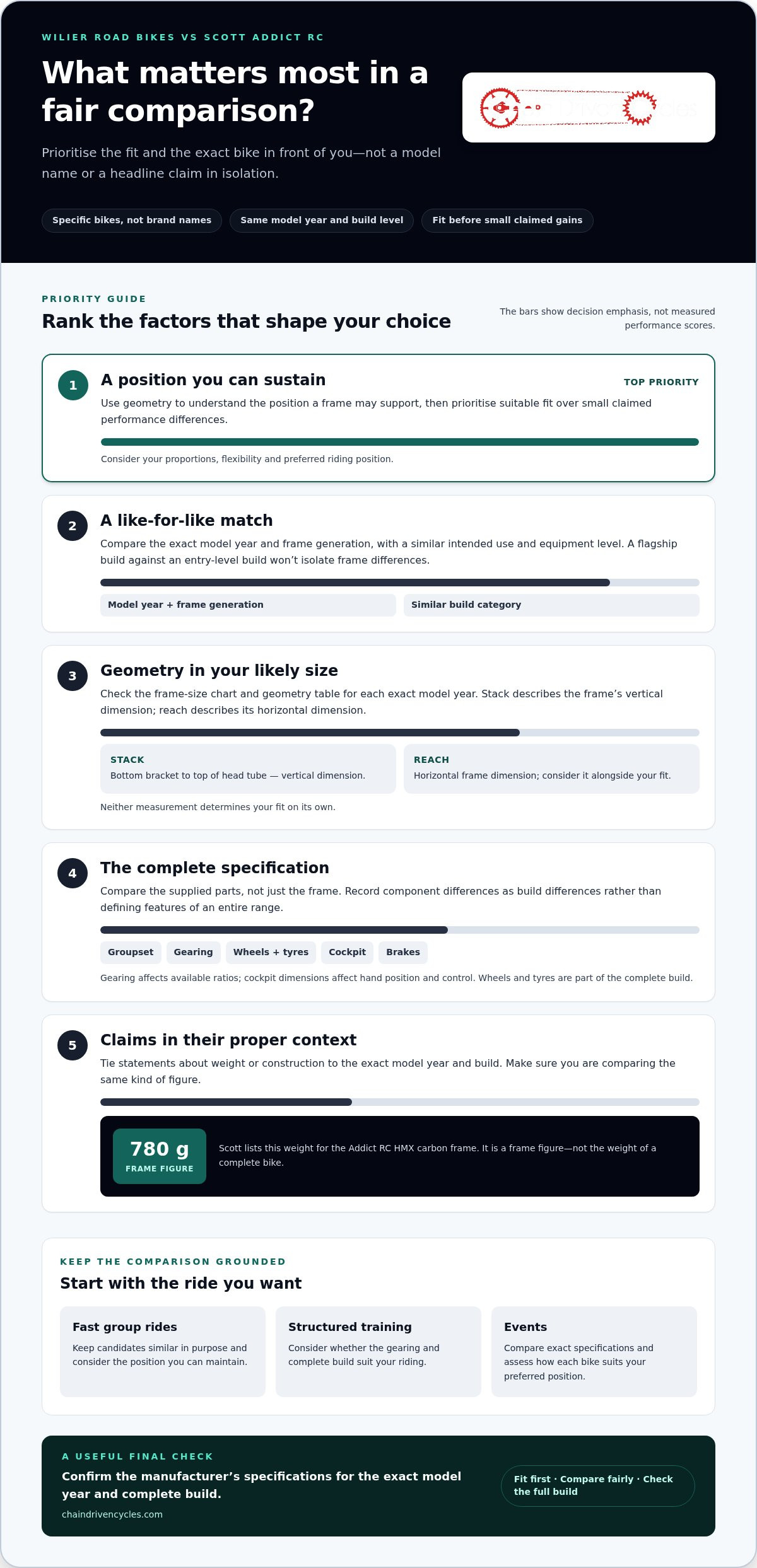
Work through your needs in order instead of choosing the frame with the most compelling headline claim. First, rank how you’ll use the bike: racing, regular training, fast group rides or everyday road riding. Then consider the position you can sustain, the equipment you value and the care you’ll need over time. This makes the Wilier road bikes review vs Scott Addict RC relevant to your riding, rather than an abstract contest between brands.
How should you match a bike to your riding?
Be specific about your priorities. For racing, consider the position and handling you’re prepared to maintain throughout an event. For frequent training, think about gearing and how the bike feels on the routes you ride most. For fast recreational rides, a sustainable position and predictable handling may matter more than small claimed differences between frames.
Next, consider your proportions, flexibility and posture. Geometry figures can help narrow the options, but they can’t tell you on their own whether a frame suits your body or riding style. Compare the size charts and model-year geometry for your candidates, then treat the figures as a starting point for assessing fit, not a substitute for it.
Prioritise a properly assessed fit over a small claimed performance difference between frames. A position that lets you ride confidently and produce power comfortably is more useful than a marginal specification advantage if the bike’s size or setup doesn’t work for you.
What should you assess before committing to a build?
Check the size range and adjustment options for the specific build, especially if it has an integrated cockpit or proprietary components. Review component compatibility and whether the supplied gearing, wheels and cockpit suit your plans. If you expect to replace parts, include those choices in your comparison rather than judging the bike only as supplied.
- Riding priority: Decide which rides matter most and where you’re willing to compromise.
- Position: Compare candidate sizes and geometry, then assess fit in your intended riding posture.
- Build: Check included components, compatibility and any planned changes.
- Ownership: Include routine maintenance and professional bicycle repair support in your decision.
For Wilier, an authorised retailer can help you relate model and build information to your priorities. Chain Driven Cycles’ Wilier expertise can support that process, while its professional repair services help with looking after a bike beyond the initial purchase. The Wilier road bikes guide offers further context as you refine your shortlist.
Explore Wilier road bikes at Chain Driven Cycles as you consider which option best matches your priorities.
Choosing a Wilier with Chain Driven Cycles: from comparison to ownership
Once you’ve narrowed down your priorities, turn them into a build that makes sense for your riding. Chain Driven Cycles is an authorised Wilier dealer and premium-bike specialist. Its Wilier expertise can help you work through model and component choices using the criteria that matter to you, such as your riding position, typical routes and preferred gearing. This is practical buying support, not a claim that every rider needs the same setup.
What does specialist Wilier support add to the decision?
Bring your shortlist and the questions behind it: what you ride most, what position you prefer, and which parts of a specification are priorities or compromises. A focused discussion can help you relate those needs to the Wilier options and builds you’re considering. Keep the comparison with Scott Addict RC grounded in the same criteria and manufacturer specifications. Wilier-specific knowledge helps you assess Wilier options without claiming an unverified head-to-head ride test.
If you’re also weighing up other Italian brands, the Bottecchia versus Wilier bikes comparison adds context to the differences between those ranges. It can help you clarify what you’re looking for before focusing on an individual Wilier model and build.
The Wilier road bikes review vs Scott Addict RC is most useful when it leads to a clear shortlist rather than a rushed verdict. Note the model year, build, sizing considerations and any components you might change. That gives you a practical basis for discussing a suitable Wilier while keeping the final choice tied to your needs.
How can you plan for ownership after choosing?
A performance bike is a long-term investment in your riding, so consider how you’ll maintain it as well as how it’s equipped at purchase. Regular attention to components helps you keep track of wear and condition, and professional bicycle repair services are part of the ownership support Chain Driven Cycles provides. For useful guidance on care, the 2026 bicycle maintenance guide covers maintenance considerations for road bikes.
Before settling on a build, make a short checklist: your main riding use, preferred position, required gearing, components you plan to keep and the ongoing care you expect to need. These points keep the decision practical and make it easier to talk through the options with a specialist.
Explore Wilier road bikes at Chain Driven Cycles and discuss which option best fits your riding priorities.
Make your next ride the deciding factor
Before choosing, turn your shortlist into a simple riding brief. Note the rides you most want the bike to support, the position you can sustain and any parts of the build you’d want to change. This gives you a clear way to judge whether a candidate suits your goals now and the kind of riding you hope to do over the coming seasons.
Use the Wilier road bikes review vs Scott Addict RC as a starting point, not a verdict. The most useful decision is grounded in your priorities and the exact bike you’re considering. A considered choice should feel right on the road, work with your preferred setup and make sense for the way you plan to ride.
Explore Wilier road bikes at Chain Driven Cycles and find a bike for your riding priorities.
Frequently Asked Questions
Is a Wilier road bike better than a Scott Addict RC?
Neither is universally better. The right choice depends on the exact model year, a comparable build, your fit and how you ride. A Wilier road bikes review vs Scott Addict RC comparison is useful when it weighs equivalent bikes rather than brand reputations. Check current manufacturer specifications for each candidate, then prioritise a position you can sustain. Without a verified, matched test, there’s no sound basis for declaring one the winner.
Which is faster, a Wilier road bike or the Scott Addict RC?
Neither brand alone determines your speed. Rider fitness and position, road conditions, tyres, wheels and the complete build all contribute. A meaningful test would need equivalent model years and equipment, as well as reliable, consistent test conditions. Treat manufacturer or review figures as context, not a prediction of your personal speed. A wheel or tyre change, for example, may affect your experience independently of the frame, so compare complete setups before drawing conclusions.
Is the Scott Addict RC suitable for long rides?
It can suit long rides if its size and setup work for your body and the position you can maintain. The Addict RC is a race-oriented range, but that description doesn’t determine an individual rider’s comfort over a particular distance. Consider your flexibility, posture and usual time in the saddle. Compare geometry for the exact model year and assess whether the position meets your needs.
Can a Wilier road bike be used for everyday training as well as racing?
Yes. A performance road bike can work for training and events if its fit, gearing and setup suit your regular routes. Consider whether the gear range works for repeated climbs as well as faster group rides, and whether the position is sustainable for your training sessions. Don’t assume every model suits every use. Check the current specifications of the exact Wilier you’re considering before making a model-specific judgement.
Do Wilier and Scott road bikes use the same groupsets?
Not necessarily. Groupset choice can vary by model year and build, so brand-level assumptions won’t reliably tell you what’s fitted. Compare the specification for each exact bike, including the groupset, chainset and cassette, and note whether listed parts are standard or optional upgrades. This also lets you compare the available gearing rather than relying on a component family name alone. Use current manufacturer or product listings for the specific candidates.
How do I compare Wilier and Scott Addict RC frame sizes?
Don’t assume matching size labels mean matching fit. Compare the geometry charts for the exact model years, paying particular attention to stack and reach, then consider your proportions, flexibility and preferred position. You can also compare those figures with a bike whose fit already works for you. Treat charts as a starting point, not a substitute for individual fit guidance, as stem, saddle and handlebar setup also affect your position.