



High-end road bikes in Ireland in carbon or aluminium
Choosing high-end road bikes in Ireland means looking beyond frame material. A good match brings together a frame that fits, components suited to your riding and a ride feel that works for the roads you use. Carbon and aluminium offer different characteristics, so compare the complete bike rather than deciding by material alone.
It’s easy to focus on the frame or groupset first, but neither tells the whole story. Fit, gearing, tyre clearance and intended use all influence how a bike performs on long rides, climbs and faster efforts.
This guide explains what to compare in a premium road bike, how carbon and aluminium differ, and what to consider when choosing a size or race-focused model. Use these factors to find a bike that suits your riding, rather than choosing on specifications alone.
Key Takeaways
- Judge a road bike by its complete specification and how it suits your riding, not by the frame material or groupset name alone.
- Weigh carbon’s ride feel against aluminium’s different balance of practicality and value when choosing a frame.
- Use a comfortable, controlled riding position as your guide to bike sizing; a suitable size supports better handling and long-ride comfort.
- For Irish roads, consider tyre clearance and braking alongside race-bike speed, so the bike’s setup works for the conditions you ride in.
What makes a top-notch road bike?
A quality road bike balances fit, frame, components and intended use. Compare the complete build and riding position, rather than judging one specification in isolation.
Road bike price ranges
Road bikes span entry-level, mid-range and premium categories. Compare the frame, groupset, wheels and finishing kit to understand what each build offers within your budget, rather than judging by the price label alone. Shimano Tiagra, 105 and Ultegra represent different groupset levels; moving from Tiagra to 105 or Ultegra typically brings smoother shifting and lower weight.
For an online bicycle order in Ireland, read the seller’s delivery, warranty and returns terms before purchasing. These explain the delivery arrangements, applicable warranty coverage and how returns are handled.
Bike categories and riding styles
Start with the rides you do most often. An endurance road bike suits riders who prioritise a more relaxed position for longer outings, while a race bike emphasises responsive handling and performance. Aero models focus on aerodynamic shaping. Gravel bikes are designed for riders who plan to leave smooth tarmac for rougher routes.
Use brand, gender and material filters to narrow your search, then compare geometry and component packages. Brand names can help identify model families, and gender filters can organise options, but frame size and fit are central to a comfortable ride.
Endurance, race and aero characteristics
Compare riding position and handling as well as each category’s intended purpose. Endurance geometry prioritises comfort over longer distances, while race bikes are designed around a more performance-focused position. Aero frames use shaped profiles to reduce aerodynamic drag, which may appeal to riders prioritising speed on exposed roads.
These labels are useful starting points, but they don’t replace a good fit. Before choosing a category, consider your usual ride length, preferred terrain and whether you value a steadier position or sharper handling.
Premium components and wheels
Look beyond the frame to the groupset, braking system, wheels and finishing kit. Each affects the bike’s feel and function, so compare complete specifications rather than assuming a premium frame guarantees a balanced build. For example, Shimano 105 or Ultegra offers a step up from Tiagra in shifting smoothness and weight.
Budget separately for pedals, fitting, servicing and replacement wheels if they aren’t included. Additional costs depend on the supplied build and the components you choose, so confirm what comes with the bike before comparing the cost of a complete setup.
Carbon and aluminium frames
Frame material influences how a road bike responds to road surfaces, pedalling and handling. Compare it alongside the geometry and groupset, rather than treating material as a stand-alone measure of quality.
Comparing frame materials
Carbon fibre combines fibres and resin, and the frame is shaped to balance stiffness and comfort. Carbon frames are designed to absorb high-frequency vibration from rough roads better than aluminium. This can make carbon appealing for riders covering longer distances on uneven tarmac.
Aluminium, often labelled alloy, is a metal-frame option with a direct, firm ride feel. In road-bike listings, “alloy” usually means aluminium alloy, so check the frame description rather than treating the labels as different materials. Cr-Mo, short for chromium-molybdenum steel, is another option. Its steel tubes can offer a more compliant ride, although the complete frame design also affects how the bike feels.
For a practical comparison, consider your usual roads, preferred ride feel and the complete build. A carbon frame with a basic groupset may not suit you better than an aluminium frame with components that meet your needs.
Carbon road bike options
Carbon road bikes range from endurance designs to race-oriented models. Geometry affects riding position and handling, while tube shapes and carbon lay-up influence the frame’s characteristics. Compare the model’s intended use and full specification, not just the word “carbon” on the frame.
Assess the fork, wheels, groupset and tyre clearance alongside the frame. These details affect the ride and how well the bike suits your routes. For instance, a carbon frame may appeal to a rider on rough roads, but a comfortable position and tyres suited to the surface matter too.
If you’re considering a second-hand carbon bike, inspect the frame finish and ask about its use. Assessing the whole bike gives you a clearer picture than material alone, especially when comparing builds with different components.
Product size options
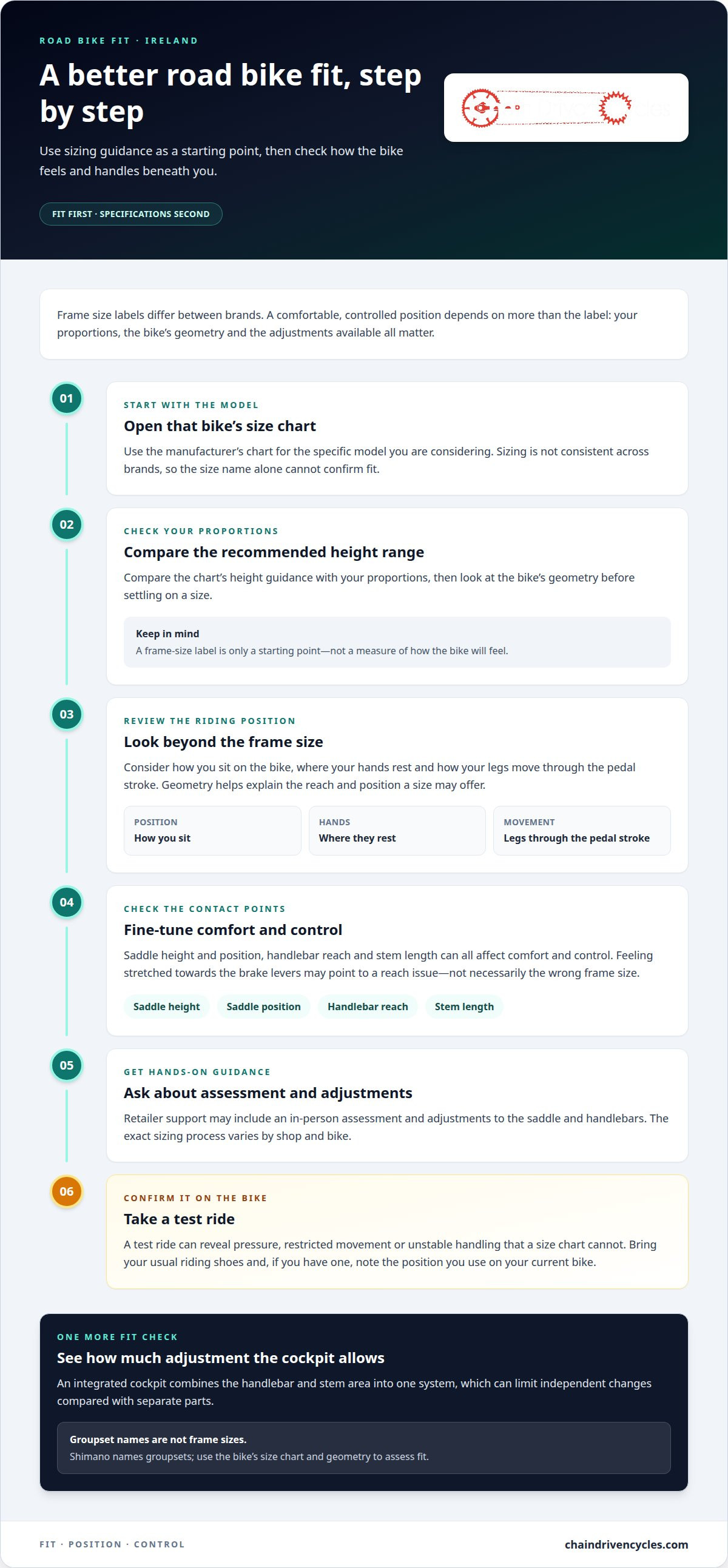
Bike sizing is about matching the frame and riding position to your body. Irish retailers can guide sizing through manufacturer charts, measurements and fit adjustments, with the exact process varying by shop and bike.
Start with the manufacturer’s size chart for the specific model. Frame sizing isn’t consistent across brands, so a size label alone won’t tell you whether the reach or riding position will suit. Compare the chart’s recommended height range with your proportions, then review the bike’s geometry before deciding.
A useful fitting considers how you sit on the bike, where your hands rest and how your legs move through the pedal stroke. Saddle height and position, handlebar reach and stem length can all affect comfort and control. For example, feeling stretched towards the brake levers may indicate a reach issue, not necessarily the wrong frame size.
Retailer support may include an in-person assessment and adjustments to contact points such as the saddle and handlebars. A test ride can reveal pressure, restricted movement or unstable handling that a chart can’t. Bring your usual riding shoes and, if you have one, note the position you use on your current bike.
Component design can also affect how much adjustment is possible. An integrated cockpit combines the handlebar and stem area into one system, which can limit independent changes compared with separate parts. Shimano names groupsets, not frame sizes, so don’t use the drivetrain name to choose a fit.
Ask the fitter to explain each adjustment and how it affects your position. Small changes to saddle height or lever reach can improve comfort without changing the frame. If discomfort persists after adjustments, reassess the frame geometry and size instead of repeatedly changing the same contact point.
If you’re choosing between adjacent sizes, compare the model’s reach and stack figures, then consider your flexibility, riding style and preferred posture. A more upright position may suit long, steady rides, while a lower, longer position may feel natural to a rider seeking an aggressive stance. The bike should remain controllable and comfortable for your intended use.
Road race bikes
A race bike prioritises responsive handling and an efficient position for fast road riding. For Irish routes, assess more than frame shape: tyre clearance, gearing and braking affect how practical the setup feels on varied surfaces. A road bike that can take wider tyres may suit rougher tarmac better than a narrow-tyred build designed around smooth racing circuits.
Tyres measuring 28 to 32 mm are advised for Irish roads. By contrast, 23 mm tyres were a former racing standard, but wider options are recommended for rougher surfaces. Check the bike’s maximum tyre clearance, then consider the routes you ride most. Gravel riding calls for a gravel bike, as a race bike is intended for paved roads.
Gearing matters on Irish gradients. A compact crankset with 50/34 gearing offers a lower climbing gear than a semi-compact 52/36 setup. An 11-34 cassette is a wide-range option recommended for sharp inclines. Choose a combination that suits your climbing and cadence, rather than assuming a harder race-oriented gear will always be faster.
Hydraulic disc brakes are recommended for consistent stopping power in wet weather. They’re a practical consideration for year-round road riding, alongside tyre choice and riding position. A low, aggressive fit may suit short, fast efforts, but you should still be able to brake with control and reach the levers comfortably.
Compare the complete specification. Shimano Ultegra identifies a groupset level, but the wheels, tyres and gearing also shape performance. A light wheelset may feel lively during acceleration, while deeper rims suit riders prioritising aerodynamic efficiency. Match these features to your routes and riding goals, then compare complete builds rather than choosing on the Ultegra name alone.
Chain Driven Cycles: Wilier Road Bikes
Chain Driven Cycles offers premium road bikes for riders choosing a machine based on fit, riding style and component needs. Use the range as a practical starting point for comparing the frame, gearing and tyre considerations covered above.
Discuss how you ride and what you want from your next bike, whether that means longer road rides, faster efforts or a setup that supports power-based training. Assioma Power Meter Pedals can suit riders who want power data as part of their training equipment. For a different way to ride, Chain Driven Cycles also offers alternative high-performance bicycles and Bike Hire.
Ready to explore your options? Contact Chain Driven Cycles to discuss the next step for your riding.
Choose a bike that supports your next season
Your ideal road bike should suit the riding you want to do next, not just the routes you’ve already ridden. Picture a typical week: the terrain, pace and time you expect to spend in the saddle. This practical view helps you focus on a setup that works for you, rather than chasing specifications that look impressive on paper.
Choosing high-end road bikes in Ireland is also an opportunity to think beyond the initial purchase. Consider how your priorities might develop, from longer rides to structured training, and whether the setup will continue to suit you as your riding changes. A considered conversation can help turn your preferences into a clear shortlist and next step.
Contact Chain Driven Cycles to discuss your road-bike choice and what you want from it. Take your time, focus on the ride you’re aiming for, and enjoy finding a bike that makes you want to get out on the road.
Frequently Asked Questions
How much do premium road bikes cost in Ireland, including VAT?
There isn’t one fixed price for a premium road bike: the frame, groupset, wheels and complete build all affect the cost. For an Irish purchase, compare the displayed total and its VAT treatment before treating listings as like-for-like. Also account for any additional components or setup you’ll need, such as pedals or a fitting.
What should I look for when choosing a high-end road bike: race, endurance or aero geometry?
Choose geometry to suit your usual rides and a position you can maintain comfortably. An endurance design may suit long days in the saddle, while a race-focused position may appeal for faster group rides. Aero geometry prioritises aerodynamic shaping. Consider how you’ll use the bike over a typical week, including for climbing, rough surfaces and riding in a lower position.
Are high-end road bikes in Ireland available with Shimano Di2 or SRAM AXS electronic groupsets?
Shimano Di2 builds appear among the listed road-bike options, including the Wilier Filante SL 2025 Ultegra Di2 EX Demo. A groupset name alone doesn’t establish the specification of every model, so compare the exact build description. For SRAM AXS, look for that system named in the individual bike’s specification rather than assuming it comes with a particular frame or model family.
Which Irish bike shops and online retailers stock high-end road bikes?
Chain Driven Cycles is mentioned in connection with Wilier road bikes.