



Bike Tyre Repair in Ireland: Choose the Right Kit, Sealant or Spare
A puncture patch may seem like the obvious fix, but it could be the wrong one for your bike. The right repair depends on whether you use an inner tube or a tubeless tyre, and on where and how the tyre is damaged. For bike tyre repair Ireland cyclists can prepare for, first identify your setup, then choose supplies designed for it.
A puncture can leave you deciding whether to patch a tube, fit a replacement, use a tubeless plug or add sealant. It’s easy to pack supplies that don’t match your valves or wheels. A little preparation helps you choose a suitable kit and recognise when a tyre needs more than a quick repair.
This guide compares repair options for inner tubes and tubeless tyres, and explains what to check when choosing sealant, valves, rim tape and repair kits. You’ll also learn what to carry on a ride and when professional repair support may be sensible. Chain Driven Cycles’ tyre accessories include options for tube and tubeless repairs, so you can compare products by the job they’re designed to do.
Key Takeaways
- For bike tyre repair Ireland, choose supplies according to your tyre setup and the type of puncture, not simply by picking a generic kit.
- Understand when a tube patch, replacement tube, tubeless plug or sealant may suit the repair, and when the damage needs closer assessment.
- Check tyre and valve compatibility before choosing repair products or wheel-maintenance components such as rim tape.
- Carry a compact kit for ride repairs and keep separate supplies at home for tyre and wheel maintenance.
- Compare products by the job they’re designed to do, and seek professional bicycle repair support if the tyre or wheel needs further assessment.
Bike tyre repair in Ireland: identify your tyre setup first
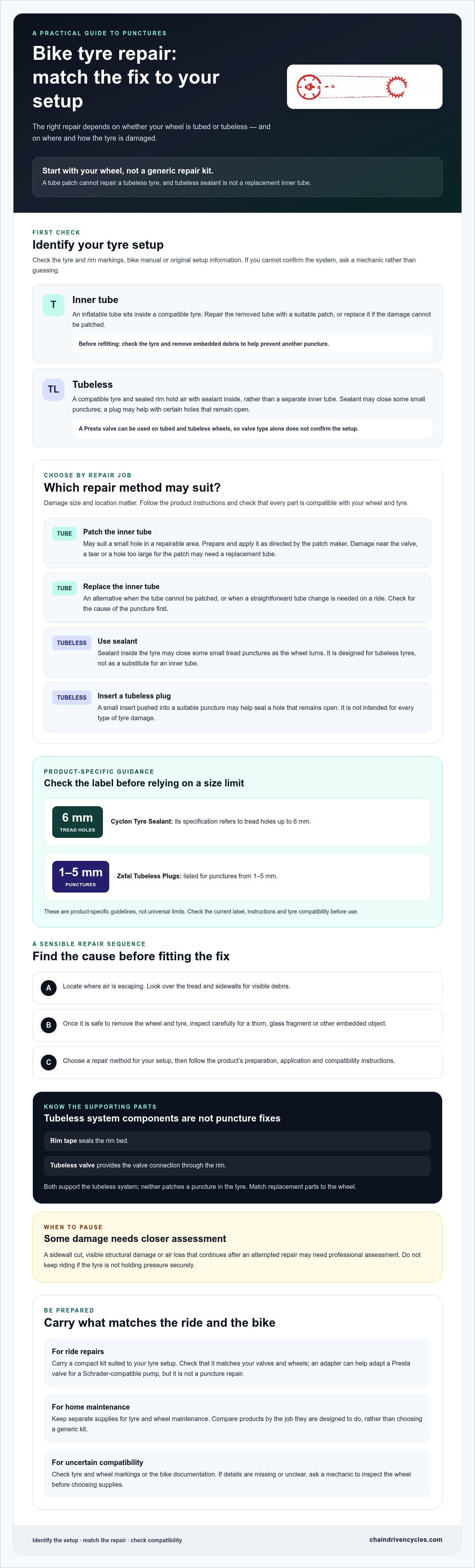
A puncture on a ride, a new repair kit to choose or a route to prepare for all call for the same first step: identify your tyre setup. An inner tube is an inflatable tube fitted inside a compatible tyre. A tubeless setup uses a compatible tyre and sealed rim, with sealant inside instead of a separate inner tube.
Quick answer: Check the tyre and wheel markings or your bike’s documentation to find out whether the setup is tubed or tubeless. If you can’t confirm it, ask a mechanic before buying supplies. The distinction matters: a tube patch won’t repair a tubeless tyre, and tubeless sealant isn’t a substitute for a replacement inner tube.
Wet roads and loose debris may affect what you encounter on a ride, but they don’t determine your tyre setup or guarantee a puncture. Knowing how your wheel is built is a more reliable starting point for bike tyre repair Ireland cyclists can prepare for. For an overview of construction and system types, see Bicycle tire types.
How can you tell whether your bike has an inner tube or tubeless tyres?
Look for tubeless wording on the tyre or rim, and check the bike’s manual or original setup information. Markings can help, but if they’re missing or unclear, don’t guess based on appearance alone. A Presta valve is used on both tubed and tubeless wheels, so the valve type by itself doesn’t confirm which system you have. If you’re still unsure, ask a mechanic to inspect the wheel.
What does each repair method do?
For a tubed tyre, a patch seals a small hole in the removed inner tube. A suitable replacement tube swaps out the damaged one. Before fitting either, check the tyre for embedded debris, or the same object could cause another puncture. For tubeless tyres, sealant may close some small punctures, while a plug can address certain holes that remain open.
A tubeless repair plug is a small insert pushed into a puncture in a tubeless tyre to help seal the opening.
Rim tape seals the rim bed, and a tubeless valve provides the valve connection through the rim. These components support the tubeless system; they don’t patch a puncture in the tyre. Match repair and replacement parts to the wheel, and follow the product’s compatibility and application instructions.
How bike tyre repair works: tubes, tubeless plugs and sealant
Start by finding where the air is escaping. Check the tyre tread and sidewalls for visible debris, then inspect the inside of the tyre carefully once it’s safe to remove the wheel and tyre. A thorn, glass fragment or other object can remain embedded, so remove it before fitting a patched or replacement tube. Otherwise, the new repair may puncture again.
For a tubed wheel, remove the inner tube and locate the hole. A suitable patch can repair some damage; a replacement tube is an alternative if the tube can’t be patched or you need a straightforward change on a ride. With a tubeless wheel, sealant may close some small punctures from inside the tyre. If sealant alone doesn’t stop a leak, a plug may help with a suitable larger hole in the tread.
When should you patch or replace an inner tube?
The size and location of the damage matter. A small hole in a repairable area may suit a patch, provided you follow the patch maker’s preparation and application instructions. Damage near a valve, a tear or a hole that’s too large for the patch may call for a replacement tube instead. Check the tyre for the cause before putting either option back in.
Weldtite Rubber Solution is described for use with suitable vulcanising patches, but not PVC patches. Check the current product and patch instructions to confirm compatibility. A Presta Schrader Valve Adapter can help adapt a Presta valve for use with a Schrader-compatible pump. It’s a useful accessory to carry, not a puncture repair.
When are tubeless sealant and plugs appropriate?
Sealant works inside a tubeless tyre and may seal some small tread punctures as the wheel turns. The Cyclon Tyre Sealant specification refers to tread holes up to 6 mm. Zefal Tubeless Plugs are listed for punctures from 1-5 mm. These are product-specific guidelines, not universal limits. Check the current label and instructions for the exact product and your tyre before use.
A plug is intended for a suitable puncture, not every kind of tyre damage. A sidewall cut, visible structural damage or air loss that continues after an attempted repair may need professional assessment. Don’t keep riding if the tyre isn’t holding pressure securely.
For a closer look at tube and tubeless repair supplies, compare bicycle tyre accessories by repair job and compatibility. Chain Driven Cycles also provides professional bicycle repair services if the damage or wheel setup needs assessment beyond a straightforward fix.
Compare bike tyre repair products by job, compatibility and ride
Choose a product for the repair task first, then check that it suits your tyre and wheel. A compact roadside kit has a different purpose from a component kept at home for setup or maintenance. The examples below help compare options. Check current product details, compatibility and availability before buying.
| Product type | Suitable setup | Purpose | Key check |
|---|---|---|---|
| Patch and Weldtite Rubber Solution | Inner tube | Repair a suitable puncture using a compatible patch | Patch material and application instructions |
| Presta Schrader Valve Adapter | Presta-valved tube | Connect the valve to a compatible Schrader pump | Pump compatibility; this isn’t a puncture repair |
| Continental Presta Valve Core | Compatible Presta valve | Replace a lost or damaged valve core | Valve and core compatibility |
| Tubeless Repair Kit or Zefal Tubeless Plugs | Tubeless tyre | Address suitable punctures using the supplied repair method | Plug size, tool and tyre instructions |
| Cyclon Tyre Sealant or Schwalbe Doc Blue | Compatible tubeless setup | Sealant for the product’s stated application | Current label guidance and compatibility |
| BBB tubeless valves and rim tape | Compatible tubeless wheel | Support setup or wheel maintenance | Rim, valve and tape dimensions |
Which repair products suit an inner-tube setup?
For a tube puncture, a patch used with suitable adhesive is one repair option. The Weldtite Rubber Solution listing identifies it for compatible patches. Check the instructions, particularly any exclusions for patch material, before applying it. A Presta Schrader Valve Adapter can help inflate a Presta-valved tube with a compatible pump, while a Continental Presta Valve Core is a replacement part, not a patch or tube.
Which products support a tubeless setup?
A tubeless repair kit and Zefal Tubeless Plugs support plug-based repairs, but check what each kit includes and which punctures its instructions cover. Cyclon Tyre Sealant and Schwalbe Doc Blue are sealant options. Their intended applications and directions may differ, so don’t assume they’re interchangeable. BBB tubeless valves and rim tape help prepare or maintain a wheel, but they don’t repair every puncture.
When might a conversion kit or sealant top-up be relevant?
A tubeless conversion kit is relevant only if the wheel and tyre are compatible with the conversion instructions. Check the Tubeless Conversion Kit 29 Sealant listing for current sizing, including any 29-inch or 27.5-inch variants, before choosing it. For sealant top-ups, follow the maker’s guidance on compatibility, quantity and application. For bike tyre repair Ireland riders can plan around, keep the small items needed on a ride separate from home supplies for wheel maintenance.
Choose and carry the right bike tyre repair supplies in Ireland
A useful repair kit starts with your actual wheel setup, not the biggest collection of tools. Follow this sequence before buying supplies for bike tyre repair in Ireland:
- Identify the setup. Confirm whether the wheel uses an inner tube or a tubeless tyre.
- Check the tyre and valve. Note the tyre size and valve type. Check the wheel details if you’re replacing a tubeless valve or rim tape.
- Choose the repair type. A tubed setup calls for a compatible patch or spare tube. A tubeless setup may need sealant, a plug or both, depending on the damage and product instructions.
- Verify compatibility. Check that the item fits your tyre, rim and valve, then follow the manufacturer’s guidance for use.
Keep the compact kit you carry separate from supplies you store at home. On a ride, prioritise items suited to your setup and the repairs you’re prepared to make, such as a tube repair option or tubeless plug, plus a compatible way to inflate the tyre. Home supplies can include sealant for maintenance, or wheel components such as rim tape and replacement valves. These support setup and upkeep rather than acting as universal puncture fixes.
What should you check before buying a repair product?
Read the product details rather than relying on a broad label such as “puncture kit”. Confirm that a patch or sealant is intended for your tyre system. For replacement tubeless valves, check the valve type and length against your rim depth. Rim-tape width should match the rim specification; tyre width alone isn’t a reliable way to select it. If the details aren’t clear, ask a mechanic to help identify the correct fit.
What should you carry for a puncture on a ride?
Pack for the setup you’re riding that day. A spare tube won’t directly repair a tubeless puncture, and a plug kit won’t patch an inner tube. A small valve adapter may help you use a compatible pump, but it doesn’t seal a puncture. Practise with unfamiliar tools at home first so you understand the steps before you need them outdoors.
At home, check tubeless sealant periodically and refresh it according to the product instructions. If a puncture keeps returning, air loss persists or the damage appears beyond the product’s stated limits, don’t rely on another quick fix. Chain Driven Cycles offers professional bicycle repair services for tyres or wheels that need further assessment. Browse bicycle tyre repair supplies to compare options for your setup.
Find bike tyre repair supplies and know when to ask for help
The right choice depends on what has failed and what your wheel is designed to use. For an inner-tube puncture, consider a suitable patch or replacement tube. For a tubeless tyre, sealant may deal with some small punctures, while a plug is intended for suitable holes that remain open. Rim tape and valves are different: they support tubeless setup and maintenance rather than patching a hole in the tyre.
These options aren’t interchangeable, and no plug or sealant should be assumed to work for every kind of damage. Match the repair to your setup, then check the product’s current instructions and compatibility details. This setup-first approach makes bike tyre repair Ireland supplies easier to compare than relying on a single do-everything kit.
Which products from the collection are useful starting points?
Think of each item as an example of a particular job, not a recommendation for every rider:
- Tubeless Repair Kit: The listing describes a needle tool and six plugs for tubeless repairs. Check the current listing and instructions for the kit contents and intended puncture types.
- Cyclon Tyre Sealant 125ml: The stated application includes tube and tubeless use. Confirm that the current label supports your particular tyre and setup before applying it.
- BBB BTI-151 Tubeless Rim Tape: This is a wheel-preparation component for a compatible tubeless setup, not a puncture patch. Check the rim requirements and tape specifications before selecting it.
Product variants, instructions and availability can change, so verify current details before choosing. The same principle applies whether you’re assembling a small ride kit or selecting parts for home maintenance.
When should you get a bicycle mechanic to assess a tyre?
Seek professional assessment if the tyre has visible structural damage, won’t hold pressure after a repair attempt or repeatedly loses air. These signs may point to an issue that a basic patch, plug or sealant can’t resolve. If you’re uncertain whether the wheel is tubed or tubeless, confirm the setup before fitting parts or adding sealant.
Chain Driven Cycles provides professional bicycle repair services for cases that need more than a straightforward fix. If you’re unsure whether to repair or replace a tyre, a mechanic can assess the damage and wheel setup.
Browse repair and tyre-maintenance accessories
Compare options by repair task and tyre setup, and check each item’s compatibility and current instructions before purchase. Browse tyre repair and maintenance accessories to explore the available categories.
Prepare for your next ride with confidence
A dependable repair plan starts with knowing whether your wheels use inner tubes or a tubeless setup. Then choose supplies for the repair they’re intended to handle, and check compatibility with your tyre, valve and rim before relying on them on a ride.
That’s the practical approach to bike tyre repair Ireland: carry what suits your bike, keep maintenance components distinct from puncture repairs, and don’t treat persistent air loss or visible tyre damage as a routine fix. If the setup or damage is unclear, Chain Driven Cycles provides professional bicycle repair services for further assessment.
The accessories collection brings together options for tube and tubeless repairs, as well as wheel-maintenance components. Browse tyre repair and maintenance accessories and compare items by their intended job and compatibility. With the right preparation, you’ll know what your kit is for and when to seek further help.
Frequently Asked Questions
Can I repair a bike tyre without removing the wheel?
Sometimes. A tubeless plug may be fitted through the tread without removing the tyre if the puncture is suitable and the product instructions allow it. A tube puncture needs access to the inner tube, which may mean removing the wheel and tyre. With either setup, inspect for embedded debris before repairing. If the damage is extensive or you can’t identify its cause, stop and ask a bicycle mechanic to assess it.
What is the difference between a tyre patch and a tubeless plug?
A patch repairs a suitable puncture in an inner tube, using the patch and adhesive as directed. A tubeless plug is inserted into an appropriate hole in the tread of a tubeless tyre. They aren’t interchangeable: a patch won’t seal a tubeless tyre, and a plug isn’t a tube repair. First identify your wheel setup, then check that the product supports it and follow its application instructions.
Can tyre sealant repair an inner tube as well as a tubeless tyre?
Some sealants are specified for both inner-tube and tubeless applications, while others are intended only for tubeless systems. Check the exact product instructions before adding sealant. For example, the Cyclon Tyre Sealant listing describes use with tubes and tubeless tyres. Confirm the current label guidance and compatibility with your setup before use, and don’t assume that one sealant works with every tube, tyre or valve.
How do I know what size tubeless valve or rim tape to buy?
Check the rim or wheel manufacturer’s specifications rather than choosing by tyre size. Valve length must suit the rim depth, and rim-tape width must match the rim bed. The BBB tubeless valves have multiple listed lengths, and the rim tape has width options, but check current product variants before ordering. If you can’t find the rim details or measure confidently, ask a mechanic to confirm the correct fit.
Can a tubeless plug be a permanent bike tyre repair?
A plug can seal some suitable tread punctures, but it isn’t a guaranteed permanent repair for every hole or tyre. Follow the product’s stated limits, then check whether the tyre holds pressure and shows any further damage. A large puncture, damage near the sidewall or a leak that returns needs closer attention. If you’re unsure whether the tyre is safe to use, have a bicycle mechanic assess it before riding.
What should I carry to fix a puncture on a bike ride?
Choose supplies for your actual setup. Inner-tube riders can carry a compatible patch kit or spare tube and a way to inflate the tyre; tubeless riders may want a suitable plug tool and compatible repair supplies. A valve adapter can help with certain pump connections, but it won’t fix a puncture. Practise using unfamiliar equipment at home and check its instructions before setting out. That preparation makes bike tyre repair Ireland riders can rely on more straightforward.
When should I replace a bike tyre instead of repairing it?
Seek professional assessment if the tyre casing is visibly damaged, it won’t retain pressure after repair or punctures keep returning. A product’s stated puncture limit doesn’t guarantee that a damaged tyre can be repaired safely. Check the tyre manufacturer’s guidance, and don’t continue riding if the tyre appears structurally compromised. If you can’t judge the damage or identify the wheel setup, a bicycle mechanic can advise whether repair or replacement is appropriate.