



Handlebars and Stems: How to Choose the Right Bike Cockpit
The fastest-looking cockpit may be the wrong one for your bike. Choosing handlebars, stems and aero extensions starts with fit and compatibility, not material or marketing claims. A mismatch in handlebar clamp diameter or steerer fit can rule out a component, while the wrong stem length or angle can change your reach and handling.
There’s plenty of choice: bar shapes, materials and adjustment options all affect how a cockpit feels on the road or trail. Wider or more aerodynamic isn’t automatically better. Your bike, riding position and intended use should guide the decision.
This guide explains how to check compatibility and compare stem length, angle and handlebar shape. You’ll also learn what separates standard bars, clip-on aero extensions and integrated designs, so you can focus on components that suit your riding. If you need help with assembly or adjustment, Chain Driven Cycles provides professional bicycle repair services.
Key Takeaways
- Handlebars, stems and nearby contact points influence hand position, steering and comfort.
- Compare conventional, high-rise, clip-on aero and integrated cockpit designs by intended use and adjustment options.
- Check your bike’s exact handlebar clamp and steerer dimensions before choosing components.
- Record your current position and any discomfort so changes are purposeful, rather than based on appearance alone.
- Choose components to suit your riding position and use, and use professional repair services for help with safe cockpit checks.
How handlebars and stems shape bike fit, comfort and control
The bike cockpit comprises the handlebar, stem and nearby contact points, including grips or bar tape and the controls your hands operate. Together, these parts determine where you hold the bike and how you steer it. The handlebars provide the hand positions; the stem connects them to the bike’s steering assembly.
A stem clamps the handlebar to the fork’s steerer tube and positions the bar in relation to the frame. Its length and angle influence reach and bar height, but neither can compensate for a frame that is fundamentally the wrong size. Comfort and control depend on the whole setup, including frame size, saddle position, bars and riding style.
What does a bike stem change?
A longer stem generally places the handlebar further forward, while a shorter one brings it closer. This changes how stretched or upright you feel, and can also affect steering feel. There’s no single stem length that suits every rider. Body proportions, frame geometry and intended use all matter.
Stem angle affects handlebar height and riding position, although the result also depends on how the stem is fitted. Before making a change, note whether you feel overextended, cramped or too low. Treat stem adjustments as fine-tuning, not as a substitute for a suitable frame and balanced fit.
What should handlebars do for your riding position?
Bar shape and width influence where your hands rest, how much leverage you have over the steering and how comfortably you can hold the position. Drop handlebars offer several hand positions, including the hoods and drops. Flat bars provide a more direct, upright hand position, while aero bars support a forward-leaning posture for sustained efforts.
These shapes serve different needs, so start with your riding rather than appearance. Consider where you ride, how long you spend on the bike and when discomfort occurs. A broad overview of bicycle handlebar types can explain the range of designs, but your current fit is the more useful reference when narrowing your choices.
Before browsing handlebars, stems or aero extensions, record your current setup and decide what you want to improve. Hand numbness, shoulder tension and difficulty reaching the controls can each point to a different issue. Changing one part at a time makes it easier to judge how the cockpit feels and whether the adjustment has helped.
Handlebar and stem types: understand the practical differences
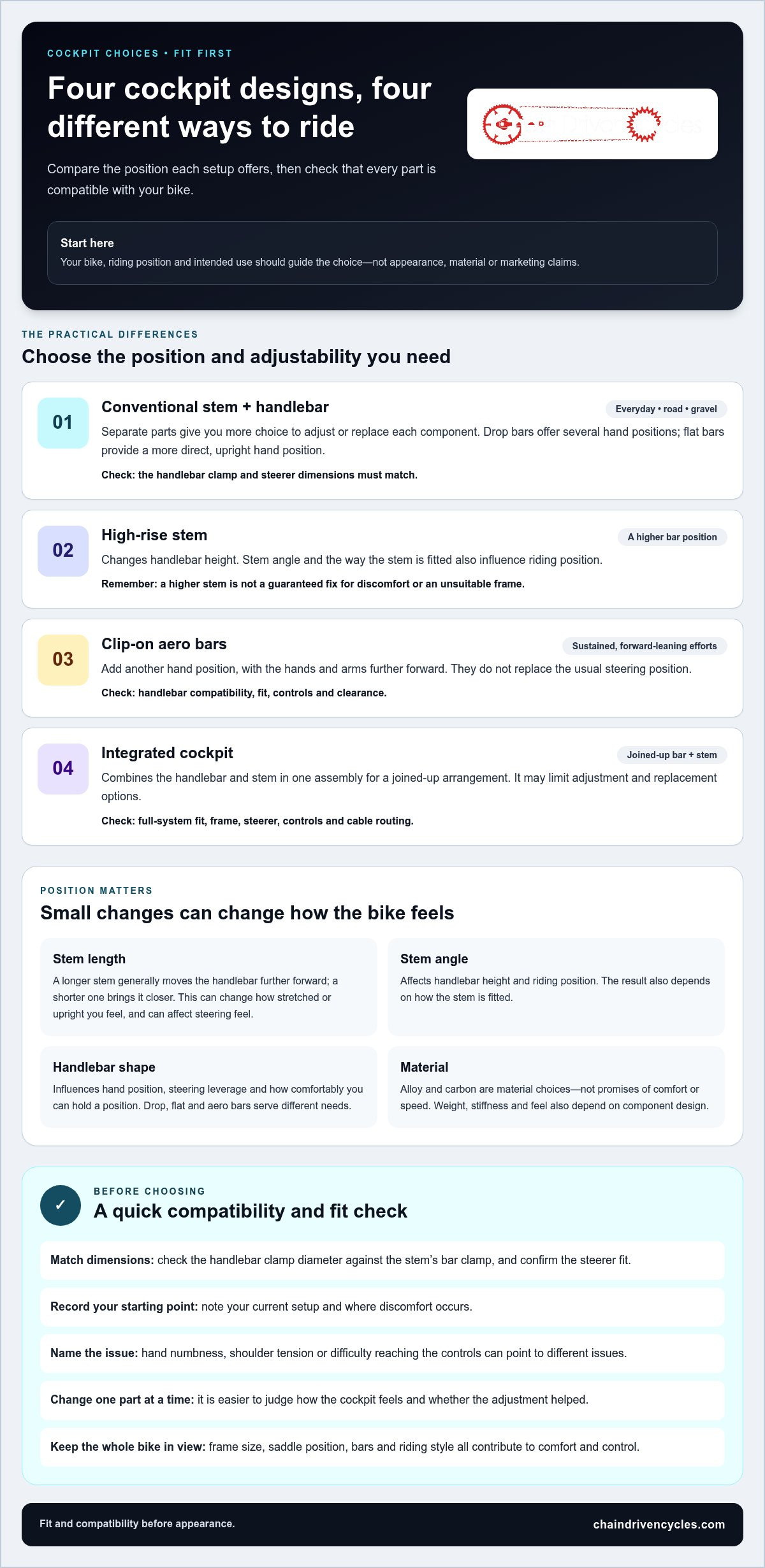
Choose a cockpit for the position and riding you want, then check that it fits your bike. Conventional stems pair with separate handlebars, giving you the option to adjust or replace each part. High-rise stems can bring the bar higher, while clip-on aero bars add a forward hand position to a compatible handlebar. Integrated designs combine the bar and stem in one assembly. They can create a clean setup, but may limit adjustment and replacement options.
For an overview of how the parts work together, see Cycling UK’s guide to handlebar and stem function. In practice, your position, riding needs and the components your bike can accept will guide the choice.
| Type | Typical use | Adjustment and compatibility |
|---|---|---|
| Conventional stem and handlebar | Everyday road, gravel or general riding | Separate parts allow more choice, but clamp and steerer dimensions must match. |
| High-rise stem | A higher handlebar position | Changes bar height; fit and steerer compatibility still matter. |
| Clip-on aero bars | A sustained, forward-leaning position | Attach to a compatible handlebar; check fit, controls and clearance. |
| Integrated cockpit | A joined-up bar and stem arrangement | Confirm the full system’s fit and compatibility before choosing. |
Standard handlebars and stems versus aero extensions
Standard handlebars provide the main steering and hand positions for varied riding. Drop bars offer different holds; flat bars provide a direct hand position often used on hybrid and mountain bikes. Clip-on aero bars add another position, with the hands and arms further forward. They can suit sustained efforts, but don’t replace the usual steering position. The Profile Design Legacy Aerobar and Control Tech Aero Cockpit are examples of aero options in the collection. Check each model’s fitting requirements before pairing it with a bar.
When does an integrated or high-rise cockpit make sense?
An integrated cockpit may suit a rider looking for a combined bar-and-stem arrangement, but the frame, steerer, controls and cable routing all affect compatibility. The PRO VIBE handlebar and Deda Alanera DCR Handlebar are options to compare. Check their product information for the exact configuration. A high-rise stem can change bar height, but it isn’t a guaranteed fix for discomfort or an unsuitable frame.
Alloy and carbon are material choices, not promises of comfort or speed. Weight, stiffness and feel depend on a component’s design as well as its material. Let fit and intended use guide your shortlist of handlebars, stems and extensions, then browse the handlebar and stem options with those requirements in mind.
How to compare handlebars and stems before choosing
Start with compatibility, then consider how a component would change your position. When comparing handlebars, stems and accessories, record your current measurements and match them against the bike and product specifications. A component can look almost identical to the one on your bike yet use a different clamp or steerer dimension. Fit, intended use and a secure match matter more than low weight or an aerodynamic profile.
Which compatibility measurements matter?
Check the handlebar clamp diameter, which must match the stem’s bar clamp, and the stem’s steerer clamp size, which must suit your fork’s steerer tube. Also account for the headset arrangement and available steerer space for the stem and any spacers. Don’t assume similar-looking bars or stems share the same dimensions.
Product details help you assess compatibility. For example, the BBB BHS-08 RoadForce Stem is specified for a 31.8 mm handlebar clamp. That measurement describes the bar it accepts, not the stem’s fit on your fork, so check steerer compatibility separately. For accessories such as aero extensions, compare their fitting requirements with your handlebar.
How do material, shape and adjustment affect the decision?
Compare alloy and carbon by the component’s design and intended use, rather than assuming the material alone determines comfort, strength or performance. Shape and dimensions affect how a bar fits your hands and where the controls sit. Consider stem length and angle alongside handlebar width and reach, using your current riding position as a reference.
Adjustability matters particularly with aero extensions. The position of the bars and armrests can affect support and comfort during longer efforts. The BBB BHB-53 Aerospeed and Profile Design Legacy are examples to compare for their aero setup and adjustment options. Check each model’s details instead of assuming the adjustment range or fitting method is the same.
- Measure: note the current bar clamp and steerer dimensions.
- Compare: assess stem length and angle, plus bar width and reach, against your existing position.
- Prioritise: rule out incompatible options before weighing material, weight or aerodynamic shaping.
This fit-first process helps narrow handlebars, stems and accessories to options suited to your bike and riding. Compare components by compatibility and position before treating weight or material as deciding factors. Chain Driven Cycles provides professional bicycle repair services to help with safe cockpit checks and adjustments.
A practical checklist for fit, setup and common buying mistakes
A measured approach makes cockpit changes easier to assess and helps avoid buying parts that don’t suit the bike. Before browsing handlebars, stems or accessories, work through this sequence:
- Identify the need: decide what you want to improve, such as hand comfort, reach, bar height or a more aerodynamic position.
- Record your current setup: note stem length and angle, handlebar width, clamp dimensions and the saddle-to-bar position. Also write down when and where discomfort occurs.
- Check compatibility: compare your measurements with the bike and component specifications, including the steerer and handlebar clamp.
- Compare suitable options: assess fit and intended use first, then consider features such as material, weight and adjustability.
What should you measure before replacing a component?
Use a tape measure or callipers where appropriate, and record the measurements rather than relying on visual estimates. Check the stem’s length and angle, handlebar width, bar clamp diameter and relevant steerer dimensions. Compare the figures with the bike and component specifications. If you’re changing more than one contact point, make one change at a time so you can better judge which adjustment affects comfort or control.
Which setup mistakes can undermine comfort or control?
Don’t force incompatible parts together or exceed the component maker’s assembly guidance. A cockpit that appears to fit may still have a mismatched clamp, insufficient steerer engagement or unsuitable accessory mounting. Follow the manufacturer’s instructions for bolt tightening and use the specified torque values for the exact component. Don’t guess, particularly with carbon parts.
After an adjustment, check that the bars and stem are secure, the steering moves freely, and the brake and gear controls operate as intended before riding. Routine inspections are part of safe upkeep; a bicycle maintenance guide can help you build a regular check. If you’re uncertain about fitting handlebars, stems or accessories, Chain Driven Cycles’ professional bicycle repair service can help with safe assembly.
Keep your measurements and notes together as you compare options. Explore handlebars and stems with your riding needs and compatibility checks in mind.
Standout handlebars and stems in the Chain Driven Cycles collection
Product examples are most useful when compared by the position or adjustment you need, rather than by name alone. As you browse handlebars, stems and aero options, keep your bike’s measurements and current riding position in view. A component that suits one cockpit won’t necessarily fit another, so use the product specifications to assess compatibility before deciding.
Stem examples for different position adjustments
The BBB BHS-08 RoadForce Handlebar Stem is a conventional stem option. Its listed handlebar fit is 31.8 mm, illustrating why the bar clamp dimension matters. The product listing shows several length options, which can help you compare possible reach adjustments. Choose by measured fit, not by assuming a particular length will suit every rider.
The Deda Zero2 Stem offers an example with extra-short sizes, while the BBB BHS-25 Highrise provides a high-rise option for riders considering a different handlebar position. These represent different adjustment approaches, not guaranteed solutions to discomfort. Check each stem’s full specifications against your bike’s steerer, handlebar clamp and setup requirements.
Handlebar and aero bar examples to compare
The Deda Elementi Zero1 RHM Handlebar is a road bar to assess by its shape and how it supports your preferred hand positions. Compare it with the Deda Alanera DCR Handlebar as a different cockpit design, and consider how each matches your bike and intended road position. Product names alone don’t establish compatibility, so compare the relevant dimensions and fitting details.
Clip-on aero options take a different approach: they add a forward-leaning position to a compatible handlebar rather than replacing the main bar. This distinction can help you decide whether you want a standard road position, a different stem adjustment or an additional position for sustained efforts. Check the specific aero bar’s mounting requirements and adjustability against the handlebar you use.
Before choosing, narrow your options in this order: riding need, fit, compatibility, then design and material. Product details can change, so use the current listing for specifications such as exact dimensions and available sizes. If cockpit assembly or adjustment feels uncertain, Chain Driven Cycles’ professional bicycle repair services can help with safe setup.
Browse handlebars and stems to compare component types against your fit and riding needs.
Choose a cockpit that works for your ride
The right cockpit isn’t simply the lightest or most aerodynamic option. Start with your riding position and comfort, record your current measurements, then check that each component matches your bike’s clamp and steerer dimensions. Stem length, angle and handlebar shape can refine your position, but compatibility and fit come first.
Use those criteria to compare handlebars, stems and aero options by the way you ride, rather than relying on appearance or broad performance claims. The Chain Driven Cycles collection brings together options across these component types. Chain Driven Cycles also provides professional bicycle repair services for cockpit checks and adjustments.
Ready to put your measurements and riding needs to work? Browse the handlebars and stems collection and narrow your choices with fit and compatibility in mind.
Frequently Asked Questions
Is a 31.8 mm stem compatible with every road handlebar?
No. A 31.8 mm stem is not compatible with every road handlebar. The handlebar’s centre-clamp diameter must match the stem’s clamp specification, and the stem’s steerer clamp must also suit the bike’s fork steerer. Check both dimensions in the component and bike information before buying. Similar-looking parts can use different standards, so don’t rely on a general label such as “road stem”.
How do I know what stem length I need?
Start with your current riding position, overall bike fit and the reach you want to change. Record your existing stem length, then compare alternatives in relation to how you sit on the bike. Stem length can affect reach and steering feel, but it won’t correct every underlying fit issue. If discomfort continues or the change is substantial, Chain Driven Cycles’ professional bicycle repair services can help you assess the setup.
Can I change my handlebars without changing my stem?
Sometimes. The replacement bar’s centre-clamp diameter must match the stem, and its width and shape should suit your position. Check that cable routing and control placement will work, and follow the manufacturer’s compatibility guidance. Integrated cockpit systems can require a more specific combination of parts. Before choosing new handlebars, stems or other components, compare their exact dimensions and consider how the bar could affect hand positions and reach.
Are aero bars suitable for everyday road cycling?
Not for every bike or riding situation. Aero bars provide a more forward position and may suit particular training or time-trial uses, but consider your route, fit and how the extensions affect access to the usual controls. Check mounting compatibility and any rules that apply to your event. The Profile Design Legacy Aerobar is one clip-on example; use its product information to assess its adjustment features and ensure the position works for you.
Are carbon handlebars better than aluminium handlebars?
Neither material is automatically better for every cyclist. Compare the handlebar’s intended use, shape, fit and compatibility, as well as the manufacturer’s specifications. Material can influence weight and construction, but it doesn’t by itself guarantee comfort, strength or performance. Assess the complete design in relation to your needs, and follow the product’s assembly and maintenance instructions. Avoid choosing on material alone if the dimensions or riding position aren’t suitable.
What should I check after fitting new handlebars or a stem?
Confirm that the parts fit the steerer and handlebar clamp correctly, the controls are secure, and cables or hoses move freely as you turn the steering. Follow the manufacturer’s assembly instructions and specified tightening guidance, including any torque values. Before riding, check that the cockpit is secure and the steering operates normally. If you’re unsure about fit or assembly, Chain Driven Cycles’ professional bicycle repair services can help with safe setup.